
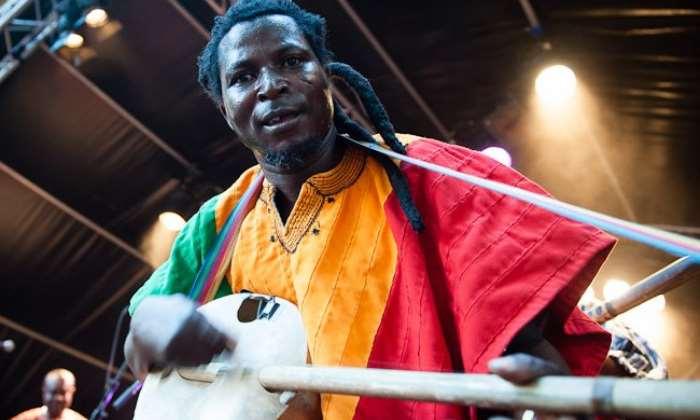

Ghanaian traditional music star King Ayisoba has secured his first ever Grammy Award nomination, earning international recognition in the Best African Music Performance category for the 2027 awards through his collaboration with celebrated compatriot Rocky Dawuni.
The nomination, announced by the Recording Academy on Monday, November 16, 2026, follows the selection of their collaborative single, No Tradition, No Africa, placing the distinctive northern Ghanaian musician among some of the continent’s most prominent contemporary recording artistes.

For King Ayisoba, the recognition represents a defining moment in a career built on preserving and projecting Ghana’s indigenous musical heritage onto international stages. His nomination also brings renewed attention to the traditional kologo music of northern Ghana, a distinctive musical tradition that has remained central to his artistic identity.

Born Albert Apoozore in Bongo Soe in the Upper East Region, King Ayisoba has distinguished himself through his unmistakable raspy vocals, energetic performances and mastery of the two string kologo lute, an indigenous instrument deeply associated with the region.

His musical expression draws extensively from Frafra cultural traditions, blending indigenous rhythms, traditional instrumentation and socially conscious messages into a sound that has earned him recognition both locally and internationally.
Over the years, he has released several acclaimed projects, including Modern Ghanaians in 2006, Africa in 2008, Wicked Leaders in 2014, 1000 Can Die in 2017 and Work Hard in 2023.

His breakthrough into mainstream Ghanaian music recognition came with Modern Ghanaians, which earned him the Song of the Year award at the 2007 Ghana Music Awards. Nearly two decades later, his first Grammy nomination represents another major achievement in his journey as one of Ghana’s leading advocates of traditional music.
The recognition also marks another significant chapter in Rocky Dawuni’s Grammy journey, with the Afro Roots and reggae musician extending his record as Ghana’s most nominated artiste in the Recording Academy’s history.

Dawuni has previously accumulated four Grammy nominations, beginning in 2016 when Branches of the Same Tree earned recognition in the Best Reggae Album category.

He subsequently received a nomination for Voice of Bunbon, Vol. 1 in the Best Global Music Album category in 2022, followed by Neva Bow Down, featuring Blvk H3ro, in the Best Global Music Performance category in 2023. His recording Rise earned another nomination in the same category in 2025.
The latest recognition, therefore, brings his Grammy nomination tally to five and further reinforces his standing as one of Ghana’s most internationally recognised musical exports.
Released earlier in 2026, No Tradition, No Africa brings together two distinctive Ghanaian musical identities, combining King Ayisoba’s powerful vocals and traditional kologo instrumentation with Dawuni’s established Afro Roots and reggae influences.
Beyond its musical composition, the collaboration carries a broader message about African identity, cultural preservation and the importance of protecting indigenous traditions from being displaced by changing cultural influences.
Their selection places Ghana in contention against some of Africa’s biggest contemporary music names in the Best African Music Performance category.
The competing entries include Asake’s Gratitude, Aye Kan (Are You Coming Back?) by Angélique Kidjo and Ayra Starr, Tems’ Big Daddy, and Jogodo, a collaboration between Wizkid and Asake.
The 69th Annual Grammy Awards will take place on February 7, 2027, when the Recording Academy will announce winners across its various competitive categories.
For Ghana, the nomination offers an opportunity to celebrate not only the international accomplishments of two established musicians but also the global relevance of indigenous African sounds and the cultural traditions that continue to shape the country’s musical identity.

