

Ghana is introducing fresh measures to strengthen its dwindling foreign exchange reserves, including transferring responsibility for forex intermediation from the Bank of Ghana to the Ghana Gold Board (GoldBod) and compelling large scale mining companies to increase the proportion of gold they sell to the country.
The International Monetary Fund (IMF) announced the policy adjustments in a statement released on Thursday, November 5, explaining that the interventions constitute corrective measures in response to the deterioration in Ghana’s external reserve position in recent months.

The Fund has emphasised the need for consistent implementation of the two measures, together with greater flexibility in the exchange rate regime, as essential steps towards restoring the country’s reserve buffers and strengthening its external economic position.

However, the IMF did not specify the extent of the decline in foreign exchange reserves or disclose the precise increase in the quantity of gold that large scale mining companies will be required to sell under the revised arrangement.

The policy adjustments come several months after Ghana concluded its financial assistance programme with the IMF and transitioned into a 36 month Policy Coordination Instrument (PCI), an arrangement that does not provide direct financial assistance but is intended to sustain economic reforms and reinforce macroeconomic stability.
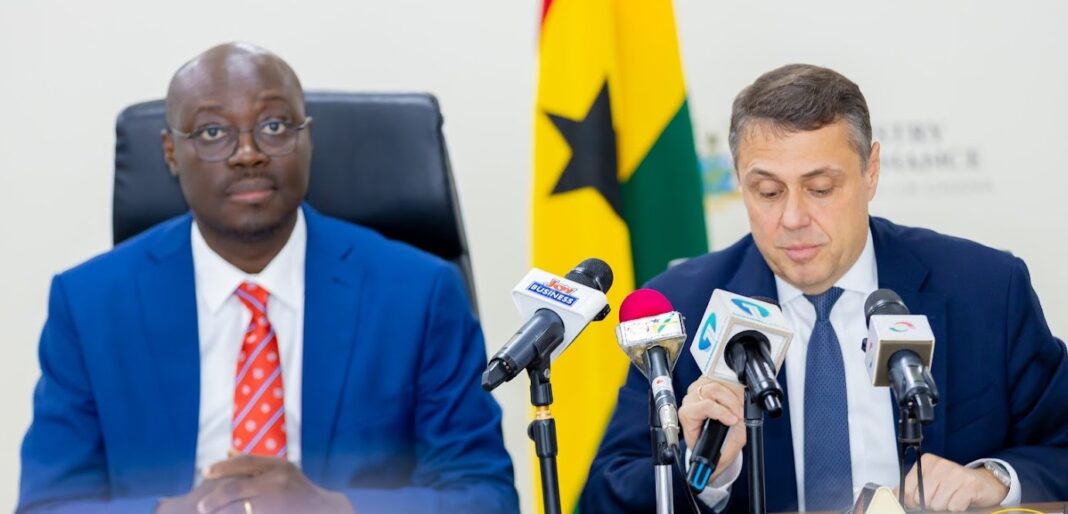
The latest developments followed a visit to Accra by an IMF delegation headed by Ruben Atoyan between October 22 and November 4, during which discussions were held with Ghanaian authorities as part of the first assessment of the PCI.

Announcing the outcome of the engagement, Mr Atoyan disclosed that IMF officials and the Ghanaian government had reached a staff level understanding on the programme’s inaugural review. Nevertheless, the agreement remains subject to endorsement by the Fund’s Management and Executive Board before it can receive final approval.
The IMF assessed Ghana’s overall performance under the programme as generally satisfactory, noting that the country had achieved most of its stipulated quantitative benchmarks. However, the renewed deterioration in foreign exchange reserves underscores the persistence of external economic vulnerabilities despite improvements in several major macroeconomic indicators.

The Fund cautioned that Ghana continues to face significant exposure to fluctuations in international commodity markets, particularly movements in the prices of gold, cocoa and crude oil, which remain important contributors to the country’s export earnings.

It further identified escalating geopolitical uncertainties and increasingly restrictive global financial conditions as additional threats capable of undermining economic stability and placing further pressure on the country’s external position.
Within the domestic economy, the IMF drew attention to substantial refinancing obligations associated with government debt, warning that the country must carefully manage its repayment commitments as existing debt instruments approach maturity.
The Fund also highlighted continuing fiscal difficulties within the energy, cocoa and gold industries, alongside unresolved vulnerabilities in the financial sector, as areas requiring sustained policy attention and effective institutional management.
These concerns persist notwithstanding Ghana’s reported economic expansion of 6.2 per cent during the first half of 2026, with the country’s overall growth rate for the year projected at 5.7 per cent.
Inflation also declined to 5.5 per cent in October, placing the rate below the Bank of Ghana’s established target range, while the government’s primary budget surplus remains on course to achieve the year end benchmark agreed under the programme.
Despite these encouraging developments, the IMF maintained that consolidating the country’s economic recovery will depend considerably on rebuilding foreign exchange reserves, maintaining disciplined monetary policy and allowing greater flexibility in the exchange rate.
The Fund also advocated the establishment of a sinking fund to provide a dedicated financial mechanism for meeting government debt repayment obligations as they fall due, thereby reducing refinancing pressures and strengthening public debt management.
Ghana concluded the final review of its $3 billion Extended Credit Facility programme in July, bringing its financial assistance arrangement with the IMF to an end before entering the new Policy Coordination Instrument framework.
Although the PCI does not offer the country fresh financing, it preserves the IMF’s oversight and policy engagement through continued monitoring of economic reforms and the implementation of measures intended to sustain macroeconomic stability.
The outcome of the first review therefore places the restoration of foreign exchange reserves at the centre of Ghana’s immediate economic priorities, signalling that maintaining recent improvements in growth, inflation and fiscal performance will require stronger external buffers and more effective management of the country’s gold and foreign exchange resources.

