
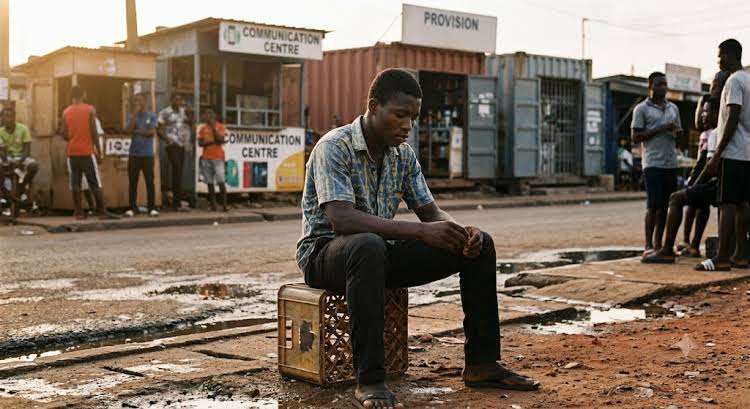

Approximately one in every three young people aged between 15 and 24 who are actively participating in Ghana’s labour force is unemployed, highlighting persistent difficulties confronting young people seeking employment, according to the Ghana Statistical Service (GSS).
The revelation is contained in the Service’s 2026 Productivity, Employment and Growth Report, which examines developments in Ghana’s productivity and labour market over a 35 year period.

The report identifies educational attainment as an important factor in unemployment patterns, with individuals who have completed secondary education experiencing a considerably higher unemployment rate than those with tertiary qualifications.

According to the GSS, unemployment among people with secondary education stood at 36.2 per cent, compared with 14.3 per cent among those with tertiary education. These figures relate specifically to the third quarter of 2025.

The report further indicates that the proportion of young people aged between 15 and 35 who were not in employment, education or training (NEET) stood at 17.9 per cent in 2025. Although this represented an improvement from the 18.8 per cent recorded in 2024, the figure remained higher than the 16.7 per cent registered in 2023, based on comparable quarterly data.
Despite these challenges, the GSS observed a gradual decline in Ghana’s overall unemployment rate over the period under review. The rate decreased from 14.7 per cent in 2023 to 13.7 per cent in 2024 before falling further to 12.8 per cent in 2025.

The report also identified a reduction in the number of people working excessively long hours. The proportion of employed individuals working more than 48 hours weekly declined from 17.2 per cent in the first quarter of 2022 to 12.7 per cent in the third quarter of 2025.
Employment More Than Doubles, but Informal Work Remains Dominant

Meanwhile, the GSS reported that Ghana’s employed population has expanded considerably over the past three decades, although the majority of workers continue to operate within the informal economy.

The number of employed persons increased from approximately 6.0 million in 1992 to 13.3 million in 2025, representing more than a doubling of the country’s employment base.
However, the composition of employment highlights the limited prevalence of formal salaried work. Data for the third quarter of 2025 show that 61.8 per cent of employed people were self employed, while 20.5 per cent worked as paid employees.
The report further established that 85.9 per cent of workers were engaged in the informal sector, underscoring the continued dominance of informal economic activities in Ghana’s labour market.
The second edition of the Productivity, Employment and Growth Report provides an extensive assessment of Ghana’s economic and labour market performance between 1991 and 2025, examining developments over a 35 year period.
To produce the analysis, the Ghana Statistical Service integrated national accounts information with findings from four population censuses and other surveys. Its methodology also followed established statistical frameworks and guidelines developed by the International Labour Organization (ILO) and the Organisation for Economic Co operation and Development (OECD).
The findings offer an extensive picture of Ghana’s employment transformation, revealing that although the number of people in work has increased substantially, unemployment among young people, educational disparities and the overwhelming concentration of workers in informal employment remain significant labour market concerns.

