
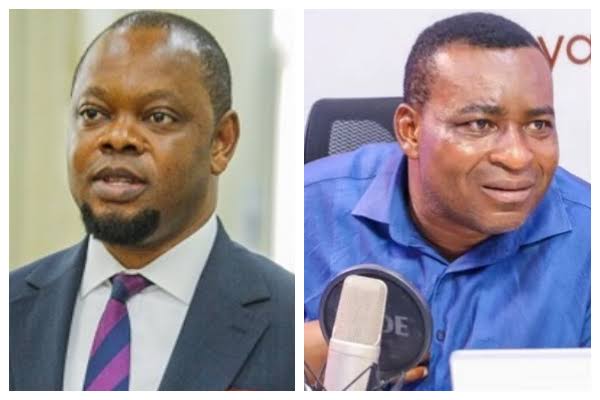

The criminal case involving businessman and New Patriotic Party Ashanti Regional Chairman Bernard Antwi Boasiako, popularly known as Chairman Wontumi, has entered a critical phase as the State and the defence team continue advanced negotiations toward a possible plea bargain agreement in the Exim Bank related proceedings.
The development emerged on Monday, July 27, 2026, when the Deputy Attorney General, Dr Justice Srem Sai, informed the High Court that discussions between prosecutors and the defence had progressed substantially and were approaching a possible conclusion. The disclosure has introduced a new dimension into a case that has attracted significant public attention due to the profile of the accused person and the financial issues surrounding the charges.

The court was informed of the negotiations after a change in legal representation for the first and third accused persons. Newly appointed defence counsel Samuel Atta Akyea told the court that he had assumed responsibility for the defence following the withdrawal of previous lawyer Andy Appiah Kubi.

Mr Atta Akyea subsequently requested that the matter be adjourned until October to allow both sides sufficient time to complete discussions surrounding a possible plea bargain arrangement. He explained that additional time was required to enable the parties to finalize negotiations and potentially reach an agreement that could determine the future direction of the case.

Responding to the request, Dr Justice Srem Sai confirmed that the prosecution was also interested in allowing the negotiations to continue but disagreed with the length of the adjournment requested by the defence. Instead of a three month postponement, the Deputy Attorney General urged the court to grant a shorter adjournment period of thirty days, arguing that the discussions were already at an advanced stage.
According to the Deputy Attorney General, the plea bargain negotiations had reached a significant point before they were unexpectedly disrupted by Chairman Wontumi’s conviction in another criminal matter. He explained that the State had already received a proposal from the defence and had responded with a counteroffer, with both parties preparing to finalize discussions before the separate conviction interrupted the process.

“We have received an offer, and we have made a counteroffer, which we were supposed to conclude last week before the accused person’s conviction in another matter derailed the negotiation,” Dr Srem Sai told the court.
The prosecution further explained that although Ghana’s legal framework permits plea bargaining discussions to continue alongside ongoing criminal proceedings, the State was willing to temporarily suspend active trial steps because of the progress made in negotiations.

Dr Srem Sai told the court that the prosecution was particularly concerned that formally filing its disclosures at this stage could affect the ongoing discussions. He argued that allowing the negotiations to continue without unnecessary procedural steps would provide the parties with a better opportunity to reach a possible settlement while preserving the integrity of the process.

He therefore urged the court to accept the State’s decision to waive its immediate right to proceed with certain trial processes and grant a short adjournment to allow the plea discussions to reach a conclusion before the prosecution is directed to submit its disclosures.
The defence team agreed with the reasoning presented by the prosecution but maintained that a longer adjournment would provide a more realistic timeframe for concluding the negotiations. Samuel Atta Akyea appealed to the court to postpone the matter until the next legal term in October, expressing confidence that the parties could return with a possible agreement that would lead to the withdrawal of the charges.
However, the presiding judge emphasized that while plea bargaining discussions were permitted under Ghana’s legal system, the court could not suspend criminal proceedings indefinitely. The judge explained that the court remained guided by the provisions regulating plea negotiations and had a responsibility to ensure that the trial process continued unless a formal agreement was reached.
“I want to stay within Section 152(c)(5). I will adjourn with the view that the case is proceeding to trial without prejudice to the plea bargain,” the judge ruled.
The court subsequently adjourned the matter to August 27, 2026, for further directions, while allowing the plea bargain discussions between the State and the defence to continue.
The legal development comes amid broader attention surrounding Chairman Wontumi’s ongoing criminal matters and his role as a prominent political figure within Ghana’s governing political landscape. His legal representation has also become a subject of public discussion following the appointment of Samuel Atta Akyea to replace Andy Appiah Kubi.
Manhyia South Member of Parliament Nana Agyei Baffour Awuah explained that the change in legal representation followed a decision by the party leadership to coordinate legal support for Chairman Wontumi across his various legal matters. According to him, the move forms part of efforts to ensure consistency and strategic direction in handling the cases involving the Ashanti Regional Chairman.
The Exim Bank case remains one of the closely watched financial crime proceedings involving a high profile Ghanaian figure. At the centre of the matter are allegations linked to financial transactions involving state resources and institutions, making the outcome potentially significant for discussions surrounding accountability, corporate governance, and the management of public funds.
A successful plea bargain agreement could bring an early resolution to the case, potentially avoiding a lengthy trial while requiring the accused persons to accept terms agreed upon with the State and approved by the court. However, if negotiations fail, the prosecution has indicated its readiness to continue with the full trial process.
The next court appearance on August 27 is therefore expected to provide further clarity on whether the parties have reached a settlement or whether the case will proceed toward a full judicial hearing. The outcome of the negotiations could have important legal and public interest implications, particularly because of Chairman Wontumi’s political prominence and the wider national debate surrounding financial accountability and the prosecution of alleged economic offences.

