
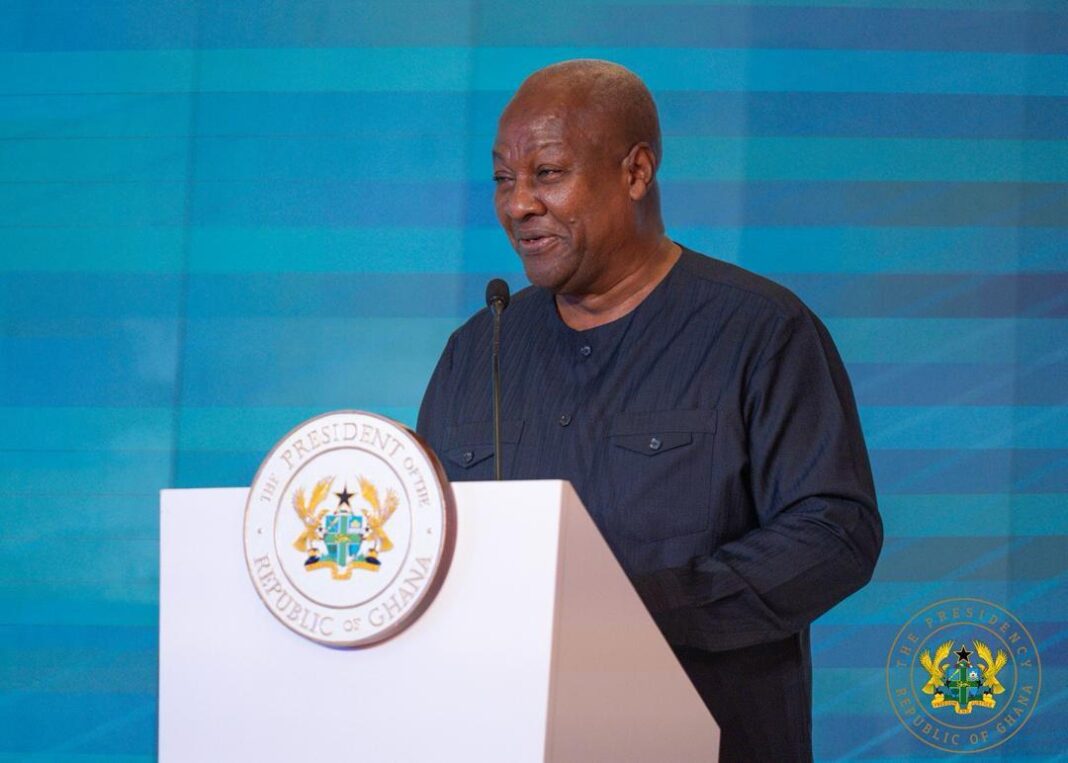

Nana Boakye Challenges Mahama’s Position On Presidential Term Limits And Warns Against Constitutional Loophole
The National Organiser of the New Patriotic Party, Henry Nana Boakye, has intensified the political debate surrounding Ghana’s presidential term limit provisions, accusing President John Dramani Mahama of adopting an unclear position on an ongoing constitutional interpretation matter before the Supreme Court.
Mr Boakye argued that although President Mahama has publicly maintained that he does not intend to seek more than the constitutionally permitted two terms in office, his comments concerning the pending Supreme Court proceedings create uncertainty about the possible interpretation of Ghana’s presidential eligibility rules.

According to the NPP National Organiser, the President’s position appears contradictory because, in his view, it separates personal political intentions from the broader constitutional consequences that may emerge from a Supreme Court decision. He suggested that while President Mahama may personally reject the idea of seeking additional time in office, a judicial interpretation allowing future presidents to contest beyond the commonly understood two term limit could fundamentally alter Ghana’s democratic system.

Speaking on Joy FM’s Top Story programme on Tuesday, July 28, Mr Boakye described the President’s posture as misleading, arguing that the issue before the Supreme Court is not merely about one individual’s political ambition but about protecting the long standing constitutional principle that limits presidential tenure.

“The posturing of President Mahama is very deceptive. President Mahama is trying to say, ‘As for me, I think two terms, two terms. I do not intend to seek. But whoever is going to the Supreme Court, as for that, I do not control the Supreme Court. So whatever interpretation they will put on that, I don’t care,’” Mr Boakye stated.
The controversy revolves around the interpretation of Article 66 of Ghana’s 1992 Constitution, which establishes the duration and limitations of presidential service. Article 66(2) provides that “a person shall not be elected to hold office as President of Ghana for more than two times.”

Mr Boakye maintained that the constitutional provision is straightforward and does not require further judicial clarification. He argued that the wording of the article clearly prevents any individual from occupying the presidency beyond two electoral victories, regardless of whether those victories occur consecutively or after a period outside office.
In his view, the ongoing legal debate represents an unnecessary attempt to create ambiguity around a provision that was deliberately designed by Ghana’s constitutional framers to prevent excessive concentration of political power in one individual.

The NPP executive further suggested that efforts to obtain an alternative interpretation of Article 66 are politically influenced, claiming that any attempt to introduce a distinction between consecutive and non consecutive presidential terms could undermine the democratic safeguards established under the Fourth Republic.

“I am even surprised why we have this debate so popular at this time. There is a sinister motive,” he said, adding that any application seeking what he described as a “twisted, unwholesome and unhealthy interpretation” of Article 66 was politically sponsored.
Mr Boakye rejected arguments that a former president who serves two terms, leaves office, and later returns after a break could still remain constitutionally eligible to contest again. He described such reasoning as unreasonable and dangerous because it could create a system where political leaders repeatedly alternate between occupying and temporarily leaving the presidency.
According to him, such an interpretation would defeat the purpose of presidential term limits by creating a possible pathway for prolonged political dominance by a single person.
He argued that Ghana’s constitutional arrangement was intentionally designed to guarantee political renewal, encourage democratic competition, and prevent the emergence of prolonged personal rule. In his assessment, weakening the restriction contained in Article 66 could damage decades of democratic progress achieved since the adoption of the 1992 Constitution.
The NPP National Organiser warned that any Supreme Court decision that expands presidential eligibility beyond what he considers the clear intention of the Constitution could generate significant political tension and threaten national stability.
“I will be very sad, and Ghana will be thrown into a state of turmoil if any strange interpretation is put on this article,” he cautioned.
The debate over presidential term limits has emerged as one of the most significant constitutional discussions in Ghana’s Fourth Republic, touching on questions of constitutional interpretation, judicial authority, democratic continuity, and the limits of presidential power.
Since the introduction of constitutional governance in 1992, Ghana has maintained a two term presidential system designed to ensure peaceful transfers of power and prevent indefinite political control by individuals or political groups. The principle has become one of the strongest features of Ghana’s democratic reputation within Africa.
Previous political transitions have demonstrated the importance of constitutional restrictions on executive power, with successive presidents completing their permitted terms and handing over authority through competitive elections. The stability of this process has often been highlighted as a major achievement of Ghana’s democratic development.
However, legal debates surrounding constitutional interpretation remain a normal feature of democratic governance, particularly when questions arise about the meaning, application, and limits of constitutional provisions. The Supreme Court, as the final authority on constitutional interpretation, has the responsibility of determining the meaning of constitutional clauses brought before it.
The current debate therefore places significant attention on the judiciary’s role in balancing constitutional interpretation with the broader democratic principles that underpin Ghana’s political system.
While Mr Boakye’s comments reflect the position of the NPP and its concerns about preserving presidential term limits, supporters of alternative interpretations argue that constitutional questions must ultimately be resolved through legal analysis rather than political assumptions.
The eventual position of the Supreme Court is expected to have far reaching consequences for Ghana’s constitutional history because it could define how presidential eligibility is understood for future generations.
As political actors continue to express competing views, the central issue remains whether Ghana’s presidential term limit should be interpreted strictly according to its historical purpose or whether constitutional language permits broader legal interpretation.
The outcome of the debate will likely become one of the most consequential constitutional moments in Ghana’s Fourth Republic, with implications for political competition, presidential succession, and the future direction of democratic governance in the country.

