
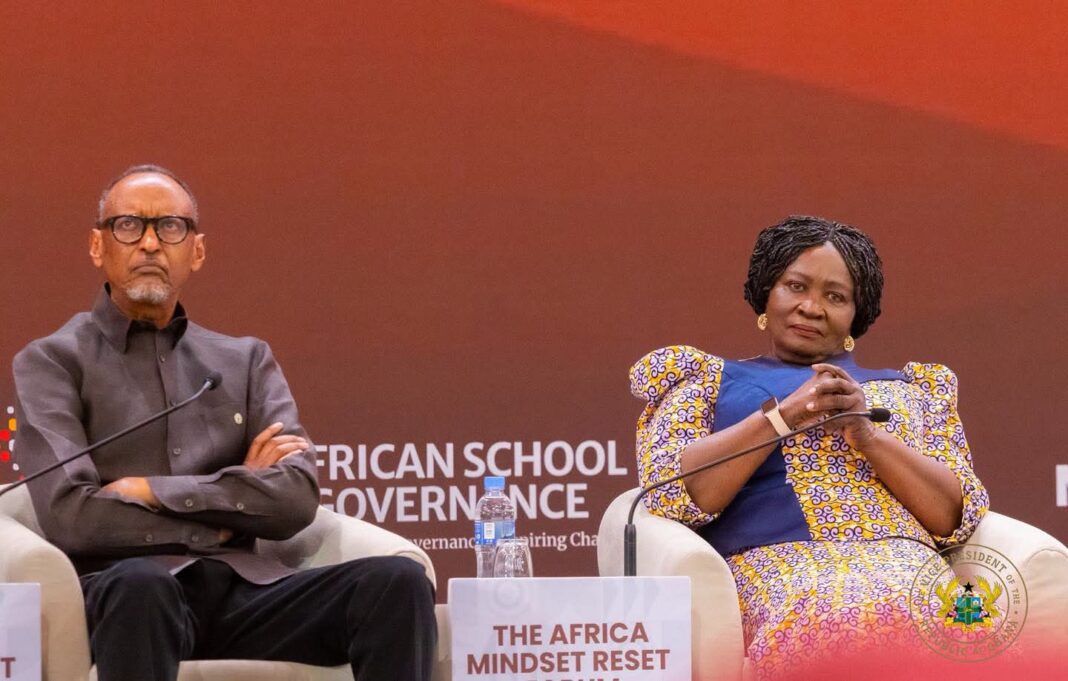

Story by Lawrence Odoom
Vice President Prof. Naana Jane Opoku-Agyemang has made a clarion call for Africa to jettison dependency and assume greater ownership of the continent’s development trajectory, insisting that Africa must transcend the rhetoric of an “Africa we want” to forge “an Africa we work for.”
She made the profound assertion in Kigali, Rwanda, during the African Mindset Reset Forum, where she participated in a high-level deep-dive conversation alongside Rwanda’s President Paul Kagame, former Ethiopian Prime Minister Hailemariam Desalegn and former South African President Thabo Mbeki.

Prof. Opoku-Agyemang contended that the continent’s development conundrums cannot be simplistically attributed to a dearth of policies, blueprints, resources or human potential.

She interrogated who has historically narrated Africa’s story and who has been empowered to delineate what Africans can become, arguing that reclaiming the narrative is pivotal to transformation.

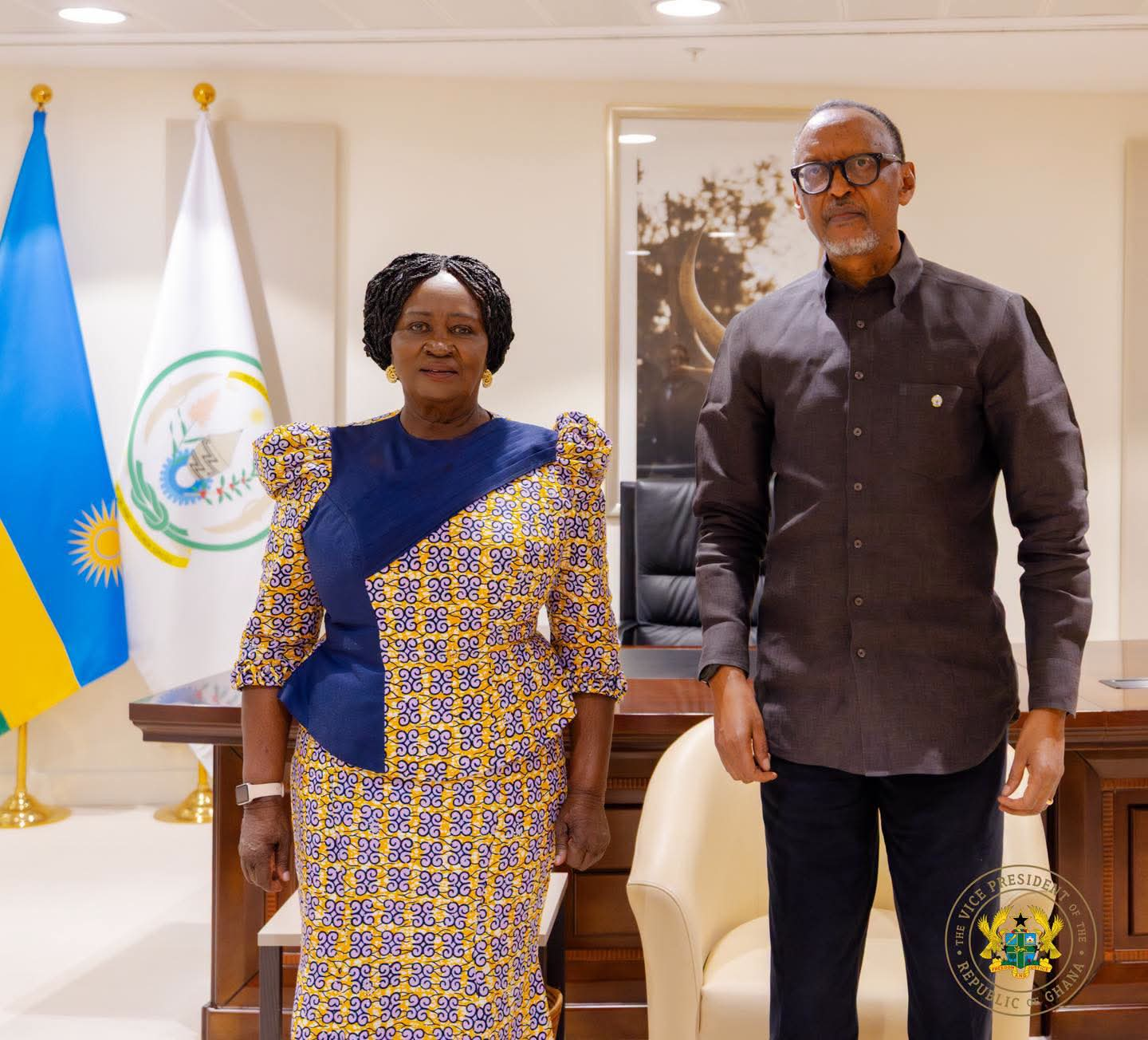 According to the Vice President, taking charge of Africa’s destiny demands a fundamental paradigm shift from overreliance on external actors to unflinching confidence in African expertise, institutions and indigenous capabilities.
She robustly challenged the long-standing argument that Africa lacks the requisite expertise to resolve its developmental challenges, questioning why African nations could not deliberately groom their own youth to become the experts needed to propel transformation.

Prof. Opoku-Agyemang also repudiated the persistent claim that African countries lack the equipment and resources needed for development, urging policymakers to juxtapose the cost of building such capacity with the colossal resources already expended in sustaining external systems.
She anchored her call for self-reliance in the enduring ideals of Pan-Africanism, describing the movement as a historic embodiment of continental solidarity founded on the principle that Africans can coalesce and resolve their own challenges.

She further advocated a comprehensive reimagination of how African education systems and curricula are conceived, asserting that education must equip young Africans not merely with knowledge, but with the confidence, competence and capacity to confront and surmount the continent’s challenges.

The Vice President acknowledged that African countries and institutions were not flawless but maintained that progress must not be jettisoned on account of existing imperfections.

