

The Minority Caucus in Parliament has intensified its challenge against the conviction of Ashanti Regional New Patriotic Party Chairman Bernard Antwi Boasiako, widely known as Chairman Wontumi, signalling that the legal contest surrounding one of Ghana’s most closely watched mining prosecutions is far from concluded. The opposition maintains that the judgment raises profound constitutional, procedural and corporate law questions whose determination could influence the future direction of criminal justice, constitutional adjudication and corporate accountability within Ghana’s legal system.
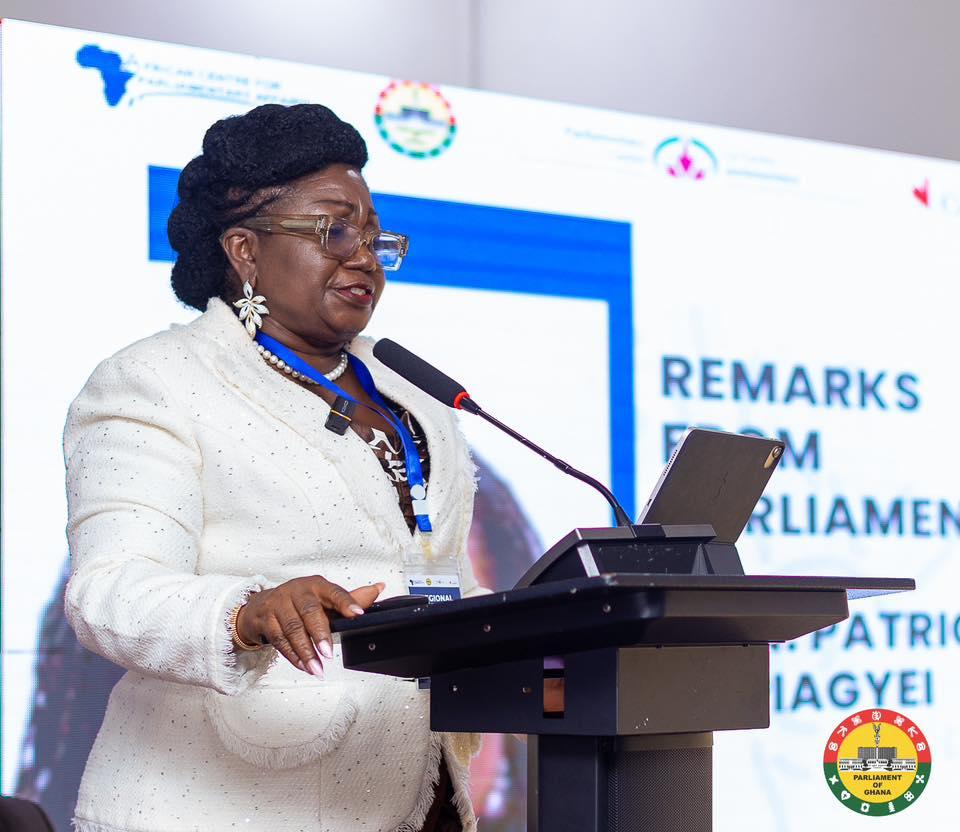
Addressing the media, Deputy Minority Leader Patricia Appiagyei insisted that the proceedings leading to the conviction were fundamentally flawed and argued that several decisions taken by the trial court departed from established legal principles. According to her, the concerns extend well beyond the fate of Chairman Wontumi and instead touch upon constitutional safeguards that every litigant is entitled to enjoy under Ghana’s justice system.

Mrs Appiagyei disclosed that the verdict was pronounced in the absence of Chairman Wontumi’s principal legal representative, notwithstanding the court having been informed beforehand that counsel was engaged in an unavoidable professional assignment outside Ghana. She contended that the circumstances surrounding the delivery of the judgment raise legitimate questions regarding fairness and the opportunity for effective legal representation, particularly in a criminal prosecution carrying significant legal and political implications.

The Deputy Minority Leader also criticised the trial court’s refusal to transmit constitutional issues arising from Section 99 subsection 2 paragraph b of the Minerals and Mining Act to the Supreme Court for authoritative interpretation. She maintained that once substantial constitutional questions emerged during the proceedings, the High Court ought to have deferred to the apex court in accordance with Ghana’s constitutional architecture instead of reaching its own conclusion on the provision.

According to Mrs Appiagyei, the trial judge concluded that the statutory provision was sufficiently explicit and therefore required no constitutional interpretation by the Supreme Court. The Minority, however, contends that such a determination ventured beyond the proper jurisdiction of the High Court and deprived the country’s highest judicial authority of the opportunity to settle an issue with potentially far reaching constitutional consequences.
She further questioned the legal reasoning underpinning the treatment of Akonta Mining Limited and Chairman Wontumi throughout the judgment. Mrs Appiagyei argued that although the court entered separate convictions against both the company and its principal, portions of the judgment effectively regarded them as a single legal personality. She maintained that this approach conflicted with one of the most enduring doctrines of company law, namely that a registered company possesses an independent legal identity distinct from its directors, shareholders and officers except under clearly established legal exceptions.

In her assessment, the court’s reasoning impermissibly disregarded the corporate personality of Akonta Mining Limited while simultaneously imposing separate criminal responsibility upon both the company and Chairman Wontumi. She asserted that the law does not permit the dissolution of the distinction between a corporate entity and an individual merely to facilitate criminal liability where the statutory requirements for lifting the corporate veil have not been satisfied.
The Minority insists that these alleged procedural irregularities, constitutional concerns and questions relating to corporate liability will constitute the central pillars of its appeal. Party officials remain confident that the appellate courts will undertake a comprehensive review of the judgment and determine whether the trial proceedings complied fully with constitutional guarantees, established judicial precedent and settled principles governing corporate criminal responsibility.

The controversy has consequently expanded beyond a single criminal conviction into a broader national conversation regarding judicial discretion, constitutional interpretation and the relationship between companies and the individuals who control them. Legal practitioners are expected to monitor the appellate proceedings closely because any definitive pronouncement from the higher courts could establish important precedents governing the referral of constitutional questions to the Supreme Court, the circumstances under which corporate personality may be disregarded and the procedural protections available to accused persons in complex criminal prosecutions.

The forthcoming appeal is therefore expected to assume significance extending well beyond the immediate interests of Chairman Wontumi and Akonta Mining Limited. Its outcome could shape future judicial practice in mining related prosecutions, reinforce or redefine constitutional boundaries between the High Court and the Supreme Court and clarify the legal threshold for attributing criminal responsibility to both corporations and their controlling officers. For these reasons, the next phase of the litigation is likely to become one of the most consequential appellate proceedings in Ghana’s recent legal history, with implications capable of influencing constitutional jurisprudence, corporate governance and the administration of criminal justice for years to come.

