
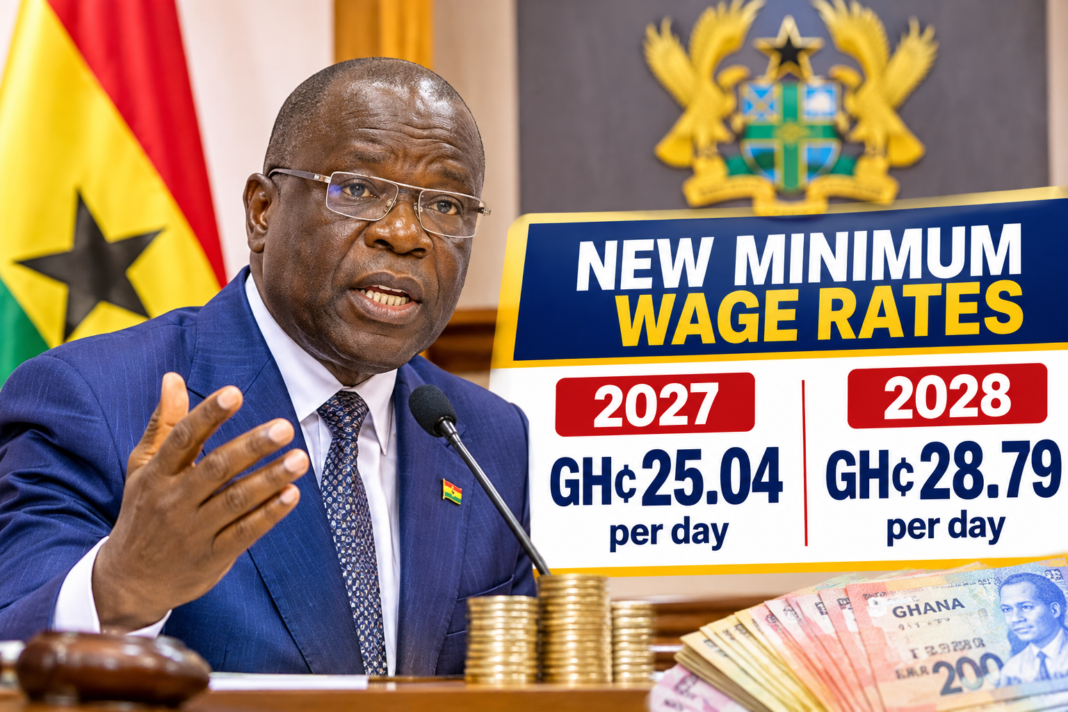

Ghana’s National Daily Minimum Wage will increase to GH¢25.04 in 2027 and GH¢28.79 in 2028 following an agreement reached by the National Tripartite Committee after negotiations involving the government, organised labour and employers.
The new rates, announced on Tuesday, November 10, 2026, represent a two year wage agreement intended to provide greater certainty in the determination of workers’ minimum earnings while helping businesses and public institutions plan their expenditure over the medium term.

Under the agreement, the daily minimum wage will rise to GH¢25.04 from January 1, 2027, before increasing further to GH¢28.79 from January 1, 2028.

The National Tripartite Committee explained that the decision followed extensive consultations and constructive engagements among its constituent partners, with the objective of protecting workers’ incomes, promoting industrial harmony and ensuring greater predictability in wage negotiations.

The adoption of a two year arrangement also marks an important development in Ghana’s minimum wage determination process, as it provides employers and employees with an indication of the applicable statutory wage floor beyond a single financial year.
However, the Committee has maintained some flexibility within the agreement, indicating that it could reconvene to reconsider the approved rates should significant changes occur in key economic indicators.

These include inflation, exchange rate movements and overall economic growth, which could substantially affect the purchasing power of workers and the ability of employers to meet their wage obligations.
The announcement comes against the background of continuing concerns about the cost of living, household expenditure and the capacity of low income earners to meet their daily financial commitments.

Although the adjustment will provide an increase in nominal earnings, its actual impact on workers will ultimately depend on movements in the prices of essential commodities and services.

The agreement is therefore expected to remain an important reference point in discussions about workers’ welfare, business sustainability and the country’s broader economic conditions over the next two years.

