
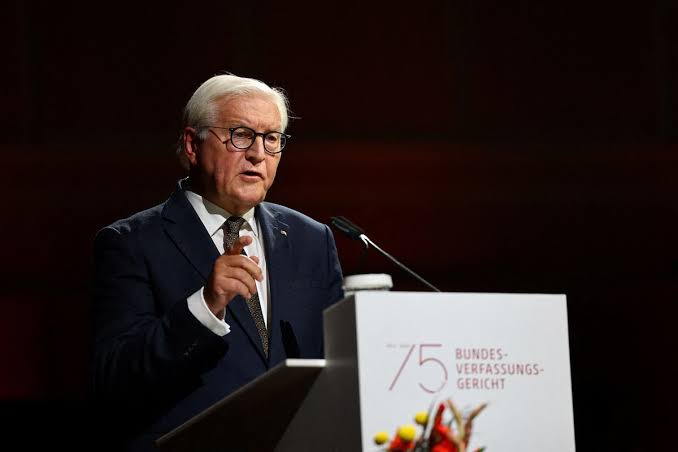

German President Dr Frank Walter Steinmeier has called on African governments to accelerate economic reforms, dismantle obstacles to cross border commerce and expand trade connections to unlock the continent’s vast economic opportunities and deepen commercial relations with Germany.
Addressing participants at the sixth German African Business Summit (GABS 2026) in Accra on Tuesday, November 24, the German leader emphasised the need for African countries to demonstrate sustained commitment to economic transformation by implementing policies that encourage trade, strengthen regional integration and establish additional commercial routes.

He argued that removing restrictions on trade and creating a more enabling economic environment would stimulate growth, improve prosperity and provide a stronger foundation for mutually beneficial cooperation between African nations and Germany.

“Please do not waver in your endeavours to implement necessary reforms and create ways to facilitate trade on your continent and open up new trade routes,” he urged African leaders.

Mr Steinmeier maintained that these interventions were indispensable to expanding economic opportunities and strengthening the commercial relationship between the two regions.
“Both things are essential for greater growth and prosperity, as well as for the expansion of our cooperation in our mutual interests,” he added.

Steinmeier identifies AfCFTA as critical to Africa’s economic integration
The German President singled out the African Continental Free Trade Area (AfCFTA) as a major instrument for advancing regional economic integration, facilitating cross border transactions and establishing a more interconnected African marketplace.

He described the continental trade arrangement as an important development in efforts to dismantle commercial restrictions and expand economic cooperation among African countries.

“The African Union’s African Continental Free Trade Area, the largest of its kind in the world, is indeed a crucial step here. And it gives me reason for optimism,” he observed.
Mr Steinmeier encouraged African governments to pursue the agreement’s implementation with greater determination, arguing that effective integration of national markets would create additional commercial opportunities, stimulate investment and improve the economic prospects of the continent’s growing youthful population.
He stressed that sustained economic expansion was essential to ensuring that young Africans could access better livelihoods, improved employment opportunities and a more promising future.
“The key to this is economic growth, economic growth that gives young people prospects for a better life,” he stated.
German leader challenges businesses to explore African investment opportunities
Mr Steinmeier also highlighted the importance of the German African Business Summit as a platform for establishing commercial relationships, facilitating investment partnerships, generating employment and advancing shared economic prosperity.
He called on German companies to adopt a more proactive approach towards exploring African markets, encouraging business executives to demonstrate greater confidence in the continent’s commercial prospects and take advantage of emerging investment opportunities.
“I would urge the German business sector to make use of the opportunities in the African countries. Be curious, take risks, and invest in our common future,” he appealed.
The German President observed that changing geopolitical circumstances had weakened the traditional predictability of major export destinations, particularly markets in North America and China, creating an incentive for German businesses to diversify their international commercial relationships.
He consequently encouraged German investors to consider Africa as an increasingly important destination for trade, investment and long term business expansion.
According to him, stronger commercial engagement would benefit both German enterprises seeking new markets and African economies pursuing industrial development, employment generation and economic diversification.
Germany Africa trade records 10 per cent growth
Providing an assessment of existing commercial relations, Mr Steinmeier disclosed that trade between Germany and African countries expanded by approximately 10 per cent in 2025, reaching an unprecedented level.
He nevertheless cautioned that the improvement represented only a fraction of the economic opportunities available to both regions, insisting that substantially greater commercial cooperation remained possible.
“However, as all of you also know, there is still much more dormant potential. We are nowhere near where we would be and could be,” he said.
The German leader further reaffirmed his country’s commitment to maintaining dependable commercial relationships with African governments and businesses, describing Germany and its private sector as credible partners in the continent’s development aspirations.
He assured participants that German enterprises were prepared to contribute to Africa’s economic transformation through responsible investment, transparent business practices and sustained commercial engagement.
“I can assure you, Germany and German companies are reliable, strong, and transparent partners on this path, actors who keep their word,” he stated.
Accra hosts sixth German African Business Summit
The sixth edition of the German African Business Summit, which commenced on November 23 and is scheduled to conclude on November 25, 2026, has brought together government representatives, policymakers, corporate executives, investors and industry stakeholders from Germany and various African countries.
The gathering is designed to strengthen economic partnerships, encourage private sector collaboration and identify investment opportunities capable of advancing commercial relations between Germany and African economies.
Key discussions are centred on strategic economic sectors, including energy transition, green hydrogen development, digital transformation, artificial intelligence, automotive manufacturing, mining, trade financing and industrialisation.
The summit also provides an opportunity for participating businesses and governments to examine emerging investment prospects, address obstacles to commercial cooperation and explore practical approaches to expanding trade between the two regions.
Mr Steinmeier’s intervention places particular emphasis on the responsibility of African governments to improve the continent’s business environment while encouraging German companies to translate their interest in Africa into concrete investments and sustainable commercial partnerships.

