
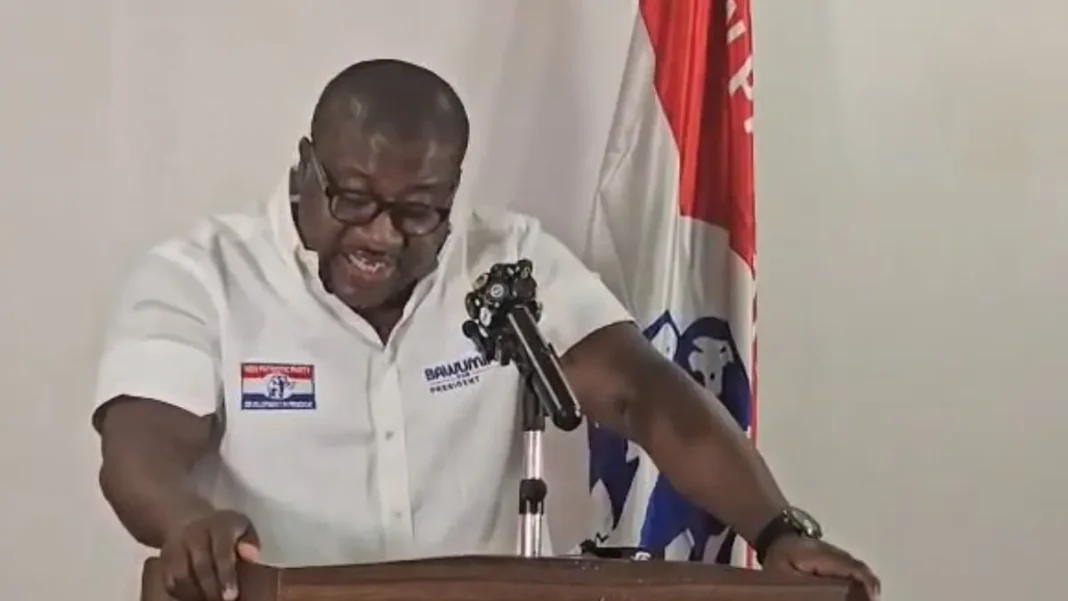

The National Second Vice Chairman of the New Patriotic Party (NPP), Henry Nana Boakye, has called for the immediate removal of the leadership of the Narcotics Control Commission (NACOC) and the Ghana Airports Company Limited (GACL), accusing the institutions of failing to prevent cocaine trafficking through Ghana.
Mr Boakye made the demand following a succession of international narcotics interceptions involving consignments allegedly originating from Ghana, which he believes expose serious weaknesses in the country’s security and drug interdiction arrangements.
He also questioned the operational effectiveness of the Ghana Ports and Harbours Authority (GPHA) and National Security, arguing that institutions entrusted with protecting Ghana’s borders, seaports and airports had failed to prevent international drug trafficking networks from exploiting the country as a transit corridor.

Addressing a press conference organised by the NPP, Mr Boakye insisted that the recurring cocaine trafficking incidents warranted decisive action against officials responsible for the affected institutions. He maintained that the repeated interceptions demonstrated significant shortcomings in the country’s security infrastructure and narcotics enforcement mechanisms.

He specifically demanded the departure of NACOC’s leadership and senior officials of GACL, including its Managing Director and Head of Security.

“The head of the Narcotics Control Commission (NACOC), the leadership there, they must go. Ghana Airports Company Limited, they must go, the leadership there, from the MD to the head of security, they must all leave,” he stated.
His demands follow the recent arrest of a Syrian national at Rafic Hariri International Airport in Beirut, Lebanon, after he allegedly attempted to transport approximately 40 kilogrammes of suspected cocaine from Ghana.

Mr Boakye argued that the continued movement of suspected narcotics through Ghanaian departure points raised troubling questions about the effectiveness of the agencies responsible for monitoring international cargo and passenger movements.
He further accused the Ghana Ports and Harbours Authority and National Security of failing to discharge their responsibilities effectively, alleging that their shortcomings had created opportunities for international drug syndicates to operate through the country.

“The Ghana Port and Harbours Authority and National Security are in charge with keeping cocaine out of our ports, our airports and our country. On their watch, Ghana has become the transit hub for international cartels. Ghana has become a haven. Ghana has become a very favourable zone for drug cartels. For drug barons,” he alleged.

The NPP official also criticised President John Dramani Mahama over what he characterised as an inadequate response to the recurring narcotics trafficking incidents, insisting that the President had failed to take the necessary disciplinary measures against officials whose institutions had come under scrutiny.
According to him, the repeated incidents should have prompted the immediate removal of the relevant institutional heads rather than allowing them to remain in positions of responsibility.
“And the president is not doing anything about it. They have failed. They have failed repeatedly. And they must be sacked,” he added.
His criticism comes amid heightened public concern over several major international cocaine interceptions involving shipments reportedly linked to Ghana.
One of the most significant incidents occurred in September this year when French authorities intercepted approximately 3.9 tonnes of suspected cocaine at the Port of Dunkirk. The consignment, which was reportedly concealed in a shipment of plastic waste originating from Ghana, further intensified scrutiny of the country’s port surveillance, cargo inspection and border security arrangements.
The recurring incidents have renewed calls for stronger institutional oversight, more effective intelligence coordination and greater accountability among agencies mandated to protect Ghana against international narcotics trafficking.

