
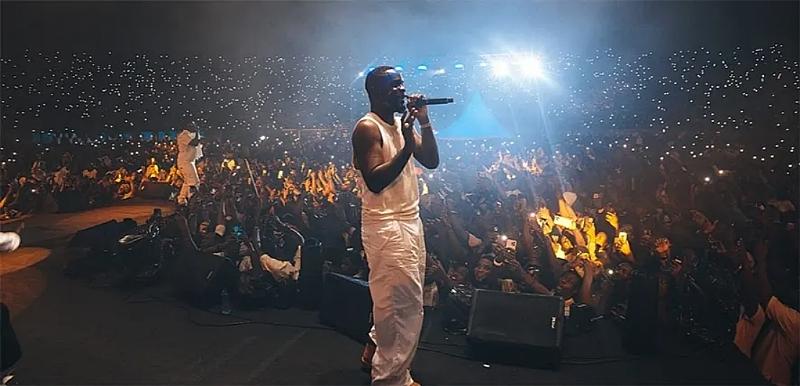

Ghanaian rap superstar Sarkodie has urged the government and private sector to increase investment in the country’s creative economy, arguing that his flagship Rapperholic concert creates business opportunities, generates employment and stimulates economic activity well beyond the entertainment industry.
In a social media post following the second consecutive Kumasi edition of Rapperholic, held at the Baba Yara Sports Stadium on Saturday, October 24, 2026, the award winning musician said the event had the potential to deliver economic benefits across Kumasi, Accra and other parts of Ghana.

According to Sarkodie, the commercial impact of a major concert extends far beyond ticket sales and performers’ earnings. He pointed to the opportunities created for tourism, hotels, transportation operators, food vendors, fashion businesses, media organisations, advertising agencies and other enterprises connected to the creative industry.

“Rapperholic is bigger than a concert!” he declared, explaining that the event’s broader economic value includes visitor expenditure, income for local businesses, temporary employment, payments to suppliers and commercial opportunities that could emerge long after the performances have ended.

He maintained that Ghana could unlock greater economic value from its entertainment industry if the government and private businesses worked together to establish a stronger support system for creative enterprises.
“Let’s invest in our creative economy. The potential goes far beyond the stage,” he added.

Sarkodie’s appeal comes amid growing recognition of the creative arts as a potential source of employment, entrepreneurship, tourism revenue and national economic development. Major entertainment events can generate demand for accommodation, transport, catering, security, event production and other services, creating opportunities for businesses that might otherwise have little direct involvement in music.
However, the rapper did not provide specific financial figures to establish how much Rapperholic contributed to business revenues, employment or tourism during its latest edition.

The 2026 concert attracted a large audience to Kumasi for performances by Sarkodie and several other Ghanaian artistes. The event also honoured the late highlife legend Daddy Lumba and featured gospel singer Bernice Offei, alongside a culturally inspired entrance that combined Asante heritage with hip hop.

The concert marked the second consecutive year that Rapperholic had been staged in the Ashanti Regional capital, extending its reach beyond Accra and strengthening Kumasi’s place on Ghana’s major entertainment calendar.
Beyond the economic significance of the event, Sarkodie also praised his loyal fan community, SarkNation, for its contribution to the concert’s success. He credited supporters with promoting the show both online and on the ground, even before he intensified his own publicity campaign.
In a separate social media message, the rapper expressed appreciation for the dedication shown by his followers, acknowledging that their commitment had helped build momentum around the event.
“Even before I intensified my PR efforts, you guys were already on the ground and online, promoting the hell out of this event!” he wrote.
Sarkodie said the fans had demonstrated that Rapperholic was not merely his personal project but an event in which they also had a meaningful stake. He described their efforts as deeply touching and admitted that he struggled to find the right words to express his gratitude.
“What have I done to deserve the amount of work you put in to make this show happen? I honestly don’t have the words to express how I feel,” he added, before thanking SarkNation for its unwavering support.
Since its introduction in 2012, Rapperholic has developed into one of Ghana’s recognised annual music events, traditionally forming part of Accra’s December entertainment season.
Its continued presence in Kumasi for a second consecutive year represents an expansion of the concert’s geographical reach and highlights the possibility of using major cultural events to stimulate economic activity outside the national capital.
Sarkodie’s call for increased investment therefore places renewed emphasis on the need to view entertainment not only as a source of recreation but also as a commercial sector capable of supporting businesses, creating jobs and attracting visitors.
Whether that potential translates into measurable economic gains will depend on stronger partnerships, reliable investment and systematic efforts to assess the financial impact of major events on host communities and the wider economy.

