

The Bank of Ghana has reported an improvement in consumer and business confidence, with its August 2026 confidence surveys indicating increasingly positive sentiment amid a comparatively stable macroeconomic environment and stronger expectations for economic expansion.
The Central Bank’s latest assessment also points to a marked acceleration in economic activity, as the updated Composite Index of Economic Activity recorded annual growth of 14.9 per cent in July 2026, significantly above the 6.1 per cent registered during the corresponding period of 2025. The Bank attributed the stronger performance to developments across several important components of economic activity, including increased private sector credit, expanding international trade and higher consumption of goods and services.

The improvement in economic momentum comes against a backdrop of substantially lower inflation than a year earlier, although consumer price pressures edged upwards in August. Headline inflation climbed to 5.0 per cent from 4.6 per cent in July 2026, representing a modest increase but remaining considerably below the 11.5 per cent recorded in August 2025.

The latest increase was principally associated with developments in the non food segment of the economy. According to the Bank of Ghana, non food inflation rose to 6.8 per cent in August from 6.1 per cent in July, reflecting, among other factors, the transmission of higher utility tariffs into consumer prices as well as elevated crude oil prices.

Food inflation, however, moved in the opposite direction, easing marginally to 3.0 per cent from 3.1 per cent in July. The Central Bank linked the moderation to improved food supply conditions, providing some relief from price pressures within the food segment.
The Ghana Statistical Service separately reported that services continued to constitute a significant source of inflationary pressure during August, while housing, water, electricity, gas and other fuels represented the largest contributor to the overall inflation rate.

Despite the month to month increase in headline inflation, the Bank of Ghana emphasised that the 5.0 per cent rate remained comfortably below the lower boundary of its medium term inflation target range of 8 per cent plus or minus 2 percentage points. The Central Bank currently places the inflation target at 8.0 per cent with a tolerance range of two percentage points on either side.
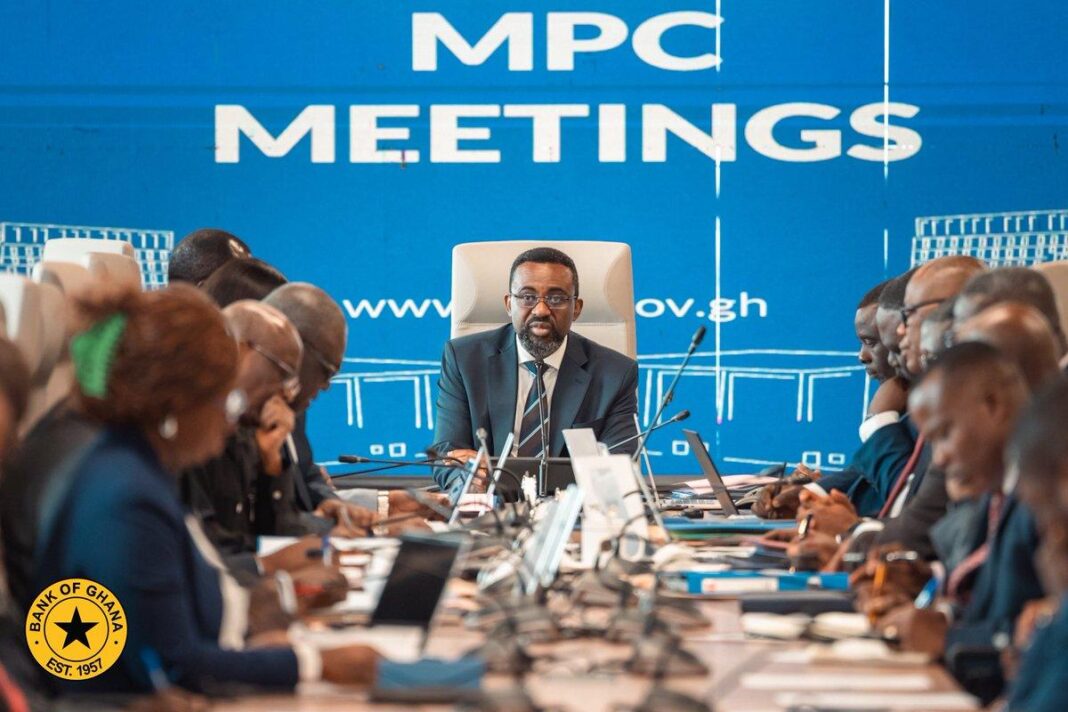
The latest economic assessment was presented around the Bank of Ghana’s 132nd Monetary Policy Committee meeting, at which the Committee maintained the monetary policy rate at 14 per cent for the third consecutive time. The decision was taken against the backdrop of continued improvements in domestic economic conditions alongside renewed external and inflationary risks.

The Central Bank’s September 2026 economic data further indicate that private sector credit has strengthened significantly, while banking sector conditions have remained relatively robust. At the September MPC briefing, Governor Dr Johnson Pandit Asiama said private sector credit growth had rebounded strongly, while the banking sector remained solvent, profitable and liquid.

Taken together, the latest indicators present an economy experiencing stronger real sector activity and improved sentiment, even as policymakers continue to monitor renewed price pressures arising particularly from non food items, utility costs and international energy prices.

