

Ghana posted a substantial merchandise trade surplus of US$4.3 billion during the first quarter of 2026, with robust gold exports emerging as the principal force behind the country’s strong external trade performance, according to the latest figures from the Ghana Statistical Service.
The figures, published in the First Quarter 2026 Trade Newsletter of the Ghana Statistical Service, indicate that Ghana exported merchandise valued at approximately US$10.2 billion between January and March, while imports amounted to about US$5.9 billion. In Ghana cedi terms, total merchandise trade reached GH¢174.6 billion, comprising exports of GH¢110.3 billion and imports of GH¢64.2 billion, thereby producing a surplus of GH¢46.1 billion.

Government Statistician Dr Alhassan Iddrisu explained that the figures meant that for every GH¢100 generated through exports, approximately GH¢58 was subsequently spent on imported goods. He nevertheless urged the public to examine the headline surplus with some caution because the nominal figures were significantly influenced by prevailing commodity prices.

According to Dr Iddrisu, adjusting the figures for price movements produces a markedly different picture of Ghana’s trading position. After the effects of rising prices were removed, the country recorded real exports equivalent to approximately US$2.6 billion, compared with real imports of about US$3.2 billion, indicating that Ghana actually imported a greater volume of goods than it exported during the period.

The disparity between the nominal and real figures consequently demonstrates how strongly international commodity prices influenced Ghana’s trade performance during the opening quarter of the year. Dr Iddrisu specifically pointed to gold as a major source of the increase in export prices, underscoring the extent to which developments in the international bullion market shaped the country’s overall trade position.
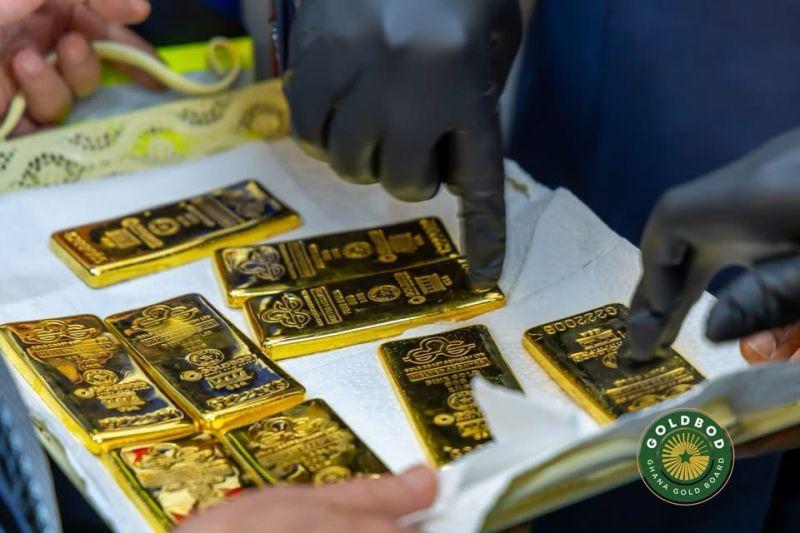
Gold maintained its position as Ghana’s leading export commodity, generating approximately US$5.9 billion in export revenue, equivalent to about GH¢63.7 billion, during the first quarter alone. Cocoa exports also recorded an improvement, although the composition of Ghana’s export earnings continued to demonstrate a heavy dependence on a relatively small number of commodities.

The dominance of gold is particularly significant because subsequent Bank of Ghana figures showed that the commodity remained the principal contributor to Ghana’s export earnings during the first half of 2026. Gold exports generated approximately US$12.5 billion between January and June, accounting for more than two thirds of total export receipts during that period.
The Government Statistician also drew attention to the geographical concentration of Ghana’s export markets. India and Switzerland together accounted for more than one third of Ghana’s merchandise exports, highlighting another area of vulnerability within the country’s external trade structure. Recent reporting based on the GSS figures indicates that the two markets represented approximately 36.8 percent of Ghana’s export earnings during the quarter.

The latest statistics therefore present Ghana with both a favourable headline and an important economic warning. While the US$4.3 billion surplus reflects a considerable excess of export value over import expenditure, the real trade deficit demonstrates that higher international prices, particularly for gold, were responsible for a substantial portion of the improvement rather than a corresponding expansion in the physical volume of goods exported.

The figures consequently strengthen the case for Ghana to broaden its export base, increase domestic processing and develop greater value addition within its commodity sectors. This is especially relevant to the gold industry, where the Ghana Gold Board has introduced a requirement effective September 1, 2026, under which gold doré purchased under approved offtake arrangements must be refined in Ghana before export.
Such measures could allow Ghana to retain a larger share of the economic value generated by its mineral resources while reducing its exposure to fluctuations in international commodity prices. The first quarter trade figures therefore reveal not only the strength of Ghana’s export earnings but also the structural dependence that continues to shape the country’s position in international commerce.

