
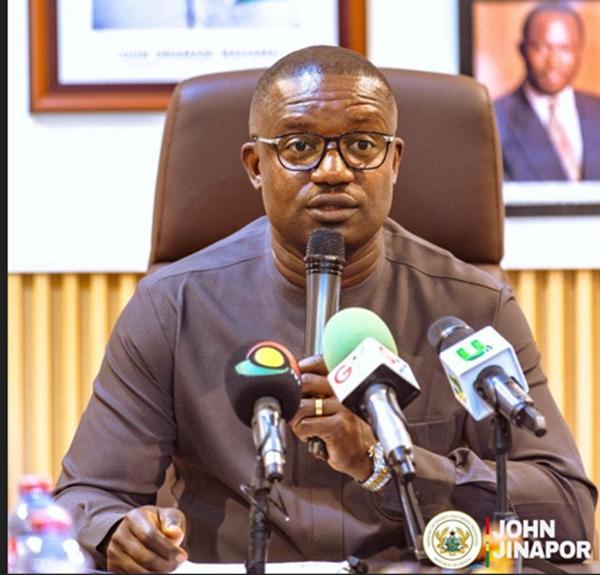

Ghana has realised approximately US$500 million in savings through the increasing substitution of costly liquid fuels with natural gas for thermal electricity generation, Energy and Green Transition Minister Dr John Abdulai Jinapor has disclosed.
Dr Jinapor said the substantial reduction in fuel expenditure had emerged from the government’s broader programme to lower electricity generation costs, strengthen the financial position of the energy sector and improve the reliability of power supply.

The Minister explained that the growing utilisation of natural gas had reduced Ghana’s dependence on imported liquid fuels, particularly crude oil based products that have historically imposed a significant financial burden on the power generation system.

According to Dr Jinapor, the transition has produced considerable foreign exchange savings while simultaneously improving the efficiency of Ghana’s thermal power generation framework. Recent remarks by the Minister indicate that greater access to natural gas, together with increased domestic production, has enabled the country to substantially reduce its requirement for imported fuels.

He said the achievement demonstrated the financial importance of restructuring the country’s energy system around more economical fuel sources, particularly as Ghana seeks to establish a more stable and sustainable electricity market.
Dr Jinapor further indicated that the fuel substitution programme formed part of a wider package of reforms designed to address the longstanding financial difficulties confronting the energy sector. The government has also reported clearing approximately US$1.47 billion in legacy energy sector obligations, while negotiations with Independent Power Producers have generated an additional US$250 million in savings.

The Minister has maintained that the reforms are intended to tackle both the immediate financial pressures affecting the electricity supply chain and the structural weaknesses that have contributed to the accumulation of arrears over the years.
He also pointed to improvements in the Cash Waterfall Mechanism, which has strengthened the distribution of revenues among key participants in the electricity sector and improved payments to Independent Power Producers. According to him, monthly declarations under the mechanism have increased substantially, enabling power producers to receive a far greater proportion of their invoiced amounts and helping to limit the creation of fresh arrears.

Beyond the financial benefits, Dr Jinapor has linked the greater utilisation of natural gas to Ghana’s wider objective of strengthening energy security. Increased domestic gas production, supported by collaboration with petroleum industry partners, has provided additional fuel for thermal power plants while reducing the country’s exposure to international liquid fuel prices and foreign exchange pressures.

The government’s strategy nevertheless extends beyond natural gas. Dr Jinapor has repeatedly stressed the importance of developing a diversified energy portfolio that combines thermal generation with renewable sources and, over the longer term, nuclear power. Such diversification, he argues, will be essential for meeting rising electricity demand while supporting industrialisation and maintaining a resilient national power system.
The Minister has also emphasised that technological advancement, infrastructure investment and financial restructuring must progress together if Ghana is to achieve a competitive and dependable electricity sector.
With industrial activity expected to expand and electricity demand likely to increase, the government intends to sustain efforts aimed at reducing the cost of generation while improving the reliability of electricity delivered to households and businesses.
The reported US$500 million saving therefore represents not merely a reduction in fuel expenditure, but a significant component of the government’s broader attempt to restore financial discipline, strengthen energy security and establish a more sustainable foundation for Ghana’s electricity sector.

