
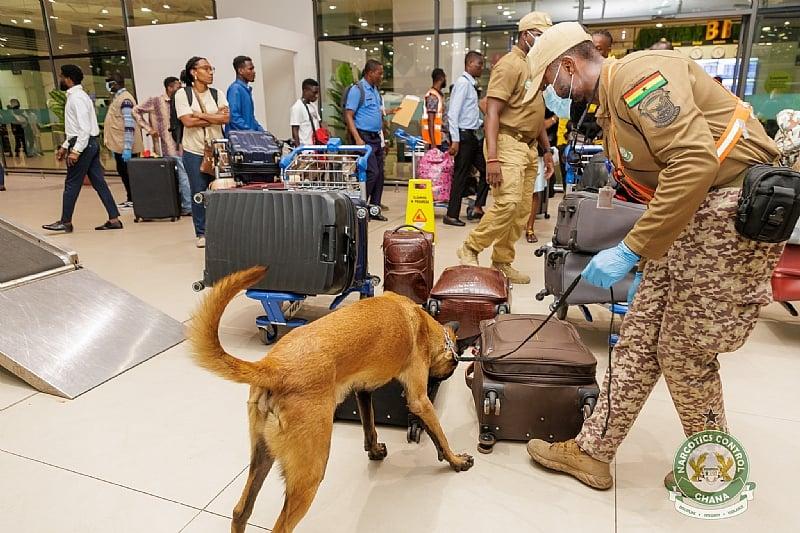

The Narcotics Control Commission has intercepted approximately 150 kilogrammes of a substance suspected to be cocaine at the Accra International Airport, in an operation that has resulted in the arrest of a delivery driver who is now assisting investigators with efforts to unravel the circumstances surrounding the consignment.
The interception, which occurred on Tuesday, August 18, forms part of intensified efforts by NACOC and other security agencies to prevent Ghana from being exploited as a transit route for the movement of prohibited narcotic substances.

According to reports, the suspected cocaine was intercepted at the airport while a courier delivery operation was underway. The driver linked to the consignment has been taken into custody as investigators seek to determine how the package arrived at the airport and identify other individuals who may have been involved in the suspected trafficking operation.

Investigative journalist Manasseh Awuni Azure reported that the suspect is believed to be connected to individuals higher up within a possible drug trafficking network. Investigators are therefore expected to examine the suspect’s links and communications as they work to establish the wider structure behind the consignment.

Although the substance has been described as suspected cocaine, its precise composition remains subject to the necessary scientific examination and investigative verification. Authorities are expected to conduct the requisite testing before the substance can be conclusively identified.
The seizure represents another significant intervention by NACOC in Ghana’s continuing campaign against illicit drug trafficking. The Commission has intensified intelligence driven operations in recent months, including major seizures and arrests involving suspected international trafficking networks. In June, NACOC announced the arrest of an alleged kingpin and two accomplices connected to a 320 kilogramme methamphetamine trafficking operation linked to Australia.

The latest interception at the Accra International Airport consequently adds to growing enforcement efforts aimed at preventing the country’s airports and other transport corridors from being used to facilitate international narcotics trafficking.
Investigators are expected to continue questioning the arrested driver while tracing the origin, intended destination and ownership of the consignment. Further arrests could also follow if investigators establish the identities of other persons connected to the suspected trafficking operation.

NACOC is expected to provide additional information as the investigation advances and as the scientific examination of the seized substance establishes its exact composition.


