

The Inter Ministerial Coordinating Committee on Decentralisation Secretariat has rejected claims made by its former Executive Secretary, Dennis Miracles Aboagye, regarding the circumstances surrounding investigations into alleged financial irregularities at the institution, insisting that his public comments were inaccurate, misleading, and unsupported by the findings of an official forensic audit.
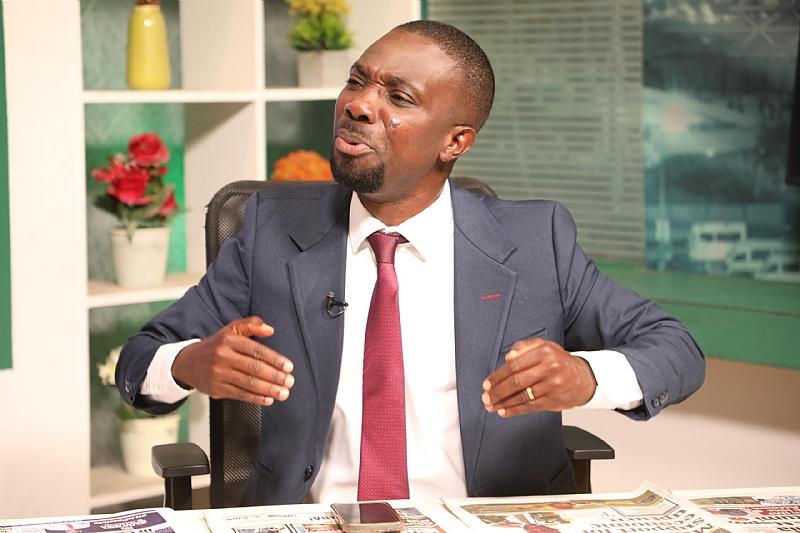
The response from the Secretariat follows comments made by Mr Aboagye during an interview on Asempa FM’s Ekosiisen programme on July 21, 2026, where he disputed reports linking his arrest by the Economic and Organised Crime Office to alleged financial irregularities amounting to GH¢55 million. He argued that the figures being circulated publicly did not accurately reflect the issues raised by investigators during his questioning.

According to Mr Aboagye, investigators focused on transactions involving approximately GH¢9 million, an additional GH¢5,000 payment, and a procurement-related matter valued at GH¢5.2 million, rather than the GH¢55 million figure widely reported in the media. He suggested that the public narrative surrounding his arrest had created an exaggerated impression of the allegations against him.

However, in a detailed statement issued on Monday, July 27, 2026, the IMCC Secretariat strongly challenged that account, stating that his comments failed to properly represent the circumstances surrounding a forensic audit conducted into the operations and financial activities of the institution.

The Secretariat explained that the IMCC is a legally established public institution created under Section 207 subsection three of the Local Governance Act, 2016, Act 936, and operates within the framework of Ghana’s public accountability system. It stated that the institution is governed by key financial and administrative laws, including the Public Financial Management Act and the Public Procurement Act, which establish strict requirements for the management of public resources.
According to the Secretariat, the forensic audit conducted in 2025 identified several financial irregularities for which Dennis Miracles Aboagye and the institution’s Accountant were found jointly and personally responsible. The audit findings, it said, pointed to instances where the two officials allegedly authorized, facilitated, or participated in transactions that did not comply with established public financial management regulations.

The Secretariat emphasized that Mr Aboagye was given an opportunity to respond to the audit observations before the final report was completed. It explained that after considering his responses, the completed forensic audit report was submitted to the Economic and Organised Crime Office for further investigation and any necessary legal action.
While acknowledging that it does not have full details of EOCO’s ongoing investigations, the Secretariat stated that it understands the forensic audit forms part of a wider inquiry into activities at the institution. It pledged to continue cooperating with investigators by providing all relevant documents, records, and information required to support the investigation process.

The Secretariat also rejected allegations attributed to Mr Aboagye that the current Executive Secretary instructed him to stop making public comments on government issues or suggested that the governing National Democratic Congress administration had directed officials to search for wrongdoing against him.

It described those claims as false and insisted that no such instruction, conversation, or political directive ever occurred between the former Executive Secretary and the current leadership of the institution.
Instead, the Secretariat presented a different account, alleging that on July 18, 2025, Mr Aboagye, through one of his legal representatives and a mutual acquaintance, sought a meeting with the current Executive Secretary at the office of his lawyer. According to the Secretariat, the purpose of the meeting was to request amendments to sections of the forensic audit report.
The Secretariat alleged that Mr Aboagye sought the removal of certain audit findings, including issues relating to two bank accounts, one of which reportedly recorded transactions amounting to GH¢102,256,802.69 but was allegedly not included in the official handing over documentation prepared during the transition process.
It further claimed that the former Executive Secretary requested the removal of findings connected to PNY Investment Limited, BMABA Enterprise, and GAPTE. However, the Secretariat stated that the Executive Secretary declined to interfere with the audit process and refused to alter the findings contained in the official report.
The institution also dismissed suggestions that the audit was politically motivated or designed as retaliation against Mr Aboagye over previous employment related matters. It described such allegations as unfounded and misleading, arguing that audits are standard governance mechanisms used to improve institutional efficiency, strengthen financial controls, and promote transparency within public organizations.
The Secretariat explained that administrative, financial, and operational audits are regularly conducted across public institutions to identify weaknesses, improve systems, and ensure responsible management of state resources. It stressed that such exercises should not be interpreted as persecution or personal attacks against former public officials.
The IMCC Secretariat further provided context on institutional reforms that followed the passage of the Local Governance Act, 2016. It explained that staff members of the Secretariat were integrated into the Office of the President and the Civil Service as part of broader efforts to strengthen Ghana’s decentralisation framework and improve coordination among government institutions.
According to the Secretariat, the integration process was completed by the end of 2025, after which the institution began receiving budgetary allocations through the Office of the President while operating within the restructured public service framework.
The controversy surrounding the forensic audit and subsequent EOCO investigation has placed renewed attention on public sector accountability, financial management, and the responsibility of public officers entrusted with state resources. The matter also highlights the growing role of investigative institutions in examining allegations of financial misconduct within government agencies.
Public financial experts have consistently emphasized that transparent audit systems and independent investigations are essential tools for protecting public funds and maintaining confidence in state institutions. They argue that accountability mechanisms must be allowed to function without political interference while ensuring that individuals accused of wrongdoing receive due process and a fair opportunity to defend themselves.
The IMCC Secretariat has reaffirmed its commitment to transparency, professionalism, and institutional accountability, stating that it will not be distracted by what it described as attempts to undermine the credibility of its operations. It maintained that the focus should remain on protecting public resources and strengthening governance standards within Ghana’s decentralisation system.
The Secretariat has also appealed to Dennis Miracles Aboagye and relevant authorities to assist in retrieving official documents, including previous handing over notes referenced during his media interview, which it said are currently unavailable to the institution.
As EOCO continues its investigations, the dispute between the former Executive Secretary and the IMCC Secretariat is expected to remain under public scrutiny. The outcome of the inquiry could have wider implications for public sector accountability, the enforcement of financial regulations, and the management of state institutions in Ghana.

