
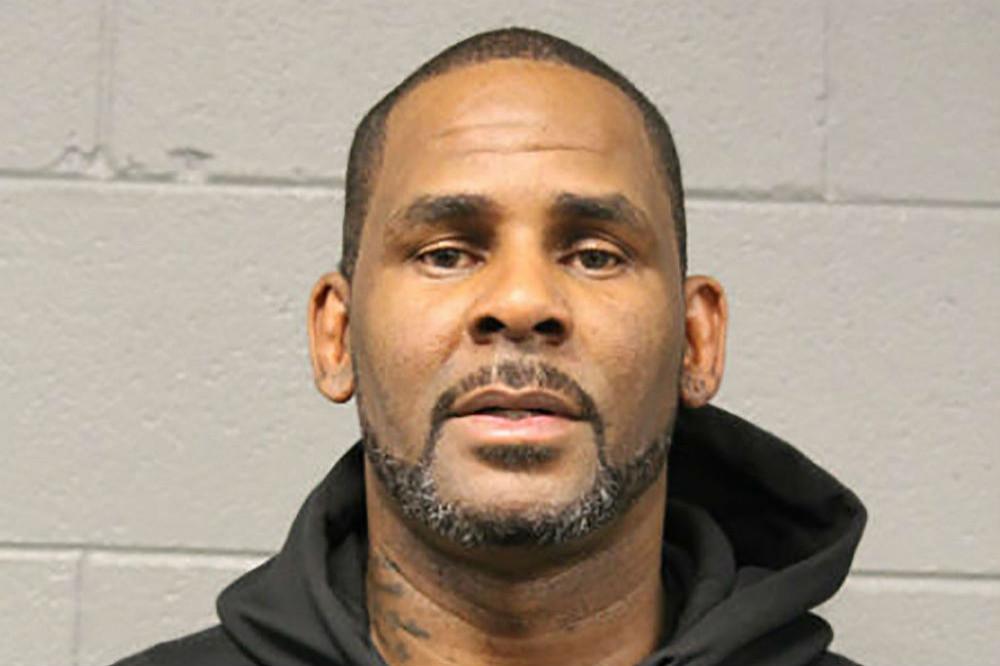

Robert Sylvester Kelly, the former rhythm and blues superstar widely known as R. Kelly, has formally petitioned United States President Donald Trump for executive clemency in an effort to reduce his lengthy federal prison sentence, marking the latest chapter in one of the most consequential criminal cases involving a globally renowned entertainer in modern American history.
Court documents released this week by the Office of the Pardon Attorney and first reported by The Guardian reveal that Kelly’s application for executive relief is currently under consideration. Rather than requesting a complete presidential pardon that would erase his convictions, the imprisoned singer is seeking a commutation of his sentence, a constitutional power that allows the President to reduce or modify a prison term while leaving the underlying convictions intact.

The application represents Kelly’s most significant legal effort outside the traditional appeals process since his convictions on multiple federal criminal charges brought an abrupt end to a career that once placed him among the most commercially successful recording artists in the world. If granted, a commutation would shorten the amount of time he is required to remain incarcerated, although it would not overturn the jury verdicts or restore his legal standing.

Kelly, whose birth name is Robert Sylvester Kelly, was convicted in 2021 following a landmark federal racketeering trial in New York. Prosecutors successfully argued that he operated a long running criminal enterprise that systematically recruited women and underage girls for sexual exploitation while using his celebrity status, wealth and professional network to facilitate and conceal criminal conduct over several decades. The evidence presented during the trial included allegations involving coercion, exploitation and the production of child sexual abuse material. Following his conviction, the federal court imposed a prison sentence of thirty years.

His legal troubles deepened the following year when he was convicted in a separate federal prosecution in Chicago. In that case, jurors found him guilty on three counts relating to child sexual abuse images together with three additional counts involving the enticement of minors. Although the court imposed another twenty year prison sentence, nearly the entire term was ordered to run concurrently with his earlier punishment, resulting in an aggregate sentence of thirty one years behind bars.
Now fifty nine years old, Kelly is serving his sentence at a federal correctional institution in North Carolina. According to official prison records, his projected release date is January 2046 unless his sentence is modified through judicial action or executive intervention.

The clemency application reflects a broader legal strategy pursued by Kelly’s defence team, which has spent more than a year appealing directly to President Trump for executive relief. His attorney, Beau Brindley, has repeatedly argued that extraordinary intervention is warranted, maintaining that his client faces serious dangers while incarcerated and deserves reconsideration of his sentence.
In 2025, Brindley submitted an emergency motion requesting Kelly’s transfer from prison to home detention. The filing alleged that correctional officials had participated in a conspiracy involving a terminally ill inmate who was supposedly promised an early release in exchange for carrying out an attack that would endanger Kelly’s life. The allegations attracted significant public attention because of their extraordinary nature and the serious implications they carried for the federal prison system.

At the time, Brindley declared that public scrutiny represented the greatest protection available to his client while he remained in custody. He asserted that only continued attention from the courts, the media and President Trump could prevent what he described as corruption that endangered Kelly’s safety inside prison. Despite those claims, the federal court ultimately rejected the emergency request, allowing Kelly to remain at his designated correctional facility.

Throughout the legal proceedings that culminated in his convictions, Kelly has consistently rejected the allegations against him and has maintained his innocence. His legal team has continued to challenge aspects of the prosecutions through the appellate process while simultaneously seeking executive intervention as an alternative avenue for relief.
The case remains historically significant because it reshaped the legal and cultural landscape surrounding accountability for powerful public figures accused of sexual abuse. Kelly’s convictions followed years of allegations that had circulated publicly but failed to result in meaningful legal consequences until renewed investigations, extensive witness testimony and heightened public awareness transformed the pursuit of justice. The prosecutions became emblematic of a broader shift within the American criminal justice system toward holding influential individuals accountable regardless of wealth, celebrity or social standing.
The request now before the Office of the Pardon Attorney illustrates the final constitutional mechanism available to many federal prisoners after conventional legal remedies have largely been exhausted. Under the United States Constitution, the President possesses broad authority to grant pardons and commute federal sentences. While recommendations from the Office of the Pardon Attorney are considered during the review process, the ultimate decision rests solely with the President.
Kelly’s application therefore enters a highly discretionary process in which legal arguments, humanitarian considerations, public interest and presidential judgment may all influence the outcome. Until a decision is announced, the convicted entertainer will remain in federal custody while his request for a reduction of his sentence continues to undergo official review.

