
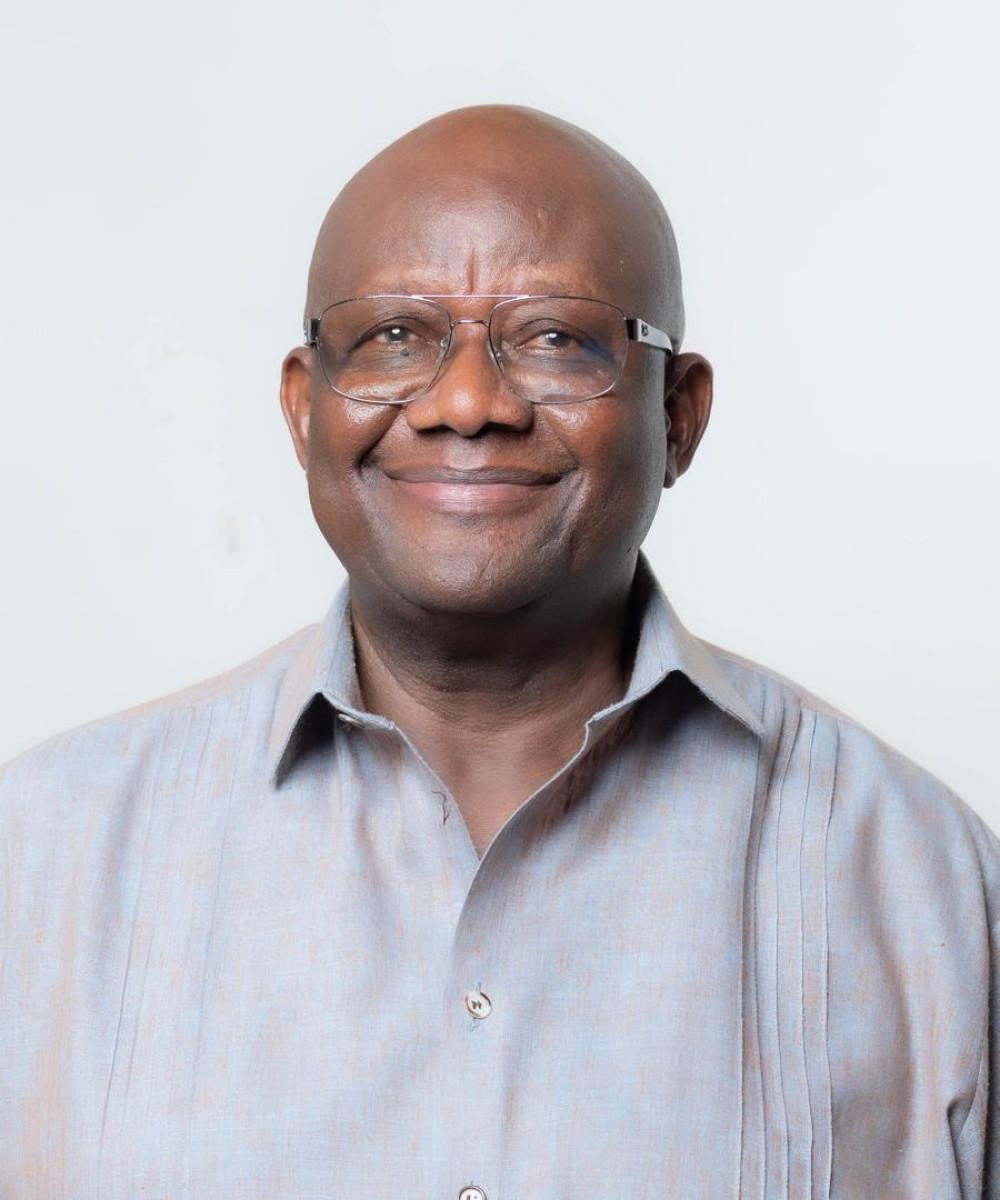

Former National Chairman of the New Patriotic Party, Paul Awentami Afoko, has formally declared his intention to reclaim the party’s highest administrative office, unveiling an ambitious campaign centred on reconciliation, organisational renewal and electoral recovery as the NPP seeks to rebuild following its defeat in the 2024 general election.
The announcement marks one of the most significant political developments within the opposition party ahead of its internal elections and signals the return of one of the most controversial yet influential figures in the NPP’s modern history. More than a decade after his suspension from office during one of the party’s deepest internal crises, Mr Afoko is positioning himself as a unifying figure capable of restoring cohesion, strengthening grassroots structures and preparing the party for a return to power.

Addressing a press conference in Accra on Tuesday, July 14, Mr Afoko confirmed that he would officially submit his nomination once the party opens the electoral process in accordance with its constitutional timetable. He stated that his decision was guided by humility, conviction and faith, expressing confidence that the New Patriotic Party possesses both the experience and resilience necessary to recover from its electoral setback.

He further invited party executives, delegates, members and supporters to participate in the formal inauguration of his campaign after nominations officially commence while invoking divine guidance for the party, its 2028 presidential candidate Dr Mahamudu Bawumia, its national executives, elders and the wider membership.

In a message aimed at redirecting the party’s internal discourse, Mr Afoko argued that the NPP’s defeat in the 2024 presidential and parliamentary elections cannot be attributed to any single individual. Instead, he maintained that the outcome reflected a combination of structural, political and economic circumstances that collectively weakened the party’s electoral fortunes.
According to him, the immediate responsibility confronting the NPP is not the pursuit of blame but the reconstruction of a stronger political organisation capable of reconnecting with the Ghanaian electorate.

He identified several factors that he believes contributed to the party’s electoral loss, including organisational deficiencies, communication shortcomings, prevailing economic challenges, parliamentary dynamics, weakening grassroots morale, declining public confidence and the broader national political atmosphere. Collectively, he argued, these issues undermined the party’s ability to effectively mobilise support across the country.
Mr Afoko emphasised that no presidential candidate, regardless of personal popularity or political experience, can secure national victory without the backing of a united organisation, disciplined leadership structures, motivated grassroots activists and an effective constituency based electoral strategy.

His remarks appeared to reinforce a broader argument that political parties achieve electoral success not solely through the appeal of their presidential candidates but through the strength, coordination and efficiency of their organisational machinery from the polling station level to the national executive.

Central to Mr Afoko’s campaign is what he described as the Three Rs Agenda, an organisational blueprint built around the principles of Reuniting the Party, Rebuilding Its Structures and Recapturing Political Power. He pledged to strengthen every level of the party’s organisational framework beginning with polling station executives and constituency branches before extending reforms to regional and national structures.
He also committed himself to improving grassroots mobilisation, ensuring that party resources are distributed more effectively across the country and rebuilding local organisational capacity to prepare the NPP for future electoral contests.
Beyond organisational restructuring, Mr Afoko promised to spearhead efforts to recover parliamentary constituencies lost during the 2024 elections while consolidating the party’s traditional electoral strongholds. He argued that strengthening parliamentary representation would be essential to rebuilding public confidence and positioning the NPP as a credible alternative government.
A significant aspect of his address focused on reconciliation. Extending an olive branch to dissatisfied members, Mr Afoko appealed to party supporters who feel marginalised, neglected or alienated to return and actively participate in rebuilding the organisation.
He stressed that the NPP cannot maximise its electoral potential while loyal members remain disengaged or excluded from the party’s activities, insisting that unity must become the foundation upon which future political success is constructed.
Mr Afoko further urged contestants in the party’s forthcoming internal elections to conduct their campaigns in a spirit of mutual respect and healthy competition without engaging in personal attacks or actions capable of deepening internal divisions. Referring to the historic Danquah Busia political tradition, he called for tolerance, discipline and democratic engagement as essential values that should continue to define the New Patriotic Party.
His return to frontline politics carries considerable historical significance because it represents the possible re emergence of a political figure whose tenure as National Chairman remains one of the most debated chapters in the party’s history.
Elected National Chairman in 2014, Mr Afoko’s leadership became the subject of intense internal disputes that culminated in his indefinite suspension in 2015. At the time, some party leaders and members accused him of actions they believed undermined the electoral prospects of the NPP and its then presidential candidate ahead of the landmark 2016 general election. His removal exposed deep divisions within the party and marked one of the most turbulent periods in its organisational history.
Reflecting upon that period, Mr Afoko defended his record in office, pointing to reforms initiated during his tenure, including the establishment of constituency bank accounts and the successful organisation of parliamentary primaries. He argued that those initiatives demonstrated the value of disciplined leadership and effective organisational planning, expressing confidence that similar reforms could once again strengthen the party if given another opportunity to serve.
His campaign also reflects broader strategic debates currently unfolding within the New Patriotic Party regarding its future direction after losing power. Political analysts have observed that the outcome of the party’s internal elections will significantly influence its organisational stability, policy orientation and electoral preparedness ahead of the 2028 general elections.
As the principal opposition party, the NPP faces the dual responsibility of rebuilding its internal structures while simultaneously providing effective parliamentary scrutiny and presenting itself as a credible governing alternative. The selection of a National Chairman will therefore play a decisive role in shaping the party’s organisational discipline, fundraising capacity, grassroots mobilisation and national political messaging over the coming years.
Concluding his address, Mr Afoko maintained that the path back to government will not be secured through political entitlement or nostalgia for past achievements. Rather, he argued, electoral victory will depend upon humility, hard work, disciplined organisation, credible policy alternatives and an unwavering commitment to national development.
His declaration therefore marks more than the launch of an individual campaign. It opens what is expected to become one of the most closely watched leadership contests in the New Patriotic Party’s recent history, with implications not only for the future of the party but also for the evolving landscape of Ghana’s democratic politics as the country gradually turns its attention toward the 2028 general elections.

