

The proposed reintroduction of tribunal courts in Ghana has triggered a major political and constitutional debate after the Minority in Parliament rejected the move, warning that the system could be abused as a tool for political persecution and the targeting of opponents.
The opposition caucus argues that Ghana’s existing judicial structure under the Fourth Republic already provides a comprehensive framework for administering justice and should be strengthened rather than supplemented with additional judicial bodies.

The Minority’s opposition comes during parliamentary consideration of the Tribunals Bill, 2026, which seeks to establish regional tribunals as part of broader reforms aimed at improving access to justice and expanding the country’s judicial capacity.

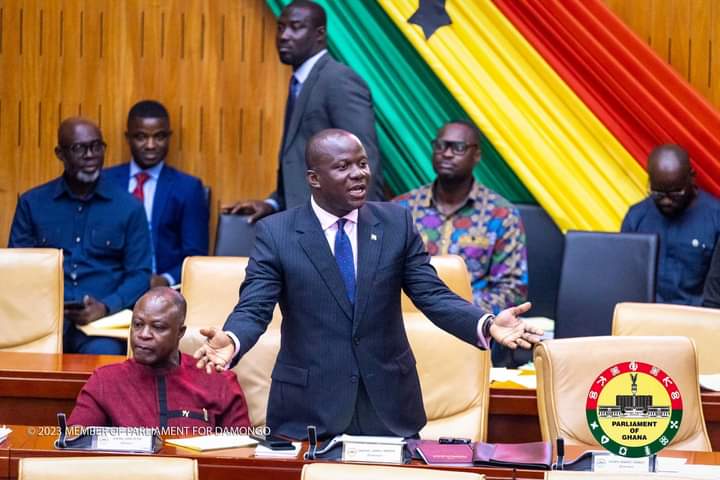
Contributing to the debate, Member of Parliament for Damongo, Samuel Jinapor, questioned the necessity of creating new courts when existing institutions, including District Magistrate Courts, Circuit Courts, High Courts, the Court of Appeal, and the Supreme Court, continue to face challenges that require investment and reform.

Mr Jinapor argued that the government’s priority should be improving the capacity of the current judicial system through increased funding, infrastructure development, and human resource expansion rather than establishing new judicial structures.
“Why additional courts? Mr Speaker, with the greatest of respect, why do we like to create new institutions every now and then? We have High Courts; why have Regional Tribunals?” he questioned.

The Damongo legislator maintained that Ghana’s justice system would benefit more from the construction of additional court complexes, the appointment of more judges, and the recruitment of judicial officers and administrative staff to reduce delays and improve efficiency.
He pointed to previous investments in judicial infrastructure, arguing that expanding existing institutions would provide a more sustainable solution to challenges facing justice delivery.

“Build more court complexes, recruit more judges, recruit more judicial staff, and if you want a jury system, let’s have a jury system,” he stated.

However, Mr Jinapor’s strongest objection centred on concerns about the possible politicisation of tribunal courts. He cautioned that newly created judicial bodies could become vulnerable to government influence and could be used to reward political allies or target individuals perceived as opponents of those in power.
“I don’t want to believe this is ‘jobs for the boys.’ I don’t want to believe that we want to recruit some lawyers from certain quarters and make them chairpersons of regional tribunals, get two people to become members of regional tribunals and have jobs,” he said.
The Minority MP argued that Ghana’s constitutional democracy has already established an independent judiciary capable of handling legal disputes and criminal matters, warning that the return of regional tribunals could revive memories of previous periods when special courts were associated with political tension and public controversy.
He insisted that Ghana should continue relying on the existing hierarchy of courts rather than creating parallel judicial institutions.
“Let’s have the existing court system. Let’s have the District Magistrate Court, the Circuit Court, the High Court, the Court of Appeal, the Supreme Court. That is the judicial system in all civilized, developed countries in the world. We do not want regional tribunals. They bring about bad memories,” he said.
The Minority’s concerns are rooted in Ghana’s historical experience with tribunal systems, particularly during the early years of the Fourth Republic when special tribunals operated under constitutional arrangements that attracted criticism from sections of society over questions concerning judicial independence and fairness.
Supporters of the proposed legislation, however, argue that modern tribunals would operate within constitutional safeguards and would not replicate the controversies associated with earlier systems.
Attorney General and Minister for Justice Dr Dominic Ayine has defended the proposed legislation, explaining that the reintroduction of tribunals is intended to expand access to justice and bring judicial services closer to ordinary citizens.
According to Dr Ayine, the initiative is designed to address limitations within the current court system, particularly delays caused by increasing caseloads and limited judicial capacity.
He assured Parliament that any potential abuses associated with tribunal operations would be prevented through clear legal procedures and strict adherence to constitutional requirements.
The Attorney General emphasised that the proposed tribunals would not operate outside Ghana’s constitutional framework but would instead serve as additional mechanisms to improve the efficiency of justice delivery.
The debate over tribunal courts has therefore developed into a wider national discussion about judicial reform, institutional expansion, and the balance between improving access to justice and protecting the independence of legal institutions.
At the centre of the controversy is a fundamental question facing Ghana’s democracy: whether creating new judicial structures will strengthen justice delivery or create new opportunities for political interference.
As Parliament continues consideration of the Tribunals Bill, 2026, the outcome of the debate could have lasting implications for Ghana’s judicial architecture, public confidence in the justice system, and the relationship between political power and the administration of law.

