
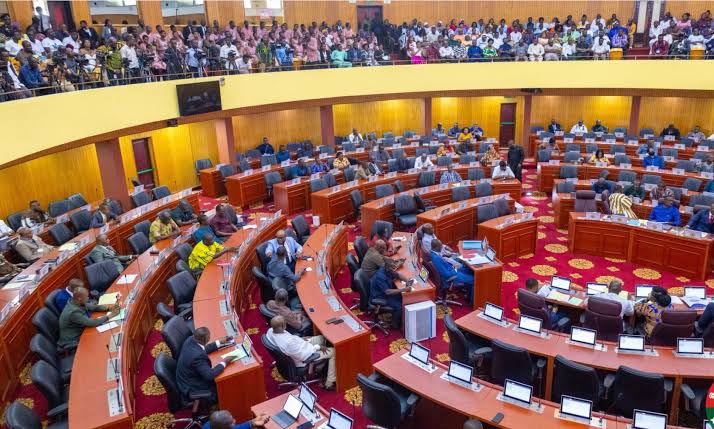

Ghana’s constitutional reform debate has entered a decisive stage after the Council of State advised Parliament against approving a proposed amendment that seeks to remove restrictions preventing dual citizens from occupying certain public offices.
The advisory opinion, presented to Parliament by Speaker Alban Bagbin, introduces a significant development in the long running national conversation over citizenship, public service eligibility and equal participation in Ghana’s governance system.

The proposed legislation, officially titled the Constitution of the Republic of Ghana Amendment Bill, 2025, seeks to alter constitutional provisions that currently restrict Ghanaian citizens who hold citizenship of another country from occupying specific state positions.

The bill, commonly referred to as the dual citizenship amendment bill, was designed to remove these limitations and allow qualified Ghanaians with dual nationality status to contest or serve in certain public offices that are currently constitutionally restricted.

However, after reviewing the proposed amendment, the Council of State has recommended that Parliament should not proceed with its passage.
Speaker Alban Bagbin informed Members of Parliament on Tuesday, July 7, that the Council had completed its constitutional review of the bill and submitted its formal advice against the proposed amendment.

“I received the advisory opinion of the Council of State on the Constitution of the Republic of Ghana Amendment Bill 2025. The Bill seeks to amend provisions of the Constitution relating to citizenship based qualifications for public office. The Council has duly rendered its advice and, in doing so, has advised against the passage of the Bill by Parliament,” Mr Bagbin stated.
The Speaker explained that the bill was referred to the Council of State on March 30, 2026, in accordance with Article 291(2) of the 1992 Constitution, which requires constitutional amendment proposals to receive the Council’s consideration and advice before Parliament proceeds with further deliberations.

The Council of State’s latest position represents a reversal from its earlier stance during the Eighth Parliament, when the same proposal received support from the advisory body.

The bill was initially introduced during the Eighth Parliament and had secured the Council’s endorsement at that time. However, Parliament was dissolved before the legislative process could be completed, forcing the proposal to be reintroduced in the current Parliament.
Mr Bagbin highlighted the change in position, noting that the current Council of State had reached a different conclusion from its previous members.
“I have received the advisory opinion on the Bill from the Council of State, and I told you this Council advised against the passage of the Bill, which meant that it differed from the earlier advice of the Council of State of the Eighth Parliament, which had given Parliament the go ahead to process and pass the Bill,” he stated.
Despite the Council’s recommendation, the Speaker clarified that the advice does not automatically prevent Parliament from continuing with the legislative process.
He emphasised that while the opinion of the Council of State carries constitutional importance, the final decision rests with Parliament, which retains the authority to determine whether the amendment should proceed.
“While the advice of the Council of State does not determine the legislative judgment of Parliament, it constitutes an important constitutional contribution to the deliberative process contemplated by the framers of the Constitution,” Mr Bagbin told the House.
The development places the dual citizenship amendment bill at the centre of a broader national debate about Ghana’s constitutional framework and the balance between national security considerations, political participation and the rights of citizens living across the world.
Supporters of the amendment have argued that removing the restrictions would enable more qualified Ghanaians with international experience and expertise to contribute directly to national development through public service.
They contend that many members of the Ghanaian diaspora possess valuable skills, knowledge and resources that could strengthen governance and economic transformation if legal barriers preventing their participation in certain public roles are removed.
Opponents, however, have raised concerns about loyalty, national interest and the potential challenges associated with public officials holding allegiance to another country. They argue that certain sensitive state positions require individuals whose constitutional obligations are exclusively tied to Ghana.
The existing constitutional restrictions affect eligibility for several important offices, including positions connected to national security, the judiciary, diplomatic representation and key state institutions.
The debate therefore extends beyond citizenship status and touches on fundamental questions about sovereignty, public trust and the responsibilities attached to holding high public office.
The Council of State’s intervention reflects its constitutional role as an advisory institution responsible for providing guidance on major national issues, particularly constitutional amendments that could reshape Ghana’s governance structure.
Under Article 291(2) of the 1992 Constitution, Parliament is required to seek the Council’s advice before proceeding with consideration of constitutional amendment proposals. However, the Constitution does not make such advice binding.
The next stage of the process will depend on Parliament’s decision on whether to continue deliberations on the amendment despite the Council’s recommendation.
The outcome will be closely watched because it could determine the future relationship between citizenship rights, diaspora participation and access to political leadership positions in Ghana.
As Parliament considers the Council of State’s advice, the dual citizenship amendment bill has once again placed Ghana’s constitutional evolution under national scrutiny, raising important questions about who should be eligible to serve the state and how the country defines citizenship in an increasingly interconnected world.

