

President John Dramani Mahama has stated that the recently passed Human Sexual Rights and Ghanaian Family Values Bill will undergo further legal and constitutional examination before any final decision is taken on whether it should become law, noting that significant procedural and substantive issues still need to be resolved.
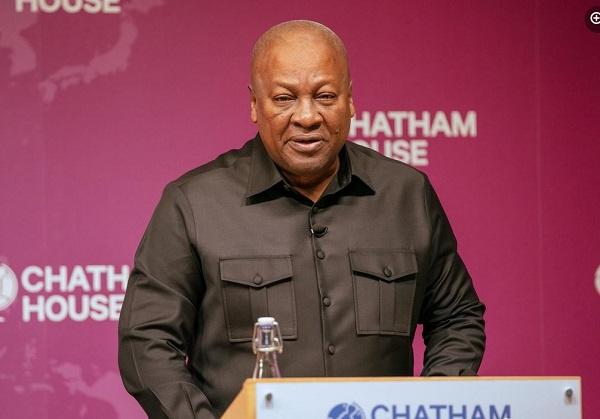
Speaking at Chatham House in London during the first day of Pride Month, the President explained that although Parliament passed the bill on May 29, 2026, it is still far from completing the full constitutional process required for enactment.

He emphasised that the legislation originated as a private member’s bill rather than a government-sponsored proposal, meaning it now enters a separate review stage within the Executive where legal experts, including the Attorney General and presidential counsel, must scrutinise its contents before any advice is given on assent.

According to President Mahama, this review process is essential to ensure that the bill complies with constitutional standards and legal requirements before it can be signed into law.

He noted that once the bill reaches the Presidency, it will be subjected to detailed examination by legal advisers who will assess its structure, implications and consistency with Ghana’s constitutional framework before making recommendations to the President.
The President also highlighted concerns that have been raised about the legislative process, including questions surrounding quorum during the parliamentary vote and alleged procedural irregularities in how the bill was handled prior to its passage.

He indicated that these issues are part of the broader considerations that must be addressed before any final decision is made, adding that the situation suggests there is still considerable time before the bill reaches the stage of becoming law.
His comments come in the wake of growing public debate following Speaker of Parliament Alban Bagbin’s disclosure that he was surprised by the speed at which the bill was passed, believing that only initial deliberations would take place before further debate continued.

In response to the controversy, parliamentary leadership has reportedly convened emergency discussions to clarify the circumstances surrounding the passage of the legislation, particularly in relation to procedural compliance and parliamentary expectations.

President Mahama further noted that, depending on the outcome of the legal review, he retains the constitutional option of referring the bill to the Council of State Ghana for additional advice if substantial concerns arise.
He also stated that if issues are identified, the bill may be returned to Parliament with clear instructions outlining the areas requiring reconsideration or correction.
The development has intensified national debate over one of Ghana’s most controversial pieces of legislation, which criminalises same sex relations and related advocacy activities. While supporters argue that it reflects Ghanaian cultural and moral values, critics have raised concerns about constitutional rights, legal procedure and international implications.
Legal practitioner Oliver Barker-Vormawor has challenged the validity of the vote, alleging that the bill was passed with insufficient parliamentary attendance and urging the President to withhold assent pending further clarification. However, supporters of the bill, including Bernard Bediako, have rejected these claims, insisting that parliamentary processes are presumed valid unless formally disproved.
Meanwhile, Majority Leader Mahama Ayariga has reiterated strong support for the legislation, stating that individuals engaged in prohibited activities should change their conduct in anticipation of the law once it receives presidential assent.
As discussions continue, President Mahama’s remarks indicate that the bill remains under active review and that its final legal status will depend on a series of constitutional, procedural and executive considerations before any assent is granted.

