
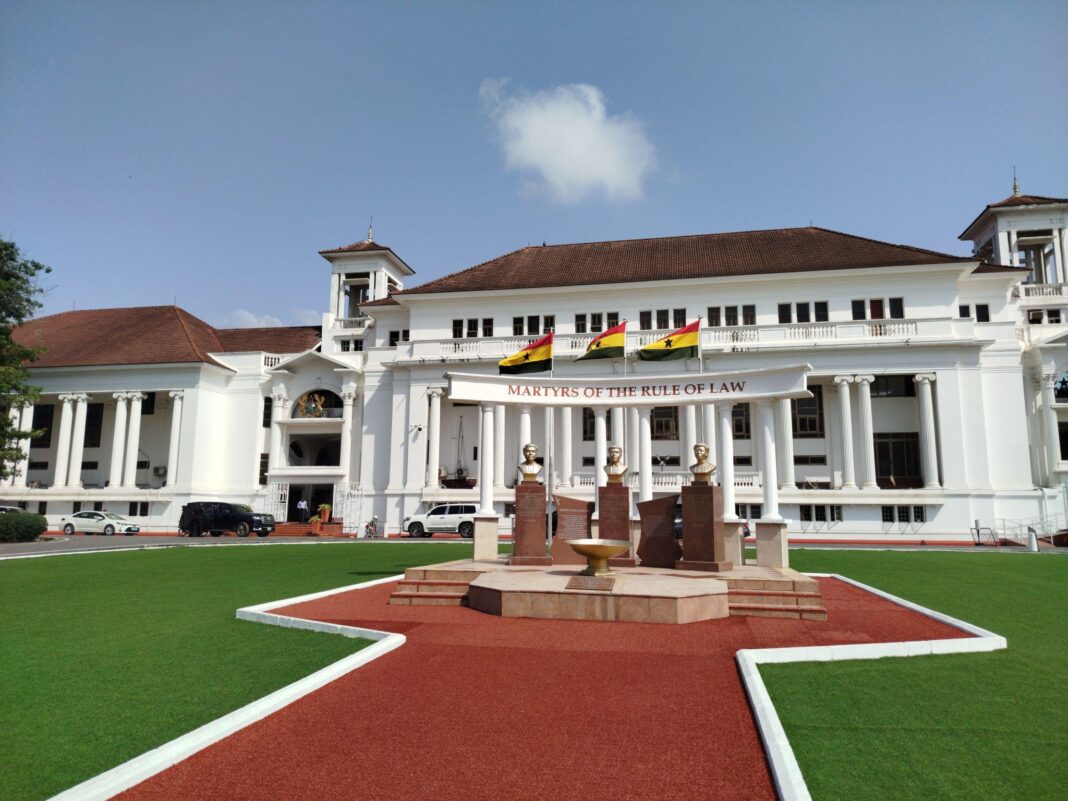

The Supreme Court of Ghana has instructed the Attorney General’s Department and the Minister for Justice to submit a formal response within seven days in a legal dispute challenging the reported renaming of Kotoka International Airport.
The directive was issued on Thursday, 14 May 2026, when the country’s highest court considered an application from the Attorney General requesting additional time to file a statement of case in the matter involving lawyer and policy analyst Austin Kwabena Brako-Powers against the Attorney General.

Mr Brako Powers initiated the legal action in March 2026, questioning the legality of the reported decision to rename the country’s main international airport.

According to the plaintiff, any attempt to alter the official designation of the airport must comply fully with the legal framework established under the General Kotoka Trust Decree, 1969, commonly referred to as NRCD 339.

He maintains that any modification to the airport’s official identity can only be carried out through a formal legislative amendment or repeal of the applicable law rather than through an executive declaration or administrative instruction.
The dispute centres on the legal standing and historical significance of Kotoka International Airport, one of Ghana’s most important national facilities, which was named after Emmanuel Kwasi Kotoka.

Counsel for the plaintiff, Michael Akosah, told journalists that any move to rename the airport must strictly adhere to constitutional and statutory requirements, including parliamentary approval where applicable.
Representing the state, legal officers led by a Chief State Attorney appealed to the court for additional time to address the substantive constitutional and legal questions raised in the suit.

Although the Supreme Court approved the request for an extension, the justices emphasised the importance of a speedy determination of the matter and subsequently directed the Attorney General to submit the required response within seven days to prevent unnecessary delays in the proceedings.

Mr Brako Powers further argues that the case raises broader constitutional concerns regarding the scope of executive authority, administrative decision making, and the legal procedures governing the renaming of state institutions and public assets.
The Attorney General is expected to clarify whether any existing legislation permits the executive branch or state agencies to independently rename nationally significant landmarks without prior parliamentary authorisation.
The matter is expected to return before the Supreme Court after the Attorney General files its response, with legal analysts describing the suit as a potentially consequential case capable of shaping future interpretations of governance, constitutional authority, and the administration of public assets in Ghana.

