

SOURCE: BBC
The US military says it shot at and disabled an Iranian-flagged oil tanker in the Gulf of Oman

The attack comes as the US continues its blockade on Iranian ports in the Strait of Hormuz

Donald Trump earlier announced the US would pause its operation to guide stranded ships through the strait – here’s how “Project Freedom” played out

Iran’s foreign ministry spokesperson says a US proposal to end the war is “still being considered”
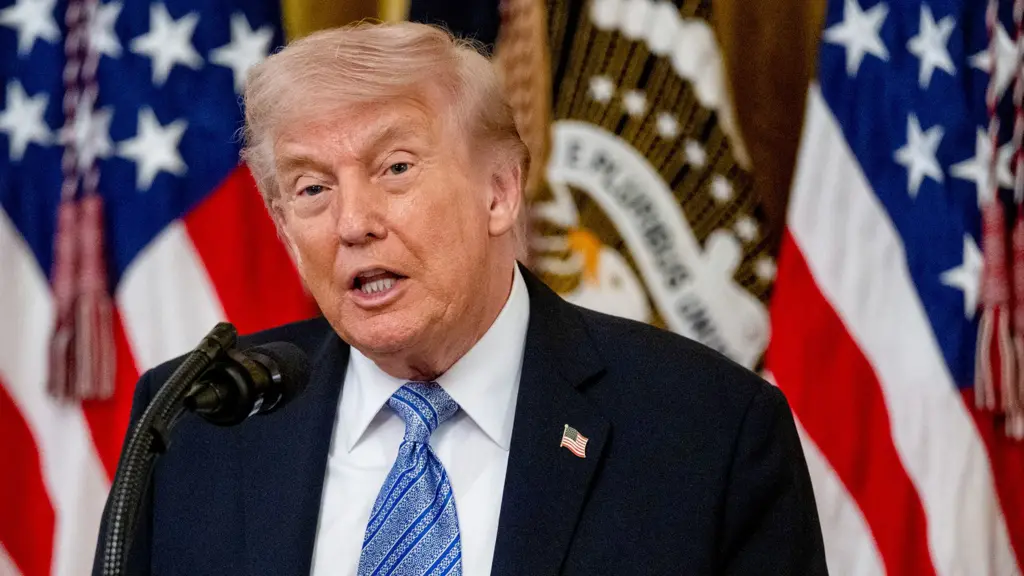
In a social media post, the US president warned strikes on Iran would resume if a deal was not agreed

Earlier a US media outlet – citing two unnamed officials – reported that a deal to end the war was close
Meanwhile, Israel’s military has launched strikes at a senior Hezbollah commander in Beirut, Israeli Prime Minister Benjamin Netanyahu says

Netanyahu says he and Israel’s Defence Minister Israel Katz ordered the country’s military “to strike now in Beirut the commander of the Radwan Force in the terrorist organization Hezbollah in order to neutralize him”.

In a post on social media he claims the Radwan force was “responsible for firing at Israeli settlements and harming IDF [Israel Defense Forces] soldiers.”
President Trump and the Islamic Republic of Iran’s leadership share an important trait: both resist acknowledging pressure and admitting how much they want to avoid a return to war.
After weeks of war, it has become increasingly clear that the United States is seeking a way out. Rising gas prices have fuelled domestic dissatisfaction, adding pressure on Washington to de-escalate.
Iran faces far deeper challenges, yet, like Trump, its leadership refuses to fully acknowledge the economic cost and the hardship Iranians are experiencing.
Many factories have laid off workers, internet access has been restricted, and hundreds of thousands who depended on the digital economy are now struggling to survive. Many households have shifted into survival mode, focusing only on essential needs.
Iranian Foreign Minister Abbas Araghchi
Hardliners, driven by ideology, appear willing to accept severe human and economic costs to preserve the Islamic system.
The Islamic Republic of Iran is increasingly concerned about the risk of renewed unrest.
In the past month, more than 20 political prisoners have been executed, many of them protesters arrested during last January’s nationwide demonstrations.
These executions are an attempt by the authorities to deter young people from rising again.
Reports suggest that the US and Iran are inching closer to a one-page memorandum aimed at ending the war.
Experts, however, are warning that any negotiations aimed at bringing the war to an end are incredibly complex, and in the case of Iran’s nuclear materials are highly technical.
Holly Dagres, an Iran expert at the Washington Institute on Near East Policy, told the BBC that unless the Iranians address their nuclear programme as part of the proposed memorandum, the Trump administration is “highly unlikely” to be satisfied.
While the one-page memorandum being reported sets a 30-day period to negotiate the issue – as well as the Strait of Hormuz and sanctions relief – Dagres said that timeline may be unrealistic.
“It’s worth emphasising that the Joint Comprehensive Plan of Action, from which the first Trump administration withdrew in 2018, was 150 pages long and included technical details,” she said.
There’s also considerable confusion as to the pause in “Project Freedom”, and whether freedom of navigation in the Strait will, in fact, bring the two sides closer to a deal.
“If this Mou [memorandum of understanding] does finalise, it should free up these vessels and be a big step in ending this war,” a former top Pentagon official told me. “If it doesn’t, this may further embolden Iran.”
Trump himself seems to be somewhat cautious about a deal.
In a brief telephone interview with PBS this morning, Trump acknowledged that he’s believed a deal was close in the past only to be thwarted.
“I felt that way before with them,” he said. “So we’ll see what happens.”
It’s been another 24 hours of dizzying twists and turns over the Iran war.
On Tuesday, the US strategy seemed to be newly dependent on unclenching Tehran’s grip on the Strait of Hormuz, with the diplomatic path apparently on the backburner.
Now, President Trump has ditched that approach and is saying that peace is all but at hand.
It’s being reported that there’s a one-page document that the two sides are close to agreeing. The Pakistani mediators are talking it up, too.
The little that’s come out of Iran so far is as ever notably less enthused about developments.
One official has said that what Washington has presented is a wish-list rather than a reality.
In a post on X citing the International Court of Justice (ICJ), Baghaei says the concept of negotiations requires “at the very least, a genuine attempt to engage in discussions with a view to resolving the dispute”.
“It needs ‘good faith’, then, meaning that ‘negotiations’ is not ‘disputation’; nor is it ‘dictation’, ‘deception’, ‘extortion’ or ‘coercion'”, he adds.
There is no direct mention of the US, or an American proposal to end the war, in the post.
However, as we’ve been reporting, Baghaei has told Iranian Students’ News Agency (ISNA) that Iran has shared its views on the US proposal with Pakistani mediators.
An American proposal to end the war with Iran is still being considered, an Iranian foreign ministry spokesperson tells Iranian Students’ News Agency (ISNA).
In an interview with ISNA, Esmail Baghaei says that Iran is sharing its views on the US proposal with Pakistani mediators.
A senior Iranian parliament member has dismissed US media reports of a deal to end the war with Iran being close as an American “wish-list” rather than a reality.
According to a report from US news outlet Axios published earlier today, the White House believes it could be closing in on a 14-point memorandum of understanding with Iran.
Responding to the report, Ebrahim Rezaei, the spokesperson of the Iranian Parliament’s national security and foreign policy commission, says the US will “not obtain through a failed war what they failed to gain in face-to-face negotiations”.
In a statement published on X in Persian, Rezai says Iran “has its finger on the trigger and is ready”. He warns that if the US “do not surrender and grant the necessary concessions”, Iran will “deliver a harsh and regret-inducing response”.

