

PERISCOPE DEPTH
…With Our Publisher

“Great minds discuss ideas; average minds discuss events; small minds discuss people.”- Eleanor Roosevelt

As I write this piece, there is the sound of great laughter outside in my compound. It is a happy sound, and I greatly cherish it. My children are at play. By my children, I mean my uterine children, nieces, nephews and the children of outright strangers. They all call me Daddy or grandfather, and I am very careful not to play the ‘favouritism’ card. Having children around me gives me a great glow.

However, from long, and painful experience, I know that I may be making a mistake. As Jesus Christ found out when it was too late and he was struggling for breathe on the cross on Calvary, one of his ‘children’, that is one of the apostles, was to betray him, leading to his crucifixion. Indeed, from the historical record, it would have been hard to differentiate Christ from his apostles, if he had not been identified by Judas. He lived with them, like them and resembled them. Only someone in that inner circle could betray him. On hindsight, was bringing Judas into his fold a wise decision? How many of the dozens of people (and children) I have helped throughout my life, would be my Judas? Which one of the beauties joyfully playing out there would break my heart, or the hearts of my new and dear?
And, count on it, it will come to pass that one of them, at a future date, would act in a manner that would displease me greatly, if not cause me to woe bitterly in my sleep.

Professionally, I have experienced the phenomenon. A reporter I once sent to a program on my behalf, to which I had been personally invited because of the sensitive nature, went over and assumed possession of the entire initiative. He would probably describe it as taking advantage of the opportunity. I call it betrayal. On hindsight, I realize that I was unwise to send him when I did. But that was a decision I took. And I have to live with it.
Life is full of decisions. One of the decisions men and women make, is whether to call upon the help of others, so that these others may assist us in our mission. It is a decision that is to be taken with utmost care, because sometimes, those we call upon to be our aides, may soon turn around to be our greatest nemesis, the inescapable agent of our downfall. The cub you bring into the house today may be the future tiger, unable or unwilling to distinguish between consumable meat, and your children. For the tiger it is meat, and no issues of principle arise. The only principle the tiger knows is that once meat is there, it is enabled, has the opportunity to feed.

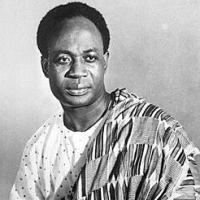
Ghana, as a unitary state, is now about sixty-four years old. Yesterday was a holiday in Ghana, and on most radio stations and media platforms, the subject of debate was whether the name of ‘Founders’ Day’ was apt. Some would have preferred the moniker ‘Founder’s Day’ that is the apostrophe after the ‘r’, instead of after the ‘s’. The latter would be a celebration of Osagyefo Dr. Kwame Nkrumah, Ghana’s first Prime Minister, and the man who declared Ghana as an independent, unitary republic, independent from the British Colonialists. The former would be a celebration of all the dozens and hundreds who sacrificed over decades to bring about Ghana’s independence from colonial rule.

For years, the subject of whether Nkrumah was solely responsible for founding Ghana as we know it, or the final declaration of the nation of Ghana was the culmination of years of bitter agitation by generations of Ghanaians, has been a subject of bitter contestation and dispute in this jurisdiction. This is understandable. Nkrumah, a political opportunist of no mean repute, deliberately, using the resources of Ghana (or the Gold Coast) and his blistering rhetoric, brainwashed generations of Ghanaians that he was responsible for the creation of Ghana, and independence. The uncontested history, however, is that the agitation of an independent African state, later to be declared the nation of Ghana, started well over a hundred years before the advent of Nkrumah on Ghana’s political scene, to be specific, in 1844, and continued with activism right up to the 1950s. The history is rife with the stories of bravery, deaths and many more sacrifices that were made before Nkrumah emerged on the scene, and culminated in the independence of the Ghanaian peoples.
And did Nkrumah emerge, or he was invited and drafted onto the political scene? The facts, uncontestable, are that, even though he was borne in the landmass that was later to become what we now know as Ghana, Nkrumah was in actual fact a political activist in the diaspora fighting for the independence of black peoples. He was little or virtually unknown in what was then known as the Gold Coast. It was some leaders of the then United Gold Coast Convention party (UGCC), who decided that they needed fresh blood in the independence movement, who decided that Nkrumah should be invited into Ghana to assist with the struggle. Again, these are facts. Many Ghanaians today do not know that Nkrumah was actually once the salaried General Secretary of the UGCC, whose formation he had nothing to do with.
Soon after his appointment, however, the people who invited him to assist them, realized that Nkrumah favoured populist ideas not backed by any serious ideological philosophy, whilst they had, through careful, meticulous work, built a party that was driven ideologically. To be frank, the party of UGCC was a party of the educated and the serious merchant class. Seeing the inherent weakness in this position, Nkrumah left the UGCC and formed his people’s party, the Convention Peoples Party (CPP), with which he stood for elections.
Being a man of some well-placed physical attributes (he was a handsome man, an easy, charming smile that was often on display, easily naughty and a winsome personality), and fantastic oratorical skills, he formed a party in which he was the lone star, and managed to win parliament, then became the first black head of government and Prime Minister under the colonialists. He virtually left the party and people who invited him in the sand. And history was made.
But it is said that they also serve who sit and wait. And who invite people and give them opportunity.
The question that remains to be answered, therefore, is whether Ghana was ‘founded’ solely by Nkrumah, or that the eventual emergence of the nation Ghana is the culmination of over a century of very hard and dangerous work by many?
Those who would answer this question fairly, know the answer. Those who would insist that the narrow interpretation of the declaration of Independence at the Black Star Square, settles the question, have their answer.
What hurts, of cause, is the deliberate and evil calumny by the likes of Kwesi Pratt, Jnr, to create the impression that all those who sacrificed, over decades, who saw the potential of Kwame Nkrumah, were not patriots. That hurts. And for those of us busy sacrificing for this nation today, we wonder what calumny future Kwesi Pratt doppelgangers, would have to say about our sacrifices today.
To conclude, we need to realize that every decision we make in life could be momentous. To always remember, that that cuddle cub, may in future be the tiger, unable to distinguish between meat, and our children.
For the protection of our children, we may need to teach them about the real nature of the cub, so that when the change is coming, they may be cautious.
22/09/2021
(You can follow stories in the Daily Searchlight on www.thedailysearchlight.com or Daily Searchlight on our Facebook home page. Write to us on searchlightnews@yahoo.co.uk).

