
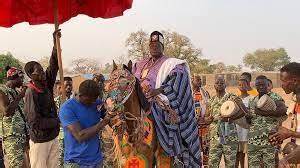

It is reputed that Ghana has over five hundred active chieftaincy disputes across all sixteen regions. About one hundred of these disputes have spilled over into violence. A classic example of a matter of chieftaincy exacerbating beyond all bounds and reason, is the Bawku Conflict. Before then, it was Yendi. Now, it is spilling over to Bole, the homestead of President John Dramani Mahama.
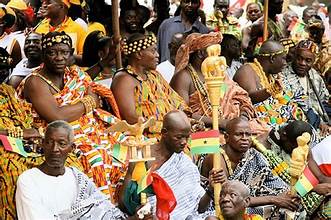
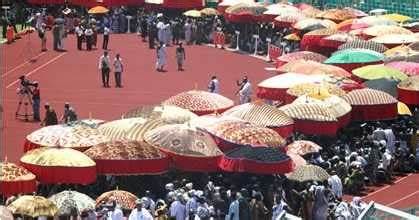 Chieftaincy in Ghana is an institution that delivers little direct socio-economic benefit to the people. But it seems to be an institution that many Ghanaians cherish.

Before the advent of the white man, large parts of Ghana did not have chiefs as we know them today. Some parts did, however. These were highly organized communities, some with standing armies and governments. After the Colonialists managed to conquer these organized communities, they copied the example they set and replicated them across other parts of Ghana. Chieftaincy thus became a means by which the British Colonialists could indirectly rule the people. Foisted onto these were ‘cultural practices’ of dubious provenance. Over the couple of centuries that these institutions have been in place, they have assumed a certain level of certainty and in many parts of Ghana, challenging chieftaincy can come with heavy consequences.

Before the advent of our current republican governments, chiefs had the backing of the British Colonialists. Since we became a Republic, Chiefs have the backing of the government. This means that if one is able to inveigle himself into the title of ‘chief’, one can be certain that one would enjoy a certain comfortable lifestyle without necessarily working for it. This comfortable lifestyle can extend to one’s family.

It is an attractive proposal; but also subject to buccaneering and piracy, particularly where the history and practice is weak. With greed and piracy in the mix, Ghana has managed to rack up a whopping five hundred cases, and counting. It is a situation which seems to beggar a solution.
There are certain situations that do not quickly lend themselves to normal policing, which is why the colonialists left Ghana with an institution called the Special Branch. The Special Branch of the Ghana Police Force was made up of highly dedicated, educated and professional police men and women who could see to the national interest of the nation.

They were trained for the purpose.
When John Jerry Rawlings forced his idealistic way into governmental power over four decades ago, he decided to change Ghana’s version of the Special Branch into the Bureau of National Investigations (BNI) and to fester its corridors with political individuals who did not necessarily have the required policing background. This led to a diminution of standards, which has continued to date.

It is these people who are currently and constantly in the news and known as ‘National Security’, who have been engaging in all manner of escapades.

So that whilst whole villages are burning and lives are being lost, ‘National Security’, which should have been conducting the proper studies of our communities and chieftaincy histories to steer systems in ways that avoids conflict, are busy chasing opponents of the current government, instead of concentrating on their core mandate.
The Special Branch that was handed over to Osagyefo Dr. Kwame Nkrumah sixty years ago was smartly suited, intelligent men and women. Fast forward sixty years (and made masters of ourselves and our fortunes) and we have managed to put together a group of gun-toting muscle bound (in brawn and not brains) group of men who are terrorizing everybody and their son. At the same time, issues requiring national security interference, fester and is causing deaths by the dozens virtually every month.
If we want to prevent incidents like what happened at Bole last week, we need to begin to realize that the solution requires gathering actionable intelligence (intel) from communities. That means creating a professional national security set up, one that is into the gathering of information, the analysis of trends and the introduction of effective counter-intelligence operations.
What it is not about, is employing jackboots by political operatives moving about from community to community terrorizing their fellow Ghanaians.
Until and unless we realize this, we would continue to witness the distressing scene of people drowning in rivers and water bodies to escape the terror created by their neighbors.
‘National Security’ is not about behaving as if our brains are made up of muscle. It is about having the ability gather useful information and being able to formulate this information into real plans that protect Ghanaian lives.
We are seeing very little of the latter of late.
(Periscope Depth, Monday, 1st September, 2025. Periscope Depth is published every Monday in the Daily Searchlight).

