
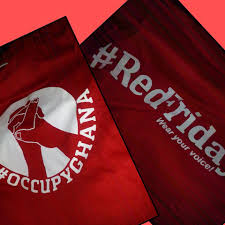

Civil society group OccupyGhana has intensified its long running campaign to have the exchange of cash, gifts, and other inducements for votes during internal political party elections formally criminalised, cautioning that the growing acceptance of such practices is steadily eroding the very foundation of Ghana’s democratic system. The organisation argues that what was once viewed as aberrant conduct has increasingly become routine, thereby hollowing out the principles of merit, accountability, and genuine representation.
In a forthright petition dated February 9, 2026, OccupyGhana formally appealed to key state actors, including the Attorney General, the Majority Leader, and the Minority Leader of Parliament, urging swift legislative action to seal what it describes as a dangerous gap in the law. According to the group, this loophole has allowed corruption within political party primaries to thrive unchecked, even as similar conduct in national elections attracts severe criminal consequences.

The latest correspondence builds on an earlier appeal sent on October 9, 2023, in which the organisation first called for explicit statutory prohibitions against vote buying in internal party contests. Nearly two years later, OccupyGhana says the absence of reform has become increasingly costly, pointing to recent allegations of vote inducement that have marred the just concluded National Democratic Congress primaries to select a candidate for the Ayawaso East by election scheduled for March 3, 2026.

Against this backdrop, the group contends that Ghana’s electoral integrity framework is fundamentally inconsistent. While presidential and parliamentary elections are governed by robust anti corruption provisions, internal party elections operate in a legal grey area where similar misconduct attracts no clear criminal liability. This disparity, OccupyGhana argues, has transformed party primaries into transactional exercises dominated by financial muscle rather than competence, ideas, or service.

A defining feature of the renewed proposal is the demand that responsibility for prosecuting offences arising from internal party elections be vested exclusively in the Office of the Special Prosecutor, instead of the Attorney General. OccupyGhana maintains that because such offences are inherently political and often involve powerful actors, enforcement by an independent institution is essential to preserve credibility and public trust. In its view, reliance on an Attorney General who also serves as the government’s principal legal adviser creates the perception, and sometimes the reality, of conflicting interests.
The organisation further advances the argument that vote buying within parties constitutes a clear abuse of trust and a form of corruption that fits squarely within the statutory mandate of the Special Prosecutor. It notes that the OSP is structurally and operationally better equipped to pursue complex financial investigations, particularly where inducements are disguised through indirect transfers, gifts, or third party intermediaries. More importantly, OccupyGhana believes that removing such prosecutions from direct executive influence would send a powerful signal that no political grouping is insulated from the rule of law.

Central to the group’s position is the insistence that internal party elections cannot be dismissed as private or internal affairs. Rather, they are the gateway through which individuals gain access to public office and, ultimately, control over state power and resources. When these processes are compromised by financial inducements, corruption is effectively planted at the earliest stage of leadership selection, making later efforts at accountability far more difficult.
The petition underscores this concern by stressing that intra party elections are decisive mechanisms through which future presidents, legislators, and public officials are chosen. Where money supplants merit and persuasion gives way to inducement, the democratic promise of representation is replaced by the logic of investment and return. In such circumstances, public office risks becoming a commodity rather than a public trust.

OccupyGhana’s renewed intervention comes at a moment of heightened public anxiety over electoral standards, following a series of high profile controversies surrounding party primaries across the political spectrum. In light of this, the group has called on the government to move beyond general assurances and to provide a clear and time bound roadmap for legislative and policy reforms aimed at addressing the identified deficiencies.

The letter was circulated widely among constitutional and governance stakeholders, including the Speaker of Parliament, the Chairperson of the Electoral Commission, and the Special Prosecutor, signalling the group’s intention to elevate the issue beyond partisan debate and frame it as a national democratic concern.
Taken together, OccupyGhana’s position reflects a broader warning that democracy can be undermined long before ballots are cast in national elections. If internal party processes remain polluted by unchecked financial inducements, the quality of leadership presented to the electorate will continue to deteriorate, regardless of how well general elections are administered. The challenge now lies in whether the political class is willing to reform a system from which many of its members benefit, in order to safeguard the long term integrity of Ghana’s constitutional democracy.

