
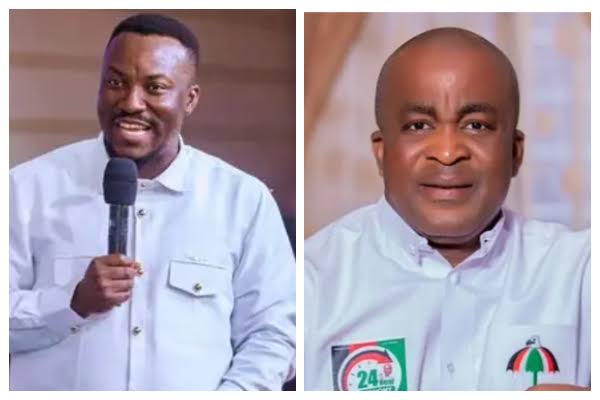

The National Democratic Congress (NDC) has recorded significant changes in its regional leadership following its 2026 regional executive elections, with several incumbent chairmen losing their positions while others secured fresh mandates.
The elections, conducted on Saturday, November 14, have so far produced declared chairmen in 14 of Ghana’s 16 regions, with the Oti and Savannah regional results still outstanding. The Central Region has also declared its winner, contrary to earlier reports that the outcome remained unresolved.

One of the most significant developments was Benjamin Danso’s victory in Greater Accra, where he defeated incumbent chairman Emmanuel Nii Ashie-Moore to take over the region’s leadership. Danso secured 515 votes against Ashie-Moore’s 295, while Michael Tetteh Kwetey polled 161 and Ibrahim Jajah obtained 63 votes.

CitiNewsroom.com+1

In the Northern Region, Godfred Apasinaba Wumbei emerged victorious with 328 votes, defeating Alhaji Tanko Maida, who secured 236 votes.
The Ashanti Region retained its incumbent chairman, Augustus Andrews Nana Kwasi, who obtained 814 votes to defeat former Regional Organiser Isham Alhassan Yaw Bonsu, who received 622 votes. The election experienced delays amid heightened security arrangements at the voting centre before proceedings were eventually completed.

In the Upper East Region, Alhaji Abdulai Mumuni Bolnaba extended his long-standing leadership after defeating Duncan Nsoh Ghaneba by a commanding 220-vote margin. Bolnaba secured 371 votes against his challenger’s 151, having first assumed the regional chairmanship in December 2005.
Graphic Online

The Bono Region also witnessed a convincing victory for Kwadwo Nyamekye-Marfo, who retained his position after securing more than 90 per cent of the valid votes. His latest victory marks his first contested regional chairmanship election, having previously been elected unopposed in both 2018 and 2022.

In the Upper West Region, Adams Randy, popularly known as Randy, defeated incumbent Abdul Nasir Saani Bunas to become the new regional chairman. Randy polled 196 votes, while Bunas obtained 164, with Sombawiere Samba Sankara receiving 28. The result represents a reversal of the 2022 contest, when Randy lost to Bunas.
Western Region chairman Nana Kojo Toku also retained his position after securing 225 votes. His challengers, Samuel Kwame Borlu and George Arthur, obtained 209 and 114 votes respectively. His re-election came despite a petition from the Apinto royal family, which had called on the party to prevent him from contesting because of his status as a gazetted chief and the constitutional restrictions cited by the petitioners regarding chiefs participating in active party politics.
In Ahafo, Ababio Owusu Nkrumah secured the chairmanship after polling 106 votes to defeat Joseph Baradoe, who received 94. Ahmed Ali Awinbila obtained three votes.
The Central Region produced one of the closest contests of the elections, with lawyer Obeng Inkoom defeating incumbent Richard Kofi Asiedu by just five votes. Inkoom obtained 372 votes, compared with Asiedu’s 367, while Ibrahim Mohammed secured 16. However, the outcome has generated controversy, with Asiedu threatening legal action over alleged irregularities in the voters’ register.
Graphic Online+1
Other regions also maintained continuity in their leadership. Ing. Dr Mark Oliver Kevor was re-elected Eastern Regional Chairman, while Alhaji Abdul Rauf Tanko Ibrahim retained the North East chairmanship. Mawutor Agbavitor secured the Volta Regional chairmanship unopposed, and Michael Aidoo maintained his position in the Western North Region.
In Bono East, Ali Abubakari Donkor defeated incumbent Unas Owusu with 155 votes against 118, while Baba Shaibu obtained 107. These results brought the number of regions with declared chairmen to 14, leaving Oti and Savannah outstanding.
Conduct of the elections
The Electoral Commission supervised the regional polls, with the Ghana Police Service responsible for maintaining security throughout the exercise.
Delegates were required to cast their ballots personally, as the electoral arrangements did not permit proxy voting. The main regional conferences elected chairmen and other regional executives, including vice-chairmen, secretaries, organisers, treasurers, communications officers and Zongo Caucus coordinators.
Meanwhile, the election of women’s and youth organisers, together with their respective deputies, took place through separate wing conferences, most of which were organised on Friday, November 13.
In Greater Accra, Mohammed Abdul Muqmin Juda emerged victorious in the Youth Organiser contest after obtaining 103 votes, defeating his closest challenger, Richard Dogbe, who received 26.
The electorate comprised constituency executives, regional Members of Parliament, ministers, metropolitan, municipal and district chief executives, as well as senior party members and other recognised delegates.
NDC prepares for December National Congress
The regional executive elections constitute an important phase of the NDC’s internal restructuring as the governing party prepares for the 2028 general elections.
The party is scheduled to convene its National Congress on December 19, 2026, when delegates will elect officers to occupy the various national leadership positions.
Ahead of the national exercise, Chief of Staff Dr Julius Debrah has encouraged successful regional candidates to extend cooperation to their defeated opponents and prioritise collective efforts towards strengthening party unity.
Competition for the national executive positions is also gathering momentum, with former Minister of Local Government and Rural Development Akwasi Oppong-Fosu among the prominent figures seeking the national chairmanship.

