

The government has intensified its campaign against illicit drug trafficking with the seizure of approximately GH¢6.9 million and US$440,000 in cash believed to be connected to suspected drug traffickers, while security agencies have also traced 73 assets and confiscated about 19 kilogrammes of gold in suspected drug money laundering cases.
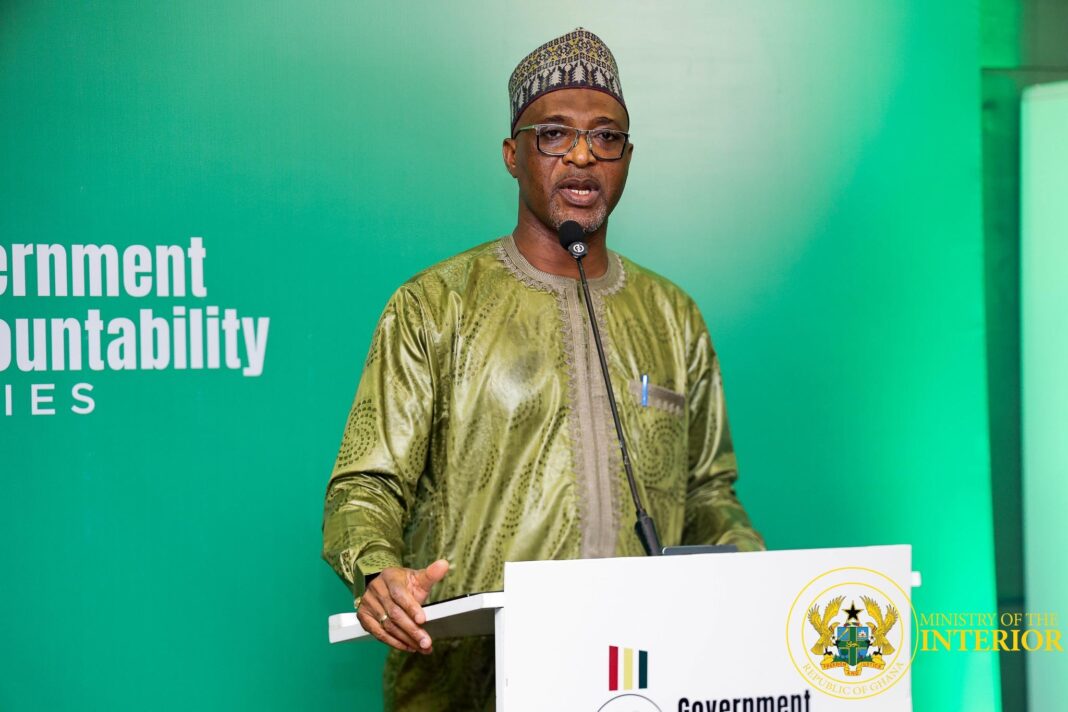
Interior Minister Muntaka Mohammed Mubarak disclosed the figures on Monday, August 24, 2026, during the Government Accountability Series, where he outlined the government’s expanding strategy to combat narcotics trafficking, disrupt the financial networks sustaining the illegal trade and strengthen efforts aimed at preventing drug abuse.

Mr Muntaka explained that the government’s approach had moved beyond the arrest of drug users and street level distributors to identifying the individuals, organisations and financial structures responsible for importing, trafficking and financing illicit narcotics.

“Our campaign is not just [targeted] at the users, but those who are bringing it,” the Interior Minister said.

According to him, intelligence gathered by security agencies has enabled authorities to identify assets and financial resources allegedly connected to persons suspected of involvement in the illicit drug trade. Such properties and funds, he said, were being restrained while investigations and prosecutions continued.
“When we get them, we seize their assets, or we taint their assets, freezing them while the prosecution is going on,” Mr Muntaka stated.

He said approximately 73 assets associated with suspected drug related activities had been identified during the period under review, while more than 19 kilogrammes of gold had also been seized in cases involving suspected money laundering linked to narcotics proceeds.
The Minister further disclosed that about GH¢6.9 million and US$440,000 in cash believed to be associated with individuals involved in illicit drug activities had been restrained by the authorities.

The financial seizures, he explained, formed part of a broader intelligence driven strategy designed to undermine the economic foundations of the narcotics trade by depriving suspected traffickers of assets and proceeds believed to have been generated through illegal activities.

Mr Muntaka said the intensified enforcement campaign had also produced significant seizures of narcotic substances across the country.
Between January 2025 and July 2026, security agencies confiscated more than 8,500 kilogrammes of narcotic drugs and intercepted approximately 45.4 million tramadol tablets, highlighting the scale of the challenge confronting Ghana in its efforts to curb illicit drug trafficking and abuse.
The Interior Minister described the volume of tramadol seized within the period as particularly alarming, especially amid growing concerns over the proliferation of synthetic and pharmaceutical drugs that can be abused.
“One of the biggest challenges now is the use of these synthetic drugs, and Narcotics Control has intensified its effort,” he said.
“Imagine, in less than two years, over 45 million tablets of tramadol were seized or intercepted.”
Mr Muntaka commended the Director General of the Narcotics Control Commission and personnel of the agency for what he described as a firm and determined response to the country’s growing narcotics problem. He said the campaign had been undertaken in cooperation with the Ghana Police Service and other security institutions.
The intensified operations, according to the Minister, have so far resulted in 217 arrests, while 165 cases have been initiated for prosecution as authorities seek to translate drug seizures and arrests into successful legal action against suspected offenders.
He emphasised that the government’s objective was not simply to remove drugs from circulation or arrest individuals found using or distributing narcotics, but to dismantle the networks that facilitate the movement, financing and distribution of illegal substances.
The government, he said, would therefore continue deploying intelligence led operations to identify suspected traffickers, trace assets connected to the proceeds of narcotics activities and restrain or seize such assets where the evidence supports official action.
Beyond enforcement, however, Mr Muntaka stressed that the government’s response also incorporates public education and preventive interventions, particularly among young people and other groups considered vulnerable to drug abuse.
He disclosed that the Narcotics Control Commission had conducted more than 2,000 educational and sensitisation programmes across the country to educate the public about the dangers associated with illicit drugs and the social, economic and health consequences of substance abuse.
The programmes have targeted a wide range of institutions and communities, including 1,153 first cycle schools, 185 second cycle schools and 41 tertiary institutions. Sensitisation initiatives have also been organised in 187 faith based institutions, 147 communities and 235 workplaces.
“We have intensified education to try to let people understand the effect and how this thing can be devastating,” Mr Muntaka said.
He explained that prevention remained an essential component of the national response because enforcement alone could not permanently resolve the drug problem. According to him, sustained education was necessary to equip young people and vulnerable communities with the knowledge required to recognise the dangers of drug use and avoid becoming involved in either consumption or trafficking.
Despite the seizures, arrests and prosecutions recorded so far, the Interior Minister acknowledged that significant challenges remain, particularly in the area of rehabilitation and long term support for people affected by drug dependence.
He identified the absence of a dedicated national rehabilitation facility as one of the major weaknesses in Ghana’s response to substance abuse, noting that individuals struggling with addiction require appropriate treatment and structured rehabilitation if the country is to achieve lasting progress in the fight against narcotics.
The government’s latest figures therefore point to a multifaceted approach that combines enforcement, financial investigations, asset restraint, prosecution, public education and rehabilitation as authorities seek to confront Ghana’s illicit drug problem.
With more than 8,500 kilogrammes of narcotics, 45.4 million tramadol tablets, GH¢6.9 million, US$440,000 in cash, 73 suspected tainted assets and approximately 19 kilogrammes of gold reportedly seized or restrained during the period under review, the government says its focus is increasingly shifting towards dismantling the financial and organisational structures that enable the illicit drug trade while simultaneously strengthening prevention and rehabilitation efforts.

