
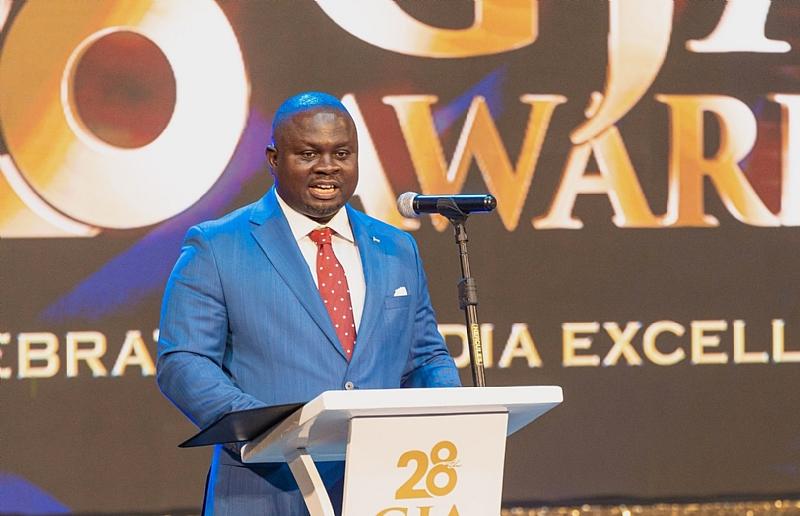

The Ghana Journalists Association (GJA) has disclosed that it recorded more than 50 incidents of attacks, assaults, arrests, threats and harassment involving journalists between 2022 and January 2026, raising renewed concerns about the safety of media practitioners and the protection of press freedom in Ghana.
The Association’s President, Albert Dwumfour, revealed the figures during the 30th GJA Media Awards ceremony in Accra, where he called on the government, security agencies and other relevant institutions to demonstrate greater commitment to protecting journalists and respecting their constitutional responsibility to inform the public.

Mr Dwumfour maintained that journalists should not be regarded as adversaries of the state simply because they scrutinise government decisions, investigate alleged wrongdoing or demand accountability from public officials.

“Journalists are not enemies of the state,” he declared, emphasising the need for a working environment in which media practitioners can discharge their professional responsibilities without intimidation, threats or unlawful interference.

Providing further details about the reported incidents, the GJA President disclosed that five attacks against journalists were recorded in January 2026 alone, with three of the incidents allegedly involving personnel of state security agencies.
The revelation has intensified concerns about the circumstances under which journalists undertake their assignments, particularly when covering sensitive issues involving public officials, security operations and state institutions.

Mr Dwumfour cautioned against allowing improvements in Ghana’s international press freedom ranking to overshadow the persistent difficulties confronting media practitioners across the country.
He observed that although Ghana had registered progress in the global assessment of press freedom, the actual condition of journalism should be evaluated by examining whether reporters and media organisations could operate independently and challenge powerful institutions without fear of retaliation.

According to figures he cited at the ceremony, Ghana advanced from 52nd position in the 2025 World Press Freedom Index to 39th in the 2026 edition.

However, he argued that international rankings alone could not adequately demonstrate the extent of press freedom enjoyed by journalists, particularly when incidents of assault, intimidation and harassment continued to be reported.
“The true measure of press freedom is not merely where a country ranks internationally, but whether journalists can investigate corruption, question public officials, report on security operations, and hold powerful institutions accountable without intimidation or fear,” he stated.
The GJA President further stressed that the celebration of improvements in the country’s international standing should be accompanied by practical interventions to eliminate the threats confronting media practitioners.
He insisted that the reported incidents of attacks and intimidation could not be disregarded simply because Ghana had improved its position in the global press freedom assessment.
“While celebrating progress, we cannot ignore the attacks and threats confronting journalists,” he emphasised.
Beyond concerns about physical safety, Mr Dwumfour identified economic insecurity, the independence of media organisations and opportunities for professional development as additional challenges requiring sustained attention.
He maintained that protecting press freedom involved more than preventing physical attacks, arguing that journalists also needed adequate professional support, financial security and institutional independence to perform their duties effectively.
The GJA President said the Association remained committed to preserving the progress Ghana had achieved in media freedom while intensifying efforts to confront longstanding challenges affecting the profession.
“Our responsibility is to consolidate the gains and address persistent challenges, including journalist safety,” he stated.
The Association has consistently advocated stronger safeguards for journalists, improved accountability mechanisms and appropriate action against individuals found responsible for attacks on media practitioners.
The latest figures disclosed by Mr Dwumfour therefore reinforce the Association’s demand for a more protective environment in which journalists can investigate matters of public interest, scrutinise the exercise of state authority and provide citizens with credible information without fear of intimidation.
Ultimately, the GJA maintains that Ghana’s progress in international press freedom rankings must be matched by improvements in the everyday working conditions of journalists, particularly their safety, independence and ability to hold institutions accountable.

