
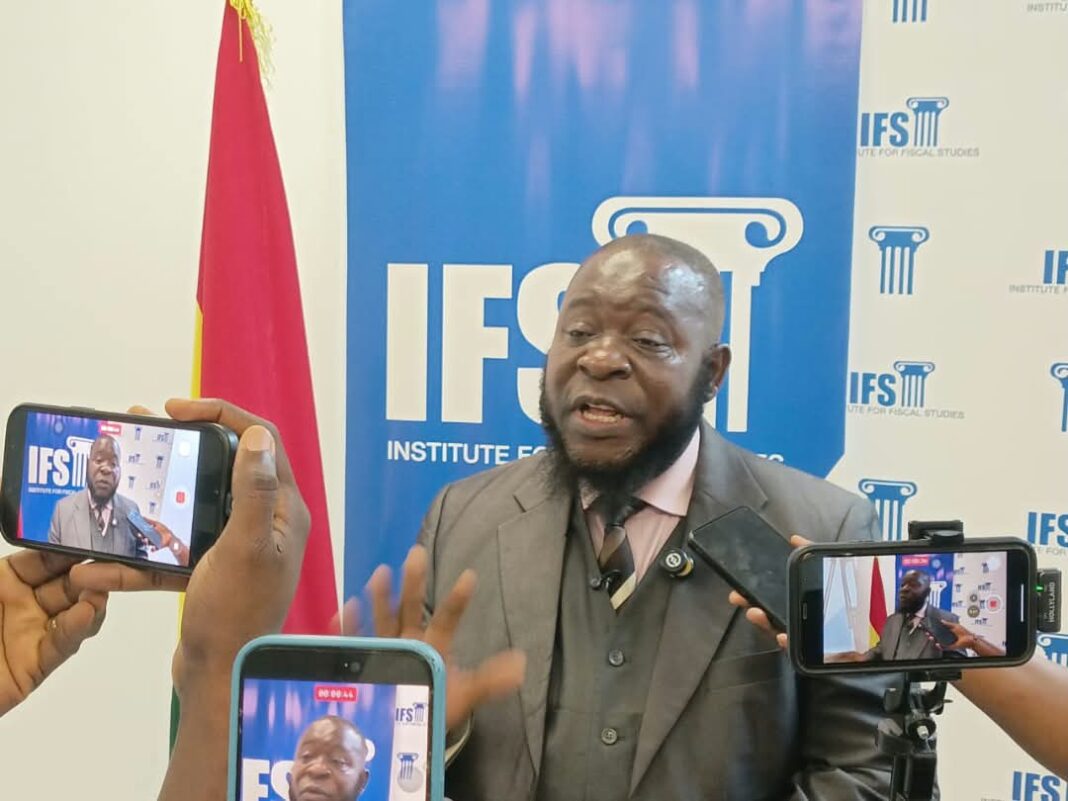

Ghana’s governing National Democratic Congress (NDC) has relocated its Central Regional Delegates’ Conference from the Cape Coast Sports Stadium to Boa Amponsem Senior High School at Dunkwa-On-Offin in the Upper Denkyira East Constituency, following controversies and formal petitions from stakeholders over the original venue. The decision was agreed on November 10 at a meeting between the party’s national leadership and executives of the Central Regional Secretariat, chaired by the National Chairman and assisted by the General Secretary, and announced in a statement on Tuesday, November 11.
The party said the revised arrangement is intended to address concerns, build consensus and ensure a peaceful and credible conference, and has constituted a five-member Regional Elections Committee chaired by Prof. Ibrahim Zubairu, with Gabriel Nii Kommey Adams, Dr. Daniel Nartey, Ebenezer Sackitey and Malik Chemo as members, to oversee the process, while directing delegates and constituency executives to comply with the new directive.For observers across the ECOWAS bloc, the episode carries significance beyond one region in Ghana, widely regarded as a bellwether for democratic stability in a sub-region that has in recent years witnessed coups, contested transitions and the erosion of party institutions. How its two dominant parties manage internal competition is therefore seen as an indicator of the health of democratic norms in West Africa, particularly in the Central Region, a traditional swing region that often determines Ghana’s presidential outcome. By conceding to petitions and relocating the conference rather than imposing the original venue, the NDC leadership is signalling a preference for negotiated settlement over confrontation, an approach regional democracy advocates say is essential if parties are to avoid the factional splits that have destabilised counterparts in neighbouring countries.

Both major parties are currently undergoing parallel internal reorganisations ahead of Ghana’s 2028 general election, albeit on different timelines. The NDC, in government since January 2025, is rebuilding from the grassroots upward, with its regional conferences scheduled for November 14-15 and its National Delegates Congress set for December 19, 2026. Its main rival, the opposition New Patriotic Party (NPP), has already completed its own executive elections, culminating in its National Officers Elections on October 3, 2026, after electing former Vice President Dr Mahamudu Bawumia as its flagbearer on January 31, 2026, and has now opened the declaration phase for its parliamentary primaries. Analysts say the contrast underscores two different models of party renewal in West Africa: the NDC’s consensus-driven approach, which prioritises internal mediation before voting, and the NPP’s contest-driven approach, which prioritised selecting a presidential candidate first and rebuilding structures around him, with the conduct of both parties’ internal polls set to be scrutinised not only in Accra, but in Abuja, Dakar, Abidjan and across ECOWAS capitals.


