

Ghana’s economy is expected to remain one of the stronger performing economies in Sub Saharan Africa over the next two years, yet fresh projections from Fitch Solutions indicate that the pace of expansion will begin to slow as structural vulnerabilities re emerge and debt servicing obligations consume a larger portion of public resources.
The United Kingdom based research and analytics firm forecasts that Ghana’s economic growth will moderate from 5.7 per cent in 2026 to 4.7 per cent in 2027. While the projected figure still represents healthy growth by regional standards, it signals a noticeable deceleration from the momentum currently being recorded across key sectors of the economy.

The forecast comes at a time when Ghana is demonstrating remarkable resilience following one of the most challenging economic periods in its contemporary history. The country’s recovery has been supported by fiscal reforms, easing inflation, renewed investor confidence, stronger external reserves and sustained performance in the gold sector. Recent economic data showed that Ghana’s economy expanded by an impressive 6.4 per cent during the first quarter of 2026, exceeding the 5.8 per cent growth recorded during the final quarter of 2025 and marking one of the strongest performances in recent years.

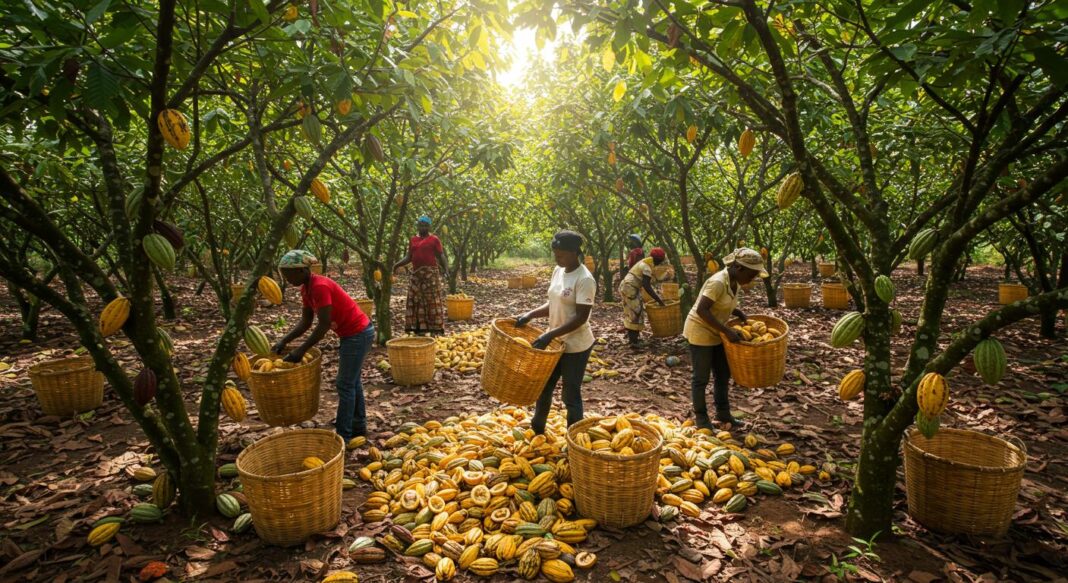
Despite these encouraging developments, Fitch Solutions believes the economy faces a more demanding environment beyond 2026. According to the firm’s assessment, the principal drivers behind the anticipated slowdown include weaker agricultural output, less favourable statistical base effects and stagnation within two of Ghana’s most important export industries namely crude oil and cocoa.

The outlook underscores a growing concern among economic analysts regarding the future trajectory of Ghana’s traditional export pillars. Although gold production continues to benefit from elevated international prices, the cocoa sector remains challenged by weather related disruptions, disease outbreaks and production constraints that have affected output over recent years. Oil production meanwhile has struggled to achieve significant growth as mature fields experience declining yields and major new production increases remain limited.
Export performance has become increasingly important to Ghana’s macroeconomic stability because foreign exchange earnings from gold, cocoa and petroleum remain critical sources of revenue. Any sustained weakness in these sectors could reduce the country’s ability to generate foreign currency, placing renewed pressure on the cedi and potentially increasing inflationary risks.

Fitch Solutions also identifies public debt servicing as one of the most significant challenges confronting policymakers over the medium term. The firm notes that obligations arising from the Domestic Debt Exchange Programme introduced in December 2022 will begin entering a phase where principal repayments become due. At the same time, repayments on Ghana’s restructured Eurobond obligations are expected to increase.
As these commitments intensify, a greater share of government revenue will be allocated toward honouring debt obligations rather than financing public expenditure, infrastructure projects, social programmes and developmental initiatives. Economists frequently describe this phenomenon as the crowding out effect because debt servicing absorbs resources that could otherwise support economic activity and public investment.

The significance of this warning extends beyond fiscal accounting. Reduced government expenditure can affect employment creation, infrastructure expansion, education funding, healthcare investment and the broader capacity of the state to stimulate growth during periods of economic uncertainty.

Fitch Solutions further cautions that external developments could complicate Ghana’s economic outlook. One of the principal downside risks identified by the research firm relates to monetary policy decisions in the United States. Should the United States Federal Reserve maintain tighter monetary conditions for longer than expected in response to persistent inflationary pressures, global financial markets could experience renewed volatility.
Such a development could weaken international commodity prices, particularly gold, which has become Ghana’s most important external economic buffer. A decline in gold prices would reduce export earnings and foreign exchange inflows, potentially exerting downward pressure on the local currency.
A weaker cedi would increase the cost of imported goods and services, creating additional inflationary pressures across the economy. Higher inflation could subsequently erode household purchasing power, reduce consumer spending and slow private sector activity during the second half of 2026 and throughout 2027.
The concern is especially relevant because household consumption remains a major contributor to economic growth. Any sustained reduction in consumer spending would have implications for retail trade, manufacturing, transportation, financial services and numerous other sectors that depend upon domestic demand.
Nevertheless, Fitch Solutions does not present an entirely pessimistic outlook. The firm acknowledges that several factors could result in stronger than expected economic performance.
One of the most significant upside risks involves the resilience of domestic demand. If businesses continue expanding operations and consumers maintain spending despite global uncertainty and inflationary pressures, economic activity could surpass current forecasts.
Strong business confidence would encourage additional private sector investment, while sustained household expenditure would support production, employment and revenue generation across multiple industries. Under such circumstances, economic growth could exceed the projected 5.7 per cent in 2026 and 4.7 per cent in 2027.
The possibility of stronger domestic demand is not without foundation. Current economic indicators suggest that consumer activity remains relatively healthy. Investment spending has strengthened considerably while several sectors continue recording robust expansion. Ghana’s information and communications sector, transportation industry and mining activities have emerged as major engines of growth in recent quarters.
Fitch Solutions also believes that Ghana’s economy remains comparatively insulated from the immediate effects of disruptions in global energy markets arising from tensions involving the United States and Iran.
According to the firm’s analysis, Ghana’s balanced oil trade position together with elevated gold prices provides an important layer of protection against external shocks. Although domestic fuel prices have increased since the emergence of geopolitical tensions in the Middle East, government intervention has prevented full transmission of international price increases to consumers.
This policy response has helped contain inflationary pressures. Inflation has remained relatively subdued compared with historical averages, preserving household purchasing power and supporting consumer activity.
The importance of this development cannot be overstated. Inflation has historically been among the most destabilising economic variables in Ghana. Periods of elevated inflation have often been associated with currency depreciation, reduced investment, declining consumer confidence and broader macroeconomic instability.
The current environment therefore represents a significant departure from the severe inflationary pressures experienced during the economic crisis that culminated in Ghana’s debt restructuring programme and engagement with international creditors.
Recent economic data further strengthens the argument that Ghana’s recovery remains firmly intact. Official figures indicate that first quarter growth was powered by strong performances in mining, information and communications technology, transportation, trade and other service based industries. Gold production and mining activity have emerged as particularly important drivers of growth, reinforcing the sector’s strategic significance within the national economy.
The broader historical significance of Fitch Solutions’ forecast lies in what it reveals about Ghana’s economic transformation. The country is gradually moving away from a growth model heavily dependent upon government expenditure and commodity exports toward one increasingly supported by digital services, private investment and domestic consumption.
Yet the report also serves as a reminder that longstanding structural challenges remain unresolved. Dependence upon commodity exports, vulnerability to external financial conditions, debt servicing pressures and productivity constraints within agriculture continue to shape the country’s economic prospects.
For policymakers, the message is clear. Sustaining strong growth beyond 2027 will require continued fiscal discipline, expanded industrialisation, increased agricultural productivity, enhanced export diversification and deeper investment in technology driven sectors capable of generating higher value economic activity.
For investors and businesses, the forecast presents a picture of cautious optimism. Ghana’s economy is expected to continue expanding at a respectable pace, but the era of easy gains from post crisis recovery may gradually give way to a more demanding phase in which structural reforms and productivity improvements determine future success.
Ultimately, Fitch Solutions’ projections suggest that Ghana’s economic recovery remains real and substantial, but the next chapter of growth will depend less on resilience and more on transformation. The challenge before the nation is not merely maintaining growth, but ensuring that expansion becomes broader, more sustainable and less dependent upon the cyclical fortunes of commodities and external financial conditions.