
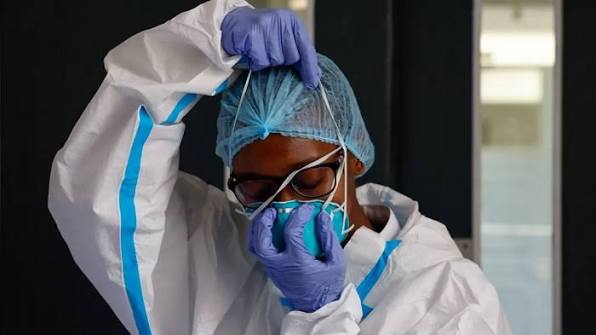

Ghana has strengthened airport screening, disease surveillance and emergency response arrangements following the spread of Ebola caused by the Bundibugyo virus to Kenya and Nigeria, amid an expanding outbreak originating in the Democratic Republic of the Congo (DRC).
The Ministry of Health says Ghana has not recorded any Ebola case but is stepping up preventive measures to minimise the risk of the virus entering the country and to ensure the prompt identification, isolation and management of suspected infections.

In a Facebook update shared by the Ministry’s Public Relations Officer, Tony Goodman, the Ministry explained that the heightened preparedness measures were intended to strengthen the country’s capacity to respond to a potential imported case and prevent further transmission.

The Ministry identified Kenya as a particular concern because of direct air connections with Ghana and the substantial movement of passengers between the two countries. Nigeria’s confirmation of an infection has also increased concern, given the frequent travel and commercial exchanges between Ghana and its eastern neighbour.

The developments come as the outbreak of Bundibugyo virus disease continues to spread beyond the DRC, with infections reported in multiple countries and health authorities intensifying efforts to trace contacts, identify new cases and strengthen cross border coordination. The World Health Organization (WHO) has documented the outbreak’s geographical expansion and the challenges associated with containing transmission.
Kenya confirmed its first imported case on October 6, 2026, involving a man who had been living in the DRC and travelled through Uganda before arriving in Nairobi. He subsequently died, and additional infections were detected among people linked to the initial case, including healthcare workers.

Nigeria confirmed an imported case on October 20, making it the latest country to report an infection associated with the wider outbreak. According to WHO, the patient was a woman with a recent travel history to Uganda whose symptoms began on October 7. She sought medical attention in Abuja on October 11, and laboratory testing confirmed the infection on October 20. She was isolated and receiving medical care, while authorities identified 44 contacts for monitoring. Investigations into the source of her infection were continuing.
The Ministry’s response in Ghana therefore centres on strengthening early detection and preparedness, particularly at international entry points, while ensuring that suspected cases can be isolated and assessed without delay.

Ghana strengthens surveillance and emergency preparedness

The Ministry of Health, working through the Ghana Health Service and other relevant institutions and partners, says several measures have been introduced to improve national readiness.
These include enhanced screening and surveillance at points of entry, particularly at the airport, alongside consultations with the Ghana Airports Company Limited, the Ghana Civil Aviation Authority and other stakeholders to improve information sharing and coordination.
Simulation exercises have also been conducted at Accra International Airport and the Ghana Infectious Disease Centre to assess emergency procedures and strengthen the response to suspected cases.
The Ministry says travellers arriving from high risk areas will be monitored for 21 days in accordance with public health protocols. Laboratory preparedness is also being strengthened through updated standard operating procedures, while healthcare workers are receiving additional information on recognising, reporting and managing suspected infections.
Public education activities at the airport are intended to help travellers understand the risks, recognise potential symptoms and know what steps to take if they become unwell.
These measures are consistent with WHO guidance, which emphasises early case identification, isolation, contact tracing, infection prevention and cross border coordination as essential components of outbreak control.
What Ghanaians need to know about the outbreak
The virus involved is the Bundibugyo species of Ebola. This distinction is important because Ebola is not caused by only one virus species. The current outbreak involves Bundibugyo virus, for which there is no approved vaccine or specific treatment as of the latest WHO outbreak information. Medical care focuses on supportive treatment and the management of complications, while research into potential medical countermeasures continues.
Ebola is not an airborne disease. Transmission occurs primarily through direct contact with the blood, secretions and other bodily fluids of an infected person who has developed symptoms, or through contaminated materials. Contact with the body of someone who has died from the disease can also result in infection. Transmission can be amplified in healthcare settings when appropriate infection prevention measures are not followed.
According to WHO, people infected with Bundibugyo virus do not become infectious until symptoms develop. This is one reason why identifying symptomatic individuals, isolating suspected cases and monitoring their contacts are important measures for limiting transmission.
Democratic Republic of the Congo
The incubation period ranges from two to 21 days. This means that symptoms may develop as early as two days or as late as 21 days after exposure. The average incubation period varies, and an exposed person should follow the advice of public health professionals rather than assuming that the absence of immediate symptoms rules out infection.
Early symptoms may include fever, fatigue, muscle pain, headache and sore throat. Some patients subsequently develop gastrointestinal symptoms, including vomiting and diarrhoea, while severe cases may involve organ dysfunction and bleeding. These symptoms can resemble malaria and other illnesses common in Ghana, making professional assessment and laboratory testing important where there is a relevant travel or exposure history.
Democratic Republic of the Congo
The Ministry has urged anyone who develops compatible symptoms after travelling to an affected area or coming into contact with a suspected or confirmed case to seek prompt medical attention and disclose their travel and exposure history to healthcare professionals.
Travellers identified as contacts may be monitored for 21 days under public health protocols. The public has also been encouraged to maintain good hand hygiene and avoid contact with bodily fluids or contaminated materials.
How serious is the situation for Ghana?
The emergence of cases in Kenya and Nigeria demonstrates why Ghana is strengthening its defences, but the confirmation of infections in other countries does not, by itself, mean that an outbreak is occurring in Ghana.
The immediate concern is the possibility that an infected traveller could enter the country before being identified. Screening can help detect suspected cases, but it cannot guarantee that every infected person will be identified at an airport, particularly if symptoms have not yet developed.
The experience in Kenya illustrates the importance of combining entry screening with surveillance in healthcare facilities, rapid laboratory testing, contact tracing and effective infection prevention. Nigeria’s confirmation also underscores the need for countries with extensive international travel connections to remain alert to imported infections.
Reuters
The latest reports available on October 21 indicate that the outbreak is no longer confined to the DRC. However, individual country figures and the status of contacts can change rapidly as investigations progress. The WHO’s outbreak reporting should therefore be consulted for the latest verified epidemiological figures rather than relying on an earlier case count.
The WHO has also advised against imposing general travel or trade restrictions on affected countries on the basis of the available outbreak assessment, while emphasising the importance of surveillance and preparedness.
Democratic Republic of the Congo
For Ghana, the practical priority is to identify possible infections quickly, protect healthcare workers and patients, and prevent any imported case from triggering wider transmission.
The Ministry of Health has cautioned the public against circulating unverified claims and urged Ghanaians to rely on official announcements from the Ministry, the Ghana Health Service and recognised public health authorities.
It has reassured the public that government agencies and their partners are implementing preventive and emergency preparedness measures. Ghanaians have been encouraged to remain calm, follow official health advice and cooperate with public health officials as the international situation develops.

