
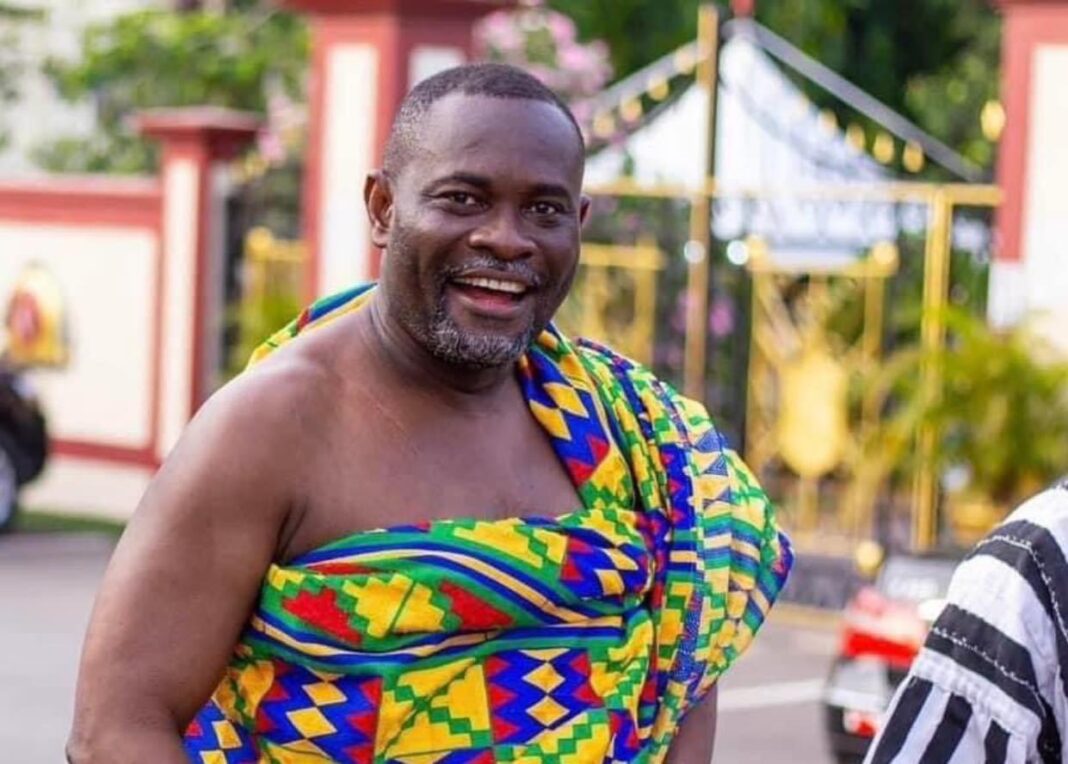

I am driving, listening to gospel music, when my mobile phone starts ringing. It was my wife, and I am on the way home, so I ignore the call. In a few minutes, I would be entering my main gate anyway.
Then she calls again, and a third time. Then, I realize that something urgent is up.

So I call back, and in tears, she reports what she has just heard on radio.

I immediately turn on my radio set and open my WhatsApp application; it is true.

One of the most vital young politicians, a personal friend, a person I knew to be a committed member of the New Patriotic Party (NPP), is dead.
John Kumah is dead.

I would relate a personal (political?) story. Recently, I took part in a political party primary to seek election as a parliamentary candidate for the NPP at Okaikoi North. I solicited for funds, vainly, from many, many people in the NPP hierarchy. Needless to state, the results were not encouraging. A few friends from the days in the trenches showed up. The majority ignored me.
One of the few I failed to call, was John Kumah. Imagine my surprise, when out of the blue, Mr. Kumah called and said he was sending a driver over with the little he can afford to aid my campaign.

I knew John Kumah when the NPP was in government under President John Agyekum Kufuor. At the time, he had just passed out as a lawyer, was actively engaged in student politics (or had just left it) and was practising in Accra. He called me ‘Senior’ then. Later, when the NPP went into opposition, we collaborated in a number of projects.

I remember a significant meeting at the head office of the NPP, after Nana Addo Dankwa Akufo-Addo won the 2016 general election. He was one of several young people (I could have been the oldest in the room) who were discussing what they wanted to contribute to the new government by way of service.
Later, we were to meet in the new President’s anteroom. He later received an appointment in the government, and most of us wished him the best of luck.
Our last physical meeting (we communicated by telephone once in a while) was at a church on the Accra to Cape Coast road. I had to go to Cape Coast on a Sunday to discuss certain professional matters. But I also needed to see him in the coming week, and as I set off from the house, I decided to give him a call. Pleasantly he picked up, and when he realized I was driving around Mallam in Accra, he directed me to the church, operated by his wife. I had opportunity to meet him there, and that was the last time we met, face to face.
His death is untimely, needless, and putatively avoidable.
Rest well, my brother.
I have been listening to the various commentary about what killed him. Some say (irresponsibly I believe) that he was poisoned. Others say that he had heart issues that he was addressing. Whatever the case, he was said to be on his way to Accra, by ambulance on the perilous Accra to Kumasi highway, when he gave up the ghost. If he had arrived in Accra, I understand that he would have been flown to Germany.
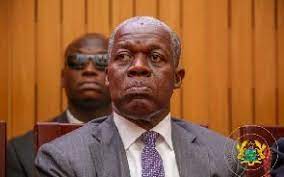
John’s story sounds eerily similar to the case of the late Emmanuel Kwabena Kyeremateng Agyarko, the former Member of Parliament for Ayawaso West Wuogon.
He was also attempting to get to a hospital in America to seek medical care.
It also sounds like the story of Paul Victor Obeng (incidentally also a former student of Opoku Ware School) who was said to have collapsed at a petrol station and died before he could arrive at a hospital.
It is also similar to the case of Paa Kwesi Amissah Arthur, who was happily training at a gym, suffered a sudden collapse, and died before he could arrive at a hospital.
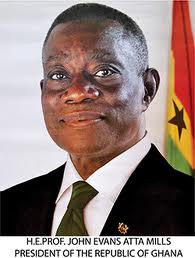
I almost forgot the case of John Evans Atta Mills, late President of the Republic of Ghana, who was declared dead at the 37 Military Hospital after collapsing at an undisclosed location whilst his personal motorcade was allegedly carrying family relations to the Central region.
Death, is a foe that we would all inevitably meet, and to whom we would all inevitably succumb. Immortality is not granted to mankind. But we have a bit of control on how long we share this mortal coil, and it is here that I believe that we are not doing ourselves any favours.
You see, I understand that John had his crisis at Ejisu, in his constituency. There was some time to react, because I understand that his wife had time to travel there.
I have been told by medical people, that it is necessary to keep critically ill people at the nearest health centres, until they are stable enough to travel.
If John was critically ill at Ejisu, then the nearest facility where he had any chance of being stabilized, was the Ejisu Government Hospital.
The hospital touts itself thus;
“Established on October 9, 1923, the Ejisu Government Hospital has grown from an initial 200 bed capacity to 2,000. It is currently the third largest hospital in Africa and the leading national referral centre in Ghana.”
Surely, such a facility could provide enough assistance to stabilize a patient long enough to travel, if travelling to another health facility was necessary?
Then, of course, there is our old warhorse, the Komfo Anokye Teaching Hospital (KATH) also known as GEE, is touted as the second-largest hospital in Ghana, and the only tertiary health institution in the Ashanti Region.
It was the main referral hospital for the Ashanti, Brong Ahafo and northern regions of Ghana until then Tamale Regional Hospital was upgraded to Teaching hospital hence handling referrals from Northern, Upper East and Upper West regions thereby easing some pressure on it.
Surely, if medical wisdom is that we stabilize the patient, then KATH was another ideal choice, much closer and offered another great opportunity to ensure that the critically ill was stabilized, until it would be advisable to travel?
Recently, it has become professionally necessary that I do a lot of travelling on the Accra to Kumasi road, and vice versa. It is a ridiculously perilous journey.
On each of the several trips I have undertaken recently, in and out, there has been close moments when I was almost involved in accidents. And I am a notoriously cautious driver. I would not, under any circumstances, recommend the four to six hour drive to a patient, especially a critically ill patient.
The Ejisu Hospital would be much safer, or, at worst, KATH. But certainly not Accra.
The last time I travelled on that road, I had to take several days off work, resting. It is a tiresome and tiring journey. For a patient, forced to lie on his back in a fast driving ambulance, it would have been a dreadful punishment. Dreadful.
But the above, lead to even more questions.
At every such death, we raise the question of conducting an inquiry into the circumstances of the death. Needless to state, once the person at the centre is a political figure (such as Atta Mills) the political parties would circle the wagons, and resist any such call.
Only for the debate to be reawakened at the next such disaster.
In Ghana, I understand that our Magistrates are our Coroners. In the case of Atta Mills, the Coroner could be a Magistrate at Osu or Labadi or Nungua or Accra.
In the case of my brother John Kumah, the Coroner would be somebody at Suhum. These persons have a duty to conduct inquiries into unexplained deaths in their jurisdictions.
But I am certain, even as I write these words, that some ‘wise’ persons have moved the remains of that fine young man to a place they deem right and secure, and have set up roadblocks that would block, and ultimately prevent any such inquiry.
They did it in the case of Evans Atta Mills, and no doubt, they would do it this time too.
A Coroner’s Inquiry is necessary for a number of reasons. It would tell us, publicly, why what happened, happened, so that we can learn necessary lessons to avoid such future tragedies.
But not in Ghana. We would only wait for the next such tragedy, shed copious tears, and wait for the next one to occur.
Rest well, John. You were one of the good ones.
PERSICOPE DEPTH is published in the Daily Searchlight every Monday

