

Corruption is a killer. For every child that is unable to get access to medicine because there was not enough because the money for the medicine had been stolen by some public official, corruption is a killer.
For the passenger that ends up dead on the highway because of a near unmotorable road because the money for it was stolen by some public official, corruption is a killer.

For every building that falls down and kills someone because some public official accepted a bribe and allowed shoddy work to be done, corruption is a killer.

But there is a worse aspect to corruption, particularly in Ghana, and that is what makes it frightful. People who are corrupt, need to flaunt the unjust gains of corruption. And that is where we have a great problem in Ghana. It is the corrupt who get to be invited to the best programs, to chair the biggest functions, to make the biggest donations to any and every cause. It is also the corrupt who have the rare privilege of speaking and getting quoted.

You have probably seen them, at the places you should least expect them, chairing school, social and religious events, because they have the money to burn, no questions asked.
In Ghana, we look up to the corrupt and those with ill-gotten wealth. They are our leaders, those our children look up to and aspire to become. It is fashionable to be corrupt, and to flaunt the vestiges of corruption. In fact, we are all probably corrupt, in one way or the other, and worse, we happen to be the loudest advocates of anti-corruption. Even the institutions and individuals that claim that their sole purpose is to combat corruption, are probably corrupt.

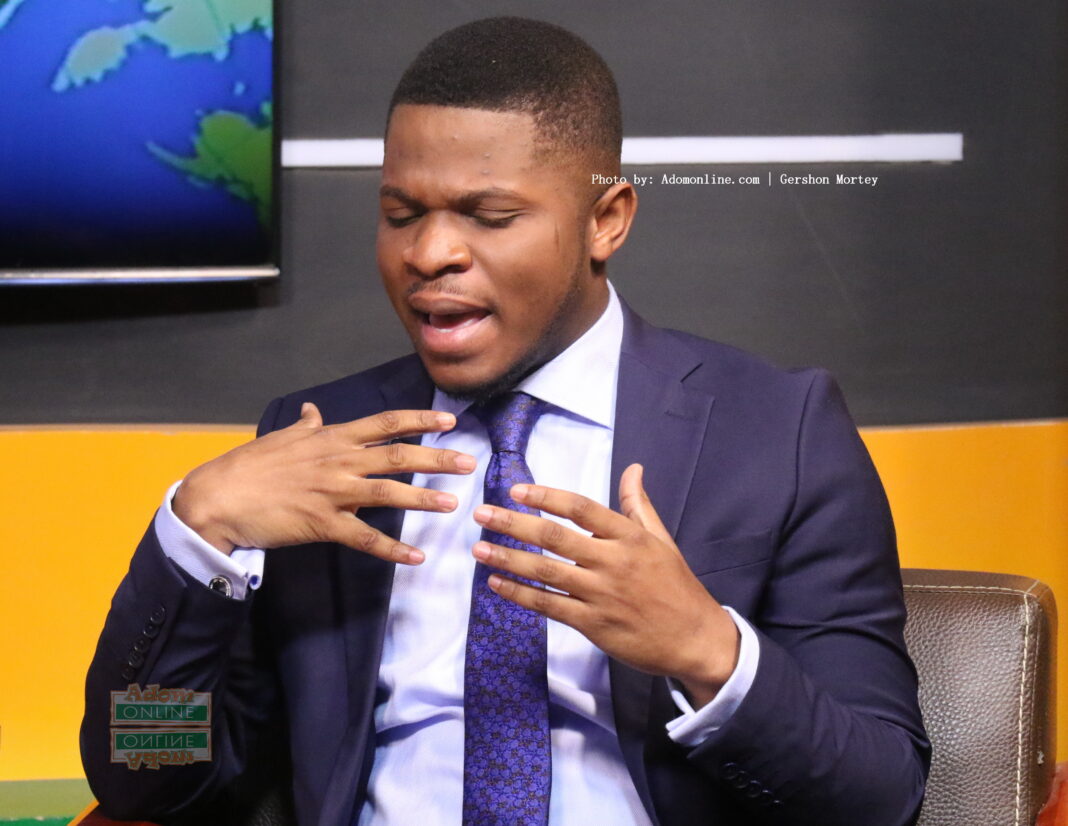
Take, for instance, the position adopted by Sammy Gyamfi of the National Democratic Congress (NDC) that the governing New Patriotic Party (NPP) has made corruption a fashionable and attractive venture.
It is probably to be expected that Sammy Gyamfi would lay the blame for corruption directly at the door of the ruling NPP. It is to be expected, and the NPP is guilty (I will not even qualify this statement with the word ‘probably’) as charged. But the NDC, in which party Sammy Gyamfi is a national officer, is just as guilty of actively participating and promoting corruption.

I am dead certain, that if we were to subject both the NDC and NPP to the litmus test of corruption, they would fail with flying colours. And it is not even hard to establish this fact; we can get an answer by asking the very simple question as the sources of funds for the operations of both political parties.

Where do these two political parties find the funds to engage in the operations they engage in?
As I write this piece, the flag bearer of the NDC is on tour throughout Ghana, holding private and public meetings. By the time he gets back to Accra, he would have travelled thousands of miles across the country, in a convoy of fuel guzzling four-wheel drives. Money must be coming from somewhere to fund these activities. The money must not be free ‘free’ sources. It is an investment, being made by certain people, and if Mr. Mahama is allowed another opportunity to lead this country, he would reward the people who gave him these funds with contracts whose prices are probably inflated.
Of course, this statement does not go for the NDC alone, but for the NPP as well. We all see what is happening, but we all turn a blind eye, only to turn round, like Sammy Gyamfi, to lament about corruption, when we are the very living essence of the phenomenon.
If we accept that corruption is a killer, then we are all killers, and that is the true sadness of the situation we find ourselves in. And yet, once again, what is sad is the fact that we are so ready, like Sammy Gyamfi, to pay lip service to the phenomenon, to play the blame game, to fail to acknowledge that whilst we are playing the sexy game of blaming each other and failing to find real, tangible solutions, real, human babies are dying in our hospitals.
I am not a fan of wholesale solutions imported from foreign thought leaders, particularly of the western kind, but I seem to recall that some years back, an American president (was it Barack Obama) was in Ghana telling us that what we need are not strong leaders, but strong institutions.
For me, that captures the essence of the problem we have with corruption; we do not have strong institutions. If we had strong institutions, we would have made good, reasonable headway in our fight against corruption. Just one good, strong institution, for instance the media, would have been enough to combat and possibly overcome corruption in Ghana, but we do not have even a single institution that works, even halfway adequately.
Take, for instance, the Electoral Commission (EC). Political parties are supposed to file returns annually and after every election with the EC. Among the data to be filed, would be how much money was spent, and the sources of funds. The political parties blatantly fail to live up to this obligation, and the EC blatantly refuses to operationalize this legal provision. We can say, conveniently, that this failure on both sides is a major contributor to proliferation of corruption within the two leading political parties. Sammy Gyamfi is an official of one of them, and by extension, he is thriving within a very corrupt milieu, but there he is, preaching to us about corruption.
Sammy Gyamfi made his claim in a radio/television studio belonging to a well-known media outlet. A simple question that could have been posed to him, as he pontificated on corruption, is whether his party had filed its returns with the EC. Because we do not fight corruption by just pontificating, but by taking real, actual steps to live the fight against corruption.
If the media were halfway active, if we insisted on seeing the right things done, corruption in Ghana would have been confronted, if not tamed. But the media does not have the mental strength to try to wean itself off political apron strings of daily bread. We are not redoubtable enough to chart a path that battles corruption, because a few cakes of cash can send off on a totally irrelevant path.
Take, for instance, our latest position on the corruption perception index. Fine, we have not done so well, but should the conversation be about some poll, done by people of nebulous background once a year, or we should have been pursuing an agenda of our own? The obvious answer, of course, is that if we, as a nation, have an issue with corruption, then we should have a national program to combat it. But that would never be.
As usual, I am certain that we would have a conversation for a few days, then, we would move on to the next crisis, and come back to the same conversations next year with a variant of the same report, and expectedly, the politicians would assume exactly the same positions.
Indeed, Ghana and Ghanaians are just having a real, live romance with corruption. It is not a canker we intend to combat. It is our friend, our bedmate.
PERISCOPE DEPTH published in the Daily Searchlight of Monday, 5th February, 2024. PERISCOPE DEPTH is a column written by our Publisher Mr. Kenneth Agyei Kuranchie every Monday in the Daily Searchlight

