
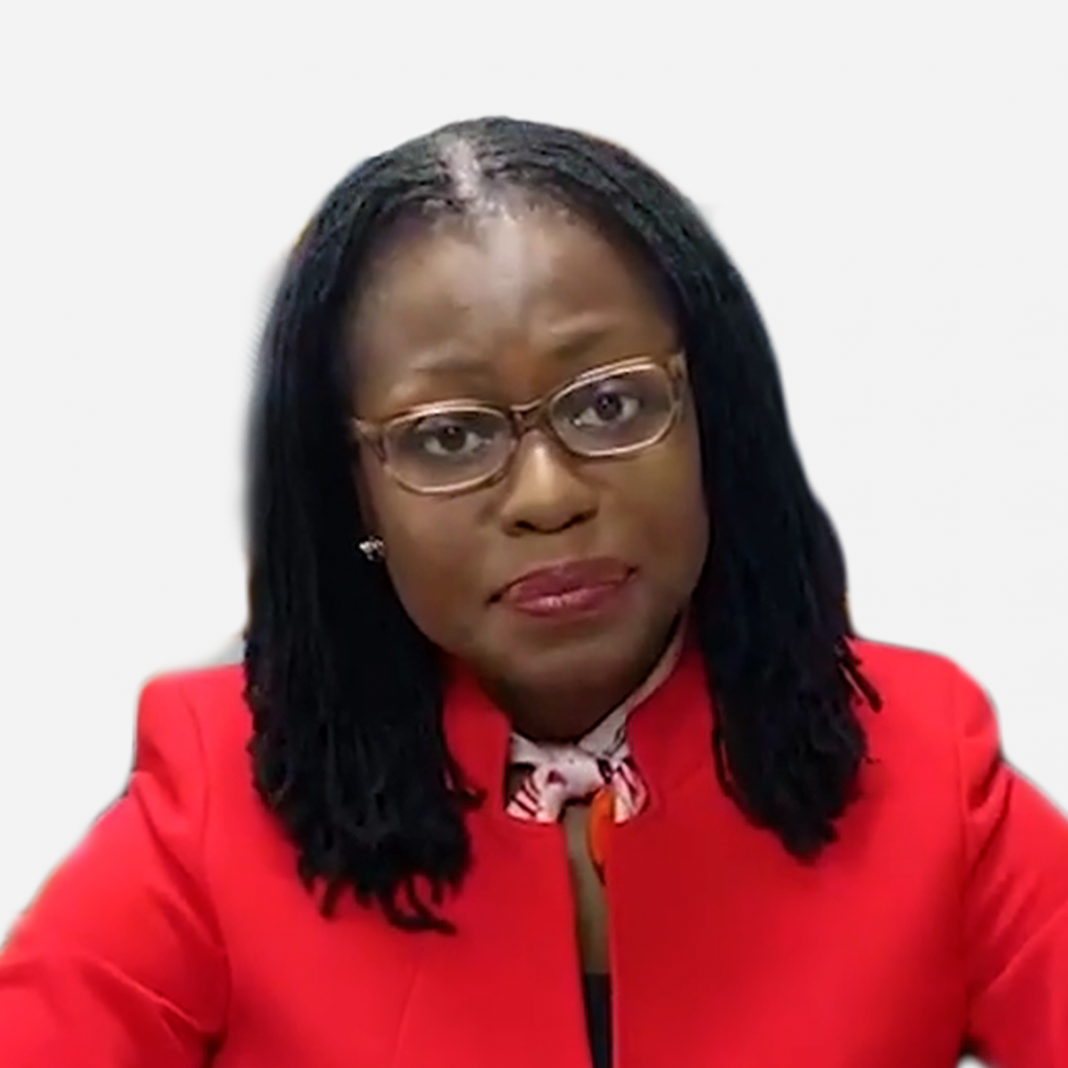

The Second Deputy Governor of the Bank of Ghana, Mrs Elsie Addo Awadzi, has stated according to an African Development Bank report on Affirmative Finance Action for Women in Africa, there is an estimated US$42 billion financing gap for African women entrepreneurs across business value chains, and only 16-20 percent of women in Sub-Saharan Africa are able to access long-term financing from formal financial institutions.
She has stated that here in Ghana, female entrepreneurs are eight percent times less likely than men to access the kind of capital and other financial services and products that they need to start or scale up their businesses, according to the World Bank’s 2017 Global Findex Survey.

“What is more, the economic shock from the COVID-19 pandemic has impacted women owned and women-led businesses disproportionately, given that many female entrepreneurs operate in the informal sector or in the MSME sector. For some of these, their businesses remain closed or struggle to regain lost markets and opportunities,” she has stated.

Mrs Elsie Addo Awadzi was delivering the keynote address at the 2nd Anniversary Celebration of the AGI Women in Business on the theme “Women-Led Businesses: Exploring Finance Channels and Market Access for Growth” 9th December 2021.

The occasion was attended by Her Excellency Madam Kati Csaba, Canadian High Commissioner to Ghana, Madam Grace Amey Obeng, Chairperson, Association of Ghana Industries’ Women in Business Initiative, and Dr. Humphrey Darkey, President Elect, Association of Ghana Industries and Madam Kosi Yankey Ayeh, Chief Executive Officer, Ghana Enterprises Agency.
She stated that given the significant contributions of female entrepreneurs and their businesses to Ghana’s socio-economic journey over the decades, it is only befitting that we shine the spotlight on them and collectively find ways to support them to contribute their full quota to national development.

She paid tribute to Ghanaian female entrepreneurs like the late Dr. Esther Ocloo of Nkulenu fame whose work to establish the AGI several decades ago continues to bear great fruit for our nation.
“Indeed, women are often the unsung heroes in our national discourse. Our great grandmothers, grandmothers, mothers, sisters, and many of us have been entrepreneurs at one time or the other producing critical goods and services for our people. Indeed, I would argue that entrepreneurship comes naturally to women and is perhaps second nature to women. In addition to full time female entrepreneurs, many women in formal employment also tend to get involved in one small business or the other to help supplement household income and to improve their financial standing,” she stated. Mrs. Addo Awadzi stated that according to the World Bank, forty-four percent of micro, small, and medium enterprises (MSMEs) in Ghana are female-owned, and this sector accounts for about 92 percent of all businesses and contributes about 70 percent of Ghana’s GDP.

“More recent data shows that Ghana’s private sector is dominated by women entrepreneurs, second only to Uganda, according to the 2019 MasterCard Index of Women Entrepreneurs. Women entrepreneurs and the businesses they own and lead, however, face serious challenges. Data suggests that these businesses tend to remain smaller and less profitable than those owned by men, owing in part to limited access to business support services, markets, and finance. Goldman Sachs estimates that 70 percent of women-owned formal SMEs are unserved or underserved in terms of access to credit, amounting to a US$285 billion credit gap, and closing this credit gap in developing countries could lead to a 12 percent increase in percapita GDP by 2030,” she stated.

She noted that limited market access and limited access to finance remain some of the key challenges for all stages of businesses owned by women in Ghana.
“The good news is that there are growing opportunities to address these bottlenecks that limit women-owned and women-led businesses, and I will shed some light on these. Market access for Ghanaian businesses continues to expand although the participation of female entrepreneurs in some of Ghana’s fast-growing economic sectors such as technology remains marginal,” she said.
She stated that beyond Ghana, there is great potential for women to harness the benefits of the AfCFTA which creates a single Africa market, as well as many other opportunities beyond Africa, thanks to technology and e-commerce platforms among others. These market opportunities offer hope to women-owned and women-led businesses in Ghana to scale up and to compete with their peers abroad,” she said.
She added that to address the limited access to finance challenge, a lot is required both on the side of female entrepreneurs and their businesses on one hand, and financial institutions on the other.
“On the demand side, female entrepreneurs must understand various financing options such as bank financing, and financing by specialised deposit-taking institutions (SDIs) such as savings and loans companies, finance houses, micro finance companies, and rural and community banks who tend to focus on MSMEs,” she said.
The Second Deputy Governor stated that the Bank of Ghana has put in place mechanisms to support the delivery of credit on a sustainable basis to businesses, including women-owned MSMEs.
“These include a credit bureau-based reporting system that ensures that banks and other licensed lenders report on credit behaviour (prompt loan repayments as well as defaults) on all borrowers, and that creditors check on borrowers’ credit behaviour before they make credit decisions on loan applications. Responsible borrowers therefore stand a better chance to access more loans and at reasonable interest rates as their credit risk will be lower. Also the Bank of Ghana’s Collateral Registry registers all collateral (over movable and immovable assets) provided by borrowers to licensed creditors and facilitates the delivery of credit to borrowers (especially women) who might not have access to immovable asset collateral,” she stated.

