
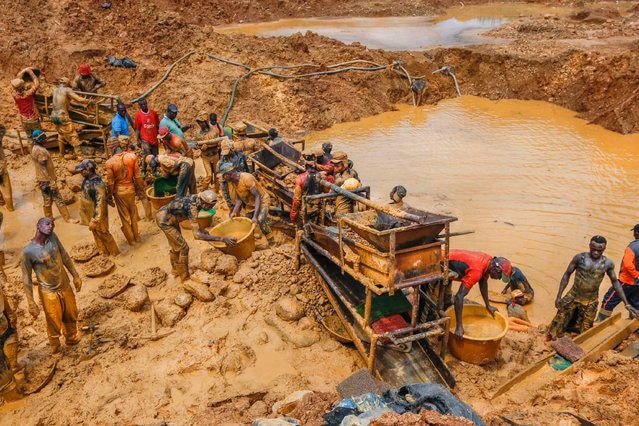

Illegal mining is increasingly undermining palm oil production in parts of the Central Region, with Twifo Oil Palm Plantation (TOPP) warning that the activities are depriving the industry of skilled labour and polluting water sources essential to agricultural operations.
Managing Director of TOPP, Daniel Kojo Nyame, disclosed that the company was currently facing a 30 per cent shortage in the workforce required for harvesting operations, as trained plantation workers abandon their jobs to engage in illegal mining, popularly known as galamsey.

He said the growing movement of workers into illegal mining was increasing operational expenditure, disrupting plantation activities and threatening the company’s efforts to expand production to meet Ghana’s rising demand for palm oil.

Speaking during a visit to the plantation at Twifo Praso by national executives of the Oil Palm Development Association of Ghana (OPDAG), Mr. Nyame explained that the company continued to lose employees who had undergone specialised training in various aspects of oil palm cultivation and processing.

He observed that activities such as pruning, harvesting and machinery maintenance required technical expertise, making the departure of experienced workers particularly difficult and expensive to replace.
Describing the extent of the labour shortage, Mr. Nyame said the plantation was operating with approximately 50 per cent of the workforce required for harvesting, leaving a deficit of about 30 percentage points.

He added that the company was compelled to repeatedly recruit and train replacement workers, only for some of them to subsequently abandon their employment for illegal mining activities.
Beyond the growing labour constraints, the TOPP Managing Director identified pollution of the Pra River as another significant threat to the company’s operations, particularly its access to dependable water supplies.

He explained that the plantation previously relied on the river during periods when its regular water sources could not adequately meet operational requirements. However, contamination associated with illegal mining had made it increasingly difficult to depend on the water body.

Mr. Nyame further disclosed that the company had encountered attempts by illegal miners to encroach on areas serving as sources of water for its operations. He noted, however, that interventions by the District Chief Executive and security agencies had helped address the situation.
He warned that the combined effects of labour shortages, water pollution and encroachment were creating serious difficulties for agricultural enterprises operating in communities affected by illegal mining.
The challenges come as TOPP pursues an ambitious expansion programme intended to increase domestic palm oil production and reduce Ghana’s dependence on imported supplies.
The company currently manages approximately 8,000 hectares of plantation land and operates a processing mill with a capacity of 30 tonnes per hour. Its expansion strategy includes upgrading the facility to process 45 tonnes per hour and doubling its plantation area to 16,000 hectares.
However, efforts to secure an additional 4,000 hectares of land have remained unresolved for nearly five years, with prolonged negotiations slowing the company’s expansion ambitions.
Mr. Nyame maintained that strengthening domestic palm oil production would help reduce import dependence, conserve foreign exchange and create additional employment opportunities for residents of surrounding communities.
TOPP currently has approximately 500 permanent employees, while its seasonal and contract workforce increases to about 2,000 during periods of heightened operational activity.
He indicated that successful implementation of the proposed expansion programme could double the employment opportunities generated by the company, providing additional livelihoods for people in neighbouring communities.
The Managing Director’s concerns highlight the growing pressure illegal mining is placing on agricultural production, industrial expansion and employment, particularly in communities where farming enterprises compete with galamsey for labour and access to essential natural resources.

