
Business and Economy | Petroleum Prices | November 29, 2026
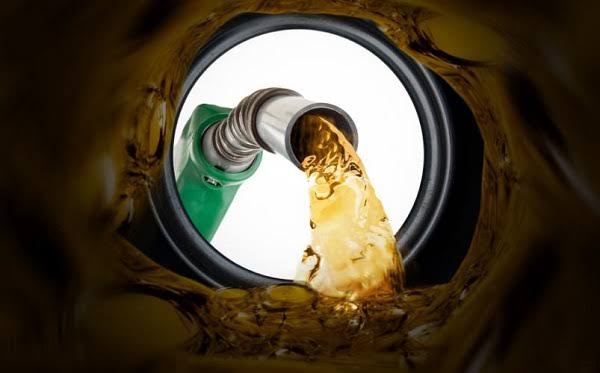
Motorists and households in Ghana are expected to enjoy substantial reductions in petrol and Liquefied Petroleum Gas (LPG) prices from December 1, 2026, although diesel consumers will face an increase of approximately four per cent per litre during the first pricing window of the month.

The anticipated adjustments, contained in the Chamber of Oil Marketing Companies (COMAC) pricing outlook, point to a significant divergence in the movement of petroleum product prices, with petrol and LPG expected to become considerably cheaper while diesel records an upward adjustment.

Pricing data obtained by JOYBUSINESS indicates that petrol, currently selling at approximately GH¢13.69 per litre at some filling stations, could decline by as much as 15.13 per cent, potentially bringing the price down to approximately GH¢11.62 per litre.

LPG, which has experienced considerable increases in recent pricing windows, is also expected to record a substantial reduction of 21.22 per cent, bringing the projected retail price to approximately GH¢17.61 per kilogramme.
Diesel, however, is heading in the opposite direction, with its price expected to increase by 3.81 per cent. The product, which is currently selling at approximately GH¢17.95 per litre at some outlets, could therefore become more expensive from the beginning of December.

The contrasting adjustments reflect developments in the international petroleum market, movements in the exchange rate and changes in domestic pricing arrangements, particularly the suspension of the GH¢2 per litre diesel subsidy.
COMAC’s assessment indicates that international crude oil prices have declined by 10.96 per cent to approximately US$92.83 per barrel, marking a third consecutive pricing window of reductions. Crude prices have also reportedly fallen by approximately 20 per cent during November following US President Donald Trump’s decision to postpone renewed military strikes.

The international market has equally recorded substantial reductions in the prices of refined petroleum products. LPG registered the sharpest decline of 21.01 per cent, followed by petrol at 15.91 per cent, while diesel experienced a comparatively smaller reduction of 12.70 per cent.

The Ghanaian cedi has remained relatively stable, notwithstanding some pressure in recent days, providing an additional measure of support for the projected reductions in the prices of certain petroleum products.
COMAC explained that the combined effect of declining international product prices and relative currency stability had contributed significantly to the expected changes at the pumps.
However, the anticipated increase in diesel prices has been attributed largely to the suspension of the GH¢2 per litre subsidy previously applied to the product, a development that could offset the benefits of falling international diesel prices.
NPA reduces petrol and LPG price floors
Adding another important dimension to the anticipated December adjustments, the National Petroleum Authority (NPA) has announced reductions in the minimum prices at which petroleum products may be sold during the December 1 to 16, 2026 pricing window.
Information obtained by JOYBUSINESS indicates that the regulated price floor for petrol has been reduced from GH¢13.69 to GH¢12.36 per litre, representing a decline of approximately 9.72 per cent compared with the previous November 14 benchmark.
The minimum price for LPG has also been lowered from GH¢15.93 to GH¢12.98 per kilogramme, reflecting a reduction of approximately 19.08 per cent.
The revised thresholds are expected to provide oil marketing companies with additional flexibility to adjust their retail prices in response to prevailing market conditions.
However, the NPA has clarified that the prescribed price floors exclude premiums charged by international oil trading companies, as well as the operating margins of bulk import, distribution and export companies and the margins applied by oil marketing companies and LPG marketing companies.
Consequently, the actual prices consumers encounter at filling stations will continue to depend on the additional charges and margins independently determined by the respective companies within the applicable petroleum pricing framework.
The distinction between the projected market reductions and the newly announced regulatory price floors is particularly important because a lower minimum selling price does not automatically translate into an identical reduction across every filling station.
Competition intensifies as oil marketing companies adjust pump prices
The anticipated December reductions come against the backdrop of increasingly aggressive competition among Ghana’s more than 200 oil marketing companies, several of which have already adjusted their prices downwards ahead of the new pricing window.
Market observations conducted by JOYBUSINESS on Wednesday, November 25, indicated that some industry players had undertaken additional reductions, suggesting that competition could influence how quickly and extensively the anticipated international market gains are transferred to consumers.
Star Oil was among the companies leading the reductions, lowering its petrol price from GH¢13.95 to GH¢13.69 per litre, representing a reduction of 26 pesewas.
Another major operator, Allied, also reduced its petrol price to GH¢13.75 per litre while lowering its diesel price from GH¢17.95 to GH¢17.50 per litre.
Industry sources familiar with Star Oil’s operations attributed the company’s decision to improved supplies through its bulk oil distribution business, alongside the sustained decline in international petrol prices.
There are also indications that additional marketers could review their prices before December 1, particularly in the petrol market, as companies seek to remain competitive and attract customers.
Nevertheless, the extent to which individual companies will reduce their prices remains uncertain, especially given the different supply arrangements, operating costs and commercial margins within the industry.
COMAC raises concerns over pricing violations
Beyond the anticipated reductions, the evolving petroleum market has reignited disagreements over compliance with the NPA’s prescribed pricing framework, particularly as some marketers continue to sell petroleum products at prices below the established regulatory thresholds.
Star Oil Chief Executive, Kwame Tieku, had earlier appealed publicly to the NPA to reduce the price floor ahead of December 1, arguing that the existing threshold restricted the company’s ability to offer petrol at prices below GH¢13.69 per litre.
The Chamber of Oil Marketing Companies has also expressed concern over what it considers increasing instances of non compliance and attempts by some operators to circumvent the pricing policy.
In a statement issued on Thursday, November 26, 2026, COMAC called on the industry regulator to investigate reported breaches of the pricing requirements and impose appropriate sanctions where violations are established, subject to due process.
The Chamber’s position highlights a growing tension within the petroleum distribution industry between the need to maintain a competitive market that delivers lower prices to consumers and the importance of enforcing a consistent regulatory framework.
While lower pump prices generally benefit motorists, transport operators, businesses and households, persistent disregard for the prescribed pricing arrangements could raise questions about fair competition and the effectiveness of regulatory oversight.
What consumers should expect from December 1
The combined effect of the international price movements, the revised NPA price floors and growing competition among marketers suggests that consumers could experience different pricing outcomes depending on the petroleum product and the filling station they patronise.
Petrol and LPG appear positioned for considerable reductions, with the lower regulatory thresholds potentially creating additional room for marketers to adjust their prices downwards.
Diesel consumers, however, may not enjoy similar relief, as the withdrawal of the GH¢2 per litre subsidy is expected to contribute to an increase in the retail price despite the decline in international diesel quotations.
For households that rely on LPG for cooking, the anticipated reduction could provide some relief from the rising cost of domestic energy. Similarly, lower petrol prices could ease transportation and operating expenses for motorists and businesses, although the extent to which transport fares and other service charges respond will depend on subsequent market developments.
Ultimately, the December 1 pricing window will test how effectively reductions in international petroleum prices are reflected in Ghana’s domestic market, while also placing the NPA under pressure to ensure compliance with its pricing regulations.
Although the outlook points to significant savings for petrol and LPG consumers, the expected increase in diesel prices means that the overall impact on households and businesses will not be uniformly favourable.
The critical issue will therefore be whether competition among oil marketing companies translates into meaningful savings for consumers without undermining regulatory compliance and fair competition across the petroleum downstream industry.