
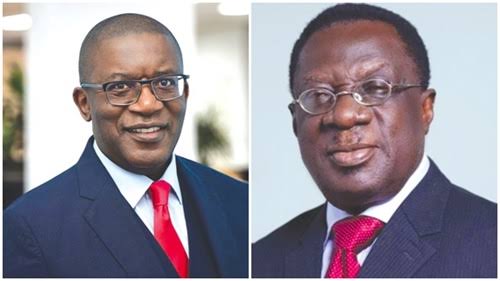

The first accused person in the ongoing criminal proceedings over the controversial Accra Sky Train project, Solomon Asamoah, has asked the High Court to compel 15 individuals, including former government officials, senior executives of the Ghana Infrastructure Investment Fund (GIIF) and financial professionals, to appear before the court and testify in his defence.
The development was disclosed by Deputy Attorney General, Justice Srem Sai, in a Facebook post, indicating that although the accused persons had initially informed the court that they had no witnesses to call, Mr Asamoah subsequently requested an order compelling the identified individuals to give evidence on his behalf.

The proposed witnesses reportedly include former Minister for Railway Development, Joe Ghartey; the Chief Executive Officer of GIIF, Nana Dwemoh Benneh; the Auditor General, Dr Pamela Graham; and representatives of Deloitte Ghana and PricewaterhouseCoopers (PwC).

The request introduces another significant development in the trial, as the defence seeks to have individuals with knowledge of the financial arrangements, institutional processes and professional assessments surrounding the proposed railway project appear before the court.

The case involves Mr Asamoah and former GIIF Board Chairman, Professor Christopher Ameyaw Akumfi, who are facing prosecution over an alleged financial loss of US$2 million to the Republic in connection with the proposed Accra Sky Train development.
According to the prosecution, the two accused persons allegedly conspired to cause financial loss to the state by facilitating the transfer of US$2 million to Africa Investor Holdings Limited, a company associated with the proposed urban railway project, without obtaining the requisite authorisation from the GIIF Board.

The prosecution alleges that the payment was made in February 2019 as consideration for an equity interest in a company connected to the development.
The proposed Accra Sky Train was conceived as an elevated urban railway transportation system intended to ease congestion within the capital and provide commuters with an alternative means of travelling across the city.

The ambitious transportation initiative was expected to be implemented through a partnership involving the government, GIIF and private sector investors. However, despite the financial arrangements associated with its development, the proposed railway infrastructure was never constructed.

The prosecution has maintained that the US$2 million transaction lacked the necessary approval of the GIIF Board and that public funds were consequently released without the requisite institutional authorisation.
Mr Asamoah and Professor Ameyaw Akumfi have denied the allegations and pleaded not guilty to six criminal charges, including conspiracy to wilfully cause financial loss to the Republic, wilfully causing financial loss to the Republic and conspiracy to commit intentional dissipation of public funds.
Prosecution closes case as court directs accused persons to open their defence
The prosecution concluded the presentation of its evidence in May 2026 after calling three witnesses in support of its case against the two accused persons.
Subsequently, in July 2026, the High Court dismissed a submission of no case to answer filed by the defence, determining that sufficient evidence had been presented to require the accused persons to respond to the allegations against them.
Following the ruling, the court directed the accused persons to open their defence and submit their respective witness statements.
The statements were subsequently filed in September 2026, paving the way for the current stage of proceedings in which the accused persons are expected to present their defence.
Mr Asamoah’s latest request seeks to bring 15 additional individuals before the court through compulsory witness attendance, potentially introducing evidence from former government officials, GIIF leadership, public financial oversight authorities and professional accounting firms.
The court’s determination of the application will establish whether the individuals identified by the first accused person will be required to appear and provide testimony as part of his defence.
The proceedings remain ongoing, and the allegations against both accused persons have yet to be established by the court.

