
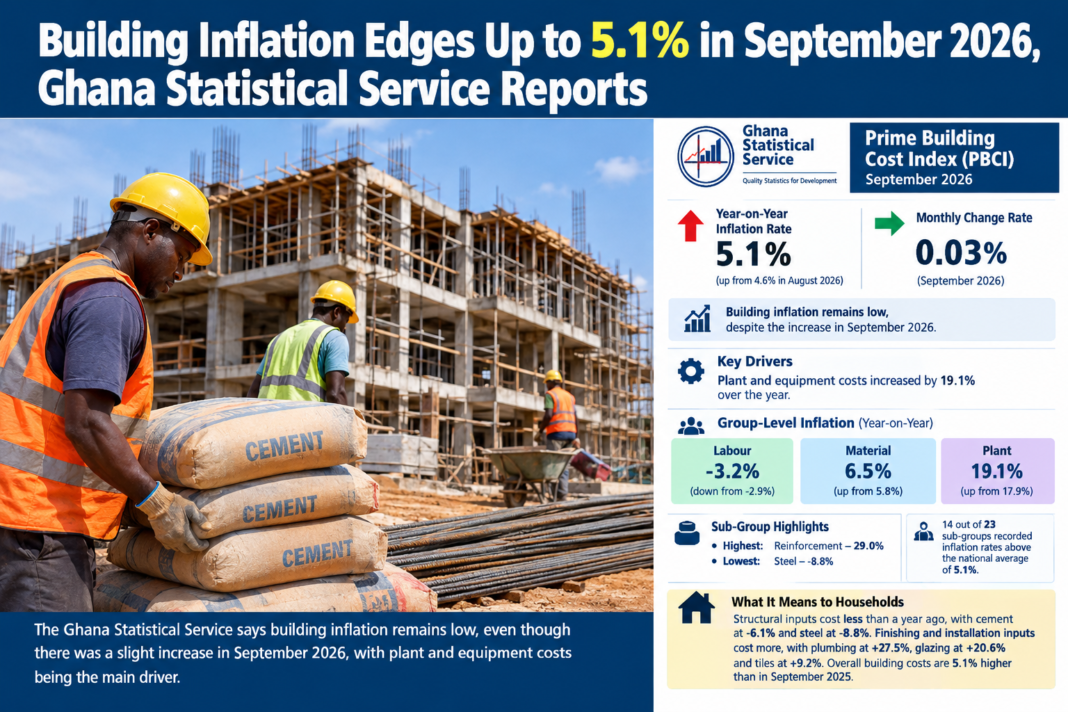

Ghana’s year on year inflation rate for building construction increased to 5.1 per cent in September 2026, compared with 4.6 per cent in August, as rising plant, equipment and construction material costs continued to influence expenditure across the building sector.
The Ghana Statistical Service (GSS), in its latest Prime Building Cost Index (PBCI) report, indicated that although the annual rate edged upwards during the month, overall building inflation remained relatively low. The monthly change in building costs stood at 0.03 per cent in September.

The latest figures point to contrasting movements across the various components of construction, with some inputs becoming cheaper while others recorded substantial price increases.

Plant and equipment costs emerged as the principal driver of annual building inflation, recording an increase of 19.1 per cent in September, compared with 17.9 per cent in August. The development highlights the growing cost pressures associated with machinery, equipment and other operational requirements within the construction industry.

A breakdown of the index showed that inflation within the materials category rose to 6.5 per cent during the review period, up from 5.8 per cent in the preceding month. Labour costs, however, continued to record a negative annual inflation rate of 3.2 per cent, compared with negative 2.9 per cent in August, indicating a further decline in the measured cost of labour relative to the corresponding period last year.
At the subcategory level, reinforcement recorded the highest annual inflation rate, reaching 29.0 per cent in September. Steel, by contrast, registered the lowest rate at negative 8.8 per cent, reflecting a decline in its cost compared with September 2025.

The report further revealed that 14 of the 23 construction subgroups recorded inflation rates above the national building inflation average of 5.1 per cent, demonstrating that cost increases remain unevenly distributed across the sector.
Although annual building inflation has fallen by approximately half over the past year, the rate has been rising since March 2026, suggesting that renewed price pressures have emerged after an earlier period of moderation.

For households planning to build, purchase construction materials or undertake home improvements, the latest figures present a mixed picture. Structural inputs, including cement and steel, were cheaper than they were a year earlier, with cement recording an annual inflation rate of negative 6.1 per cent and steel registering negative 8.8 per cent.

However, several finishing and installation materials became considerably more expensive. Plumbing inputs recorded an annual inflation rate of 27.5 per cent, while glazing costs increased by 20.6 per cent and tiles registered an increase of 9.2 per cent.
These differences mean that households may experience varying cost outcomes depending on the stage of construction, the materials required and the type of work being undertaken. Although lower prices for certain structural materials could provide some relief, the substantial increases in plumbing, glazing and equipment costs may raise expenditure on other aspects of building projects.
Overall, the Prime Building Cost Index indicates that building construction costs in Ghana were 5.1 per cent higher in September 2026 than in September 2025. While the relatively modest monthly change suggests limited immediate movement in overall costs, the continued rise in annual inflation and the sharp increases recorded in selected construction inputs remain important considerations for households, developers and contractors.

