
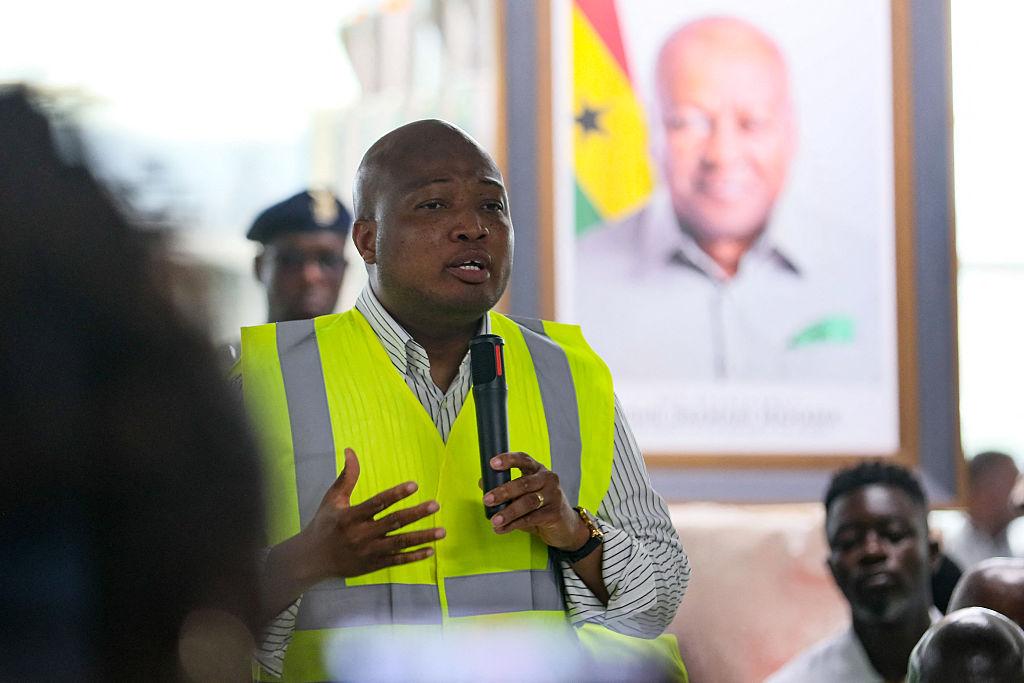

The government has released the names of 1,964 Ghanaian nationals evacuated from South Africa following a renewed wave of xenophobic attacks, according to Foreign Affairs Minister Samuel Okudzeto Ablakwa.
Addressing a media briefing on Monday, September 7, 2026, Mr Ablakwa explained that the evacuation programme, which commenced on May 27 and concluded on September 4, was organised to safeguard Ghanaian citizens amid escalating threats, intimidation and violence directed at foreign nationals.

He disclosed that the exercise cost GH¢49.72 million, with the government providing GH¢33.72 million and Engineers and Planners, a company owned by businessman Ibrahim Mahama, contributing GH¢16 million towards the operation.

The overall expenditure covered chartered aircraft and flight tickets, transportation within South Africa and Ghana, meals, accommodation, medical assistance, reintegration programmes and the transportation of the remains of two deceased Ghanaian nationals.

Mr Ablakwa further revealed that each evacuee received GH¢5,000 to support reintegration into Ghana and an additional GH¢500 to cover travel and transportation expenses.
Other forms of assistance provided to the returnees included complimentary medical examinations, enrolment in the National Health Insurance Scheme, food supplies, SIM cards with airtime and data, psychosocial counselling and accommodation arranged through partner organisations.

According to the minister, the government has also entered the returnees into a dedicated national database designed to connect them with employment opportunities, entrepreneurial assistance, vocational training and financial support for start up businesses.
Four Ghanaians Reportedly Die Amid Xenophobic Violence

Mr Ablakwa disclosed that four Ghanaian citizens had died in connection with the reported violence and the difficult circumstances surrounding the attacks in South Africa.

The deceased were identified as Bashiru Issahaq, aged 44, who was killed in Khayelitsha, Cape Town, on June 30; Kwadwo Antwi, who was murdered in Prieska on July 18; Amoonu Jailor Nash, who lost his life in East London on April 3; and Ebenezer Ayi Tawiah, who died upon arriving at Kotoka International Airport in Accra on August 17 after reportedly being unable to obtain medical attention amid harassment.
The foreign affairs minister said Ghana’s High Commission in Pretoria had been engaging South African authorities to facilitate investigations into the deaths and ensure that anyone found responsible was held accountable under the law.
He added that Ghana had officially protested the reported attacks and conveyed its concerns to South African officials regarding the security and protection of Ghanaian nationals living in the country.
Ghana Seeks African Union Action on Xenophobic Attacks
Mr Ablakwa said Ghana had petitioned the African Union Commission on May 6, calling for xenophobic attacks against African nationals in South Africa to be formally considered as a continental concern.
He explained that the petition had received unanimous backing from the ECOWAS Authority of Heads of State and Government. The African Union Commission had also indicated that the matter would be considered at the organisation’s summit scheduled for January 2027.
The minister emphasised that the government remained determined to address the underlying causes of xenophobic violence while advancing the protection of Ghanaian citizens and defending their rights and dignity outside the country.
Government Invites Auditor General to Examine Evacuation Costs
As part of efforts to strengthen transparency and public accountability, the Ministry of Foreign Affairs announced that it had published the names of those evacuated, alongside ticket receipts and other supporting records associated with the exercise.
The government has also invited the Auditor General to undertake an independent audit of all evacuation operations conducted since 2017, according to Mr Ablakwa.
He maintained that the latest evacuation was voluntary and intended to protect Ghanaian citizens experiencing distressing and potentially dangerous conditions in South Africa. He stressed that safeguarding human life and preserving the dignity of Ghanaians remained more important than the financial implications of bringing them home.
The minister also announced plans to establish a Ghanaian Diaspora Consular Fund to provide emergency assistance to Ghanaian nationals who encounter crises in different parts of the world.
He reaffirmed the government’s commitment to openness in public expenditure, responsible management of state resources and the continued protection and welfare of Ghanaians living abroad.

