
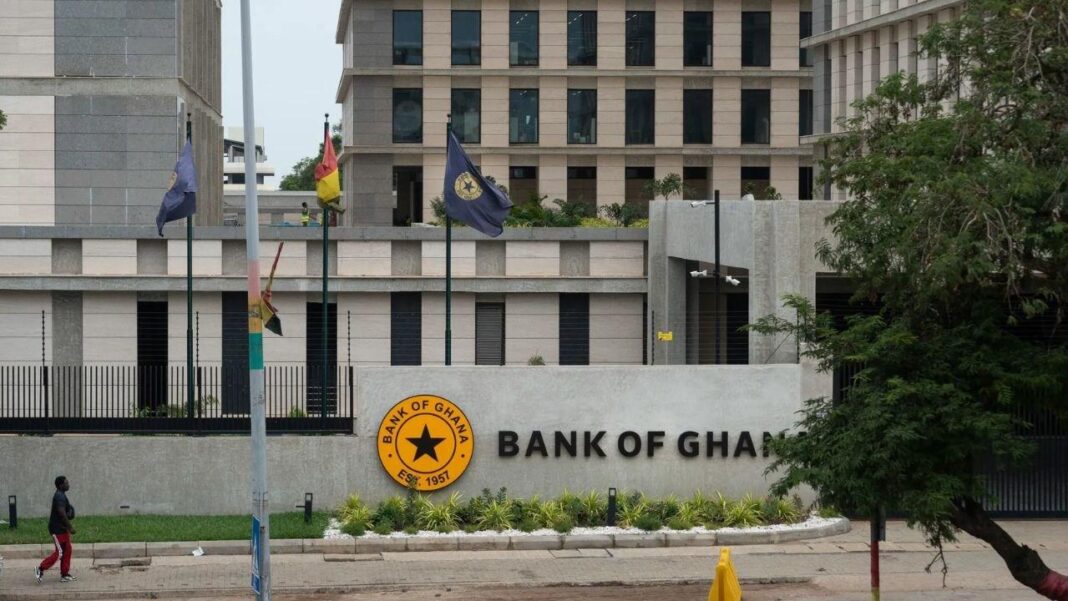

The Bank of Ghana (BoG) has proposed stricter liquidity requirements that would oblige commercial banks to maintain sufficient readily accessible, high quality assets to meet their anticipated net cash outflows throughout a 30 day period of financial difficulty.
The proposed measures are contained in the Liquidity Coverage Ratio Directive, 2026, an exposure draft released by the central bank on October 9, 2026, to obtain feedback from financial institutions, industry participants and members of the public.

In a notice published on its official website, the BoG explained that the consultation was being conducted in accordance with its Procedures for Issuance of Directives, 2020. Interested parties have until November 30, 2026, to submit their observations and recommendations before the proposed framework is finalised.

Under the proposed regulations, banks would be required to maintain a Liquidity Coverage Ratio of at least 100 per cent. This would mean that each institution must hold an adequate volume of eligible, unrestricted high quality liquid assets to cover its projected net cash outflows over the next 30 calendar days under specified financial stress scenarios.

The proposed requirement is intended to strengthen banks’ capacity to withstand unexpected funding shortages, honour their financial commitments and maintain operational stability when confronted with severe market disruptions or difficulties affecting individual institutions.
According to the draft directive, the measure would also improve the banking industry’s ability to absorb economic and financial shocks while reducing the possibility that liquidity difficulties at one institution could spread to other banks and threaten the stability of the wider economy.

How the Proposed Liquidity Requirement Would Operate
The proposed Liquidity Coverage Ratio would be determined by dividing a bank’s eligible high quality liquid assets by its projected net cash outflows over a period of 30 calendar days.
To qualify, the assets must be readily convertible into cash without significant delays or substantial losses in value. They must also remain free from legal, contractual or operational restrictions that could prevent a bank from using them when financial pressure arises.

The draft identifies cash holdings, eligible balances maintained with the Bank of Ghana and qualifying government securities as assets that could contribute towards the required liquidity reserve. Other approved securities may also be accepted, provided they satisfy the applicable eligibility criteria and remain subject to prescribed regulatory discounts, commonly known as haircuts.

The proposed framework would also establish limits on the categories of assets that banks may use to satisfy the requirement. Level 2 assets would account for no more than 40 per cent of the total stock of qualifying liquid assets, while Level 2B assets would be restricted to a maximum of 15 per cent.
These restrictions are intended to ensure that banks do not rely excessively on assets that may be less readily converted into cash during periods of financial uncertainty.
Furthermore, banks would be expected to estimate potential cash outflows arising from customers withdrawing deposits, a reduction in access to wholesale funding markets, the maturity of outstanding financial obligations and customers drawing on credit facilities previously committed to them.
The proposed rules would additionally require banks to undertake internal liquidity stress tests to assess their ability to withstand adverse financial developments. These assessments would have to consider scenarios more severe than those covered by the minimum supervisory requirement and circumstances extending beyond the prescribed 30 day period.
Proposed Implementation Date and Reporting Requirements
The Bank of Ghana has proposed September 1, 2027, as the date on which the directive would take effect. Under the draft, banks would be expected to bring their internal policies, operational procedures and information systems into conformity with the new requirements by August 31, 2027.
The proposed framework also provides for a one year pilot period following publication, during which participating banks would submit quarterly liquidity reports to the central bank using prescribed reporting templates.
After the pilot period, the reporting frequency would increase to monthly submissions.
These arrangements are intended to enable the regulator to monitor liquidity conditions across the banking industry, assess compliance with the proposed standards and identify emerging weaknesses before they develop into more serious financial difficulties.
The final reporting arrangements and implementation obligations will depend on the provisions ultimately adopted by the central bank following the consultation process.
BoG Invites Banks and the Public to Submit Comments
The central bank has invited commercial banks, financial industry representatives and other interested parties to scrutinise the proposed requirements and submit their views before the directive is formally adopted.
All submissions must be sent by email to bsdletters@bog.gov.gh no later than November 30, 2026.
The BoG has indicated that it will examine all substantive comments received and provide written explanations outlining how the submissions were addressed during the preparation of the final directive, including whether particular recommendations were accepted and incorporated.
The consultation therefore gives affected institutions an opportunity to identify practical difficulties, raise concerns about compliance costs and recommend adjustments that could improve the effectiveness of the proposed framework before implementation.
Proposal Forms Part of Wider Banking Regulatory Reforms
The proposed Liquidity Coverage Ratio requirement represents part of the Bank of Ghana’s broader efforts to strengthen liquidity risk management and improve the resilience of the country’s banking industry.
The exposure draft indicates that the proposed directive is intended to operate alongside the Liquidity Risk Management Directive, 2026, and the Liquidity Monitoring Tools Directive, 2026. Together, these measures would establish minimum quantitative liquidity standards and complementary mechanisms for assessing and monitoring financial institutions’ exposure to liquidity risks.
Although the proposed ratio would establish a minimum threshold for short term liquidity protection, its introduction could require banks to review their treasury operations, asset allocation decisions, cash flow forecasting methods and regulatory reporting systems.
Financial institutions may also need to reconsider how they balance the need to maintain readily accessible reserves against the deployment of funds into lending and other commercial activities.
The scale of any operational changes would depend on the final requirements adopted by the central bank and the existing liquidity management arrangements of individual institutions.
The proposed directive consequently marks an important development in Ghana’s banking supervision framework. Once finalised, its provisions are expected to influence how banks manage their liquid assets, prepare for unexpected funding pressures and maintain their ability to meet financial obligations during periods of economic and market instability.

