
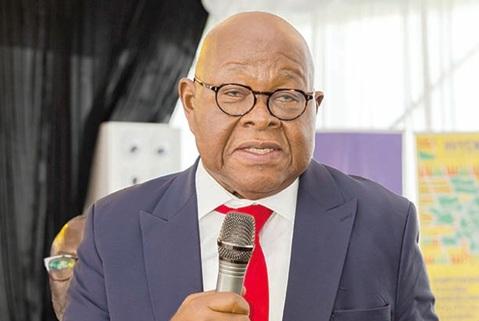

Former Speaker of Parliament and Distinguished Fellow of the Institute of Economic Affairs, Professor Aaron Mike Oquaye, has opposed the continued establishment of tribunals for the prosecution of criminal cases, arguing that citizens should ordinarily face the established courts of the country.
Professor Oquaye said the creation of separate prosecutorial forums could undermine the principle that all citizens should enjoy equal treatment before the law.

He made the argument during an IEA forum examining the Prempeh Committee’s report and the government’s position on constitutional review.

According to the former Speaker, Ghana’s justice system should uphold the principle that criminal accusations should ordinarily be brought before the regular courts rather than creating specialised avenues that could subject different individuals to different judicial arrangements.

Professor Oquaye said the concept of ordinary courts of the land remains an important principle within the broader tradition of constitutional justice.
He argued that where a person is accused of a criminal offence, the normal judicial institutions should be available to determine the case rather than establishing separate mechanisms that could create unequal treatment.

In his view, the continued creation of tribunals could contribute to an undesirable expansion of prosecutorial powers within Ghana’s constitutional system.
Professor Oquaye maintained that the justice system should not develop arrangements under which one person could be prosecuted before a special tribunal while another person facing comparable allegations would be brought before the ordinary courts.

He said equality before the law requires citizens to be subject to comparable judicial processes regardless of their individual status or circumstances.

The former Speaker further argued that extraordinary courts should not become an expanding feature of the country’s justice system because doing so could weaken confidence in the principle of equal treatment.
His comments formed part of a broader discussion on constitutional reform and the institutional arrangements required to strengthen Ghana’s democratic system.
The IEA forum provided a platform for participants to assess the recommendations of the Prempeh Committee and the government’s position on proposed constitutional changes.
Professor Oquaye’s intervention placed particular emphasis on the administration of criminal justice, the distribution of prosecutorial authority and the constitutional principle that citizens should have equal access to the ordinary judicial system.
His position is likely to add to the wider national debate over how Ghana should restructure its constitutional institutions while preserving judicial independence, equality before the law and due process.

