

The Institute of Economic Affairs has rejected the proposal to extend the tenure of Ghana’s President and Members of Parliament from four years to five, maintaining that the existing constitutional mandate provides adequate time for an elected government to formulate and implement its programme.
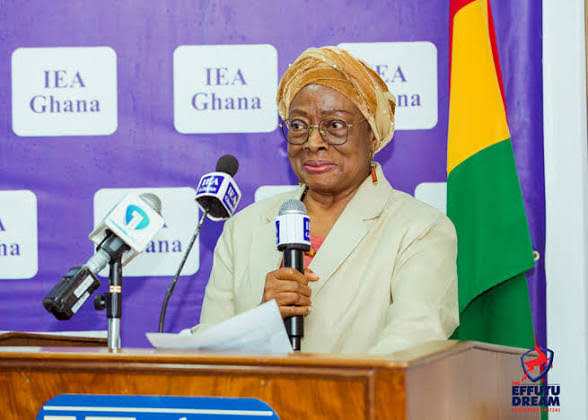
Former Chief Justice and IEA Fellow, Justice Sophia Akuffo, said there must be cogent and compelling evidence that the current four year tenure is inadequate before such a fundamental alteration to Ghana’s constitutional order is contemplated.

Justice Akuffo made the observation as the IEA intensified its engagement with the ongoing constitutional review process, particularly the recommendations of the Professor H. Kwasi Prempeh led Constitution Review Committee and the Government’s position on the proposed reforms. The IEA has formally rejected the five year tenure proposal among a broader set of constitutional recommendations on which it has taken positions.

The Prempeh Committee recommended that the constitutional terms of office for the President and Members of Parliament should be increased from four years to five years. The Government has accepted that recommendation, arguing that an additional year would provide elected administrations with more time to formulate, implement and assess policies.

The IEA, however, has maintained that the difficulty of delivering government programmes cannot, by itself, justify extending the tenure of elected officials.
Justice Akuffo argued that political parties and prospective governments have considerable time to prepare their programmes before assuming office and should therefore be capable of commencing governance promptly once elected.

“Four years you prepare before you come into office. In fact, you prepare before you even vie for power, so that on the day you come to power, from that day you’re on your feet and running,” she said.
She further questioned delays in the appointment of ministers and other officials responsible for implementing government policy, arguing that administrative delays should not be used as a basis for extending the constitutional mandate of elected governments.

“It shouldn’t take six months to appoint ministers and people into key positions as has been our experience in times past,” she said.

The IEA’s position places the question of tenure within the broader issue of governmental efficiency and democratic accountability. While proponents of a five year mandate contend that an additional year could provide more time for governments to execute longer term policies and assess their outcomes, the IEA has argued that the existing four year period can accommodate meaningful policy implementation when governments are adequately prepared and institutions function effectively.
The Institute has also questioned whether policy discontinuity in Ghana can properly be attributed to the four year electoral cycle. In its wider constitutional reform position, the IEA has argued that weaknesses in institutions, inadequate planning and the tendency of successive administrations to abandon or redesign programmes initiated by previous governments may be more significant causes of interrupted national development.
The Institute has consequently linked the tenure debate to the question of national development planning. It supports strengthening the National Development Planning Commission and establishing a credible long term national development framework capable of providing continuity across successive administrations.
According to the IEA, a binding national development framework could allow different governments to pursue substantial programmes within the existing four year mandate while ensuring that national development does not repeatedly begin from a new starting point whenever political power changes hands.
The institute’s broader constitutional position extends beyond the proposed duration of presidential and parliamentary mandates. It has called for measures to reduce the President’s appointment powers, strengthen Parliament and the Judiciary, improve local democracy, enhance accountability and establish greater continuity in national development planning.
The IEA has also expressed reservations about the proposed timetable for constitutional amendments. The Government has envisaged separate amendment Bills for entrenched and non entrenched provisions, with amendments to non entrenched provisions targeted for February 2027 and a referendum on entrenched provisions expected to be held alongside the 2027 District Assembly elections.
The Institute has urged that the reform process should not be rushed, stressing the importance of public education, extensive consultation and national consensus before changes are made to the country’s supreme law.
The debate over the length of presidential and parliamentary mandates therefore forms part of a much wider constitutional conversation about how Ghana should balance effective governance, policy continuity and democratic accountability.
For the IEA, the central issue is not simply whether governments need additional time in office, but whether existing institutions, planning mechanisms and administrative processes can be strengthened sufficiently to enable governments to deliver within the constitutional period already available to them.
The Institute is continuing to advance these positions through its constitutional review engagements, including its “Views and Reflections” series examining the Prempeh Committee’s report and the Government’s response to the proposed reforms.

