
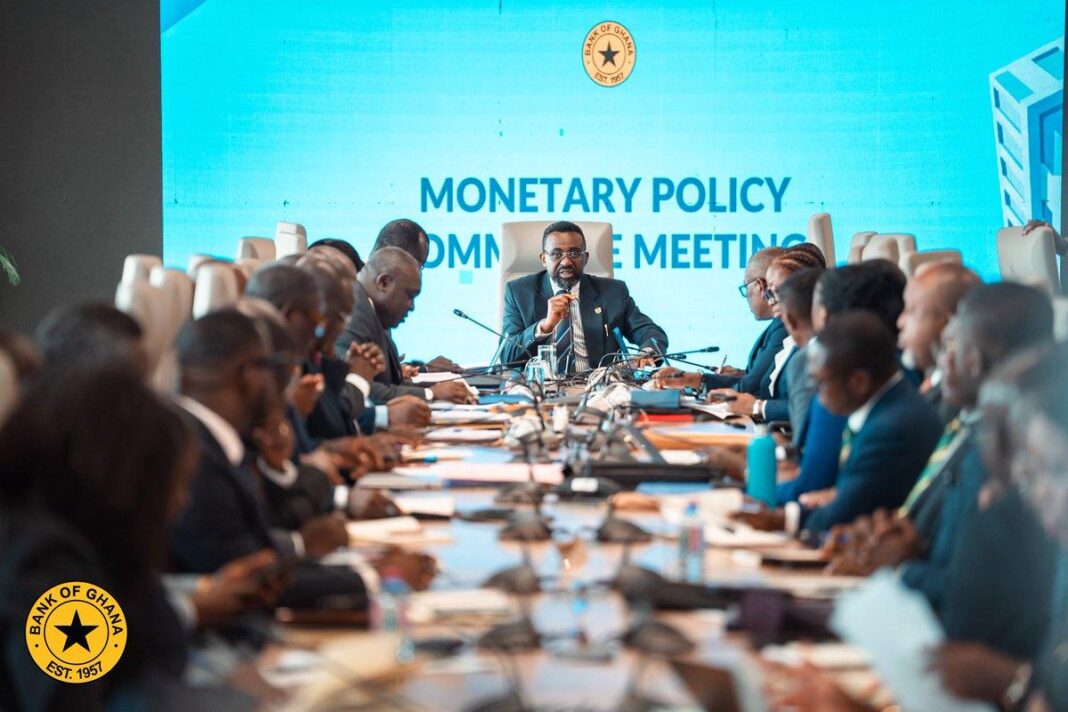

The Bank of Ghana has identified the recent resurgence in inflation as a central consideration for the Monetary Policy Committee as it evaluates the appropriate direction of monetary policy amid changing domestic and international economic conditions.
Governor of the Bank of Ghana, Dr Johnson Pandit Asiama, said headline inflation had climbed from a low of 3.2 percent in March 2026 to 5.0 percent in August, representing a cumulative increase of 1.8 percentage points within five months. The figures have consequently placed renewed attention on the trajectory of consumer prices as the central bank weighs the next course of monetary policy.

Addressing members of the Committee at the opening of the 132nd Monetary Policy Committee meeting on Wednesday, September 23, Dr Asiama acknowledged that the prevailing inflation rate remains below the lower threshold of the Bank of Ghana’s medium term inflation target of 8 percent plus or minus 2 percentage points. Nevertheless, he stressed that the direction of movement has become an issue requiring close observation.

The Governor explained that the principal concern confronting policymakers is not merely the current level of inflation, but whether the recent upward movement will prove temporary or develop into a more sustained source of price pressure. According to him, the anticipated increase in inflation over the coming months could either constitute a short lived adjustment associated with higher energy costs and changes in administered tariffs or become sufficiently persistent to influence inflation expectations.

“The level remains well below the lower bound of the target band, but the direction has been upward,” Dr Asiama said.
The distinction is important for monetary policy because temporary movements in prices can have different implications from a prolonged acceleration that begins to influence the expectations of households, businesses and financial market participants. The Committee is therefore examining whether the recent increase represents an isolated adjustment or whether it could gradually become embedded in broader inflation expectations.

The latest development follows several months of significant disinflation during which Ghana’s inflation rate reached historically low levels. However, the subsequent increase has prompted the central bank to pay greater attention to emerging risks, particularly those arising from energy prices, utility tariffs and developments in the international economic environment. Earlier Bank of Ghana assessments had already identified adjustments in utility prices and higher petroleum costs as potential sources of upward pressure on inflation.
The Governor’s latest assessment places the inflation outlook alongside two other major domestic considerations that are expected to influence the Committee’s deliberations. These are developments in Ghana’s external position and the relationship between fiscal policy and monetary policy.

The external position has become particularly significant as the country enters the final quarter of the year. The Bank of Ghana has indicated that Ghana’s international reserves currently provide approximately 4.2 months of import cover, while the current account is projected to record a deficit in the third quarter amid slower gold shipments and increased payments for services.

At the same time, the Bank is monitoring developments in the international economy, including higher energy prices and geopolitical tensions, which could transmit additional inflationary pressure into the Ghanaian economy. The central bank’s earlier assessments identified disruptions to global supply chains, movements in petroleum prices and changes in utility tariffs among the factors capable of influencing Ghana’s inflation trajectory.
The 132nd MPC meeting therefore comes at a consequential stage for monetary policy. The Committee is assessing whether the existing policy stance remains appropriate in an environment where inflation, although still comparatively low, has begun moving upwards while the country’s external buffers face additional pressure.
The Bank of Ghana currently places its Monetary Policy Rate at 14 percent, and the latest deliberations will determine how policymakers assess the balance between maintaining price stability, supporting economic activity and responding to emerging external and domestic risks.
For the central bank, the immediate challenge is consequently to determine whether the recent increase in inflation constitutes a temporary adjustment that can be absorbed without a significant change in expectations or whether the upward movement warrants a different monetary policy response.
Dr Asiama’s remarks make clear that, despite inflation remaining below the Bank of Ghana’s target range, the recent reversal from the exceptionally low levels recorded earlier in the year has become an important factor in the Committee’s assessment of Ghana’s economic outlook.

