

The Bank of Ghana has raised concerns over mounting pressure on Ghana’s external position, attributing part of the strain to a slowdown in gold shipments and a suspension of gold exports by the Ghana Gold Board, commonly known as GoldBod, since the middle of August 2026.
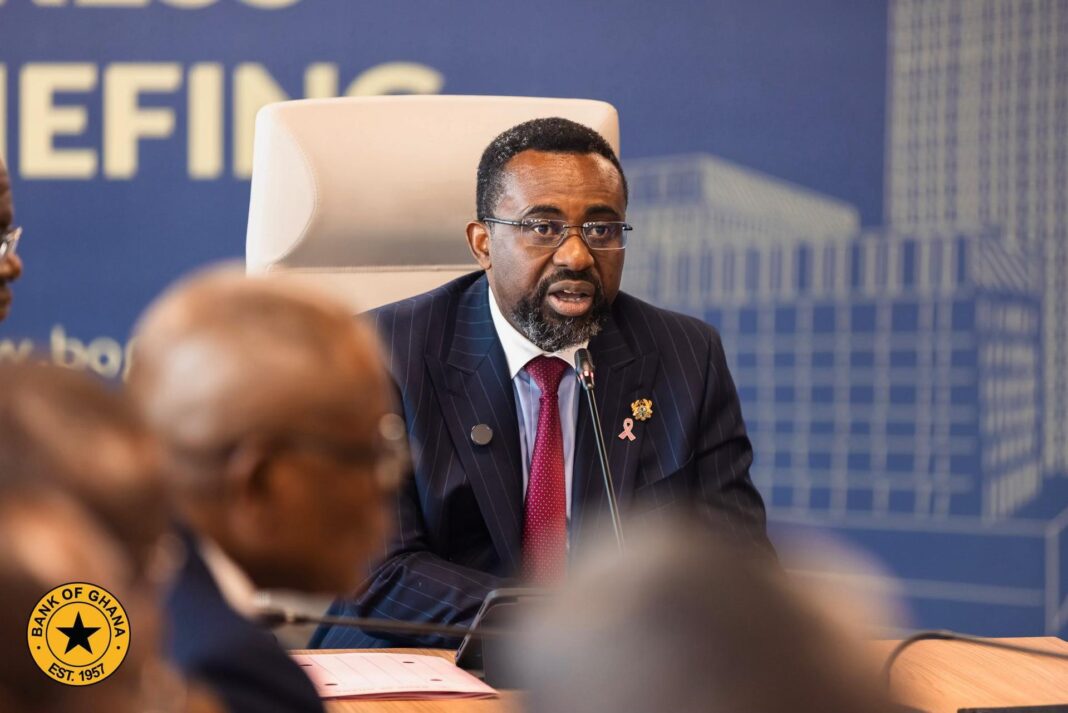
Bank of Ghana Governor, Dr Johnson Pandit Asiama, disclosed the development on Wednesday, September 23, 2026, when he delivered his opening remarks at the 132nd Monetary Policy Committee meeting. The latest meeting comes at a critical point for the economy as policymakers assess the country’s international reserves, foreign exchange position, inflation trajectory and broader monetary conditions.

Dr Asiama explained that the deceleration in Ghana’s gold shipments, together with GoldBod’s decision to pause exports since mid August, has emerged at a time when the country’s external position is already experiencing pressure. According to him, the combination of a weaker current account position, declining international reserves and the interruption in GoldBod’s gold exports warrants particularly close scrutiny as Ghana approaches the final quarter of the year, when demand for foreign exchange typically increases.

The Governor said Ghana’s gross international reserves currently provide approximately 4.2 months of import cover, while the current account is expected to move into deficit during the third quarter as slower gold shipments coincide with increased payments for services. He consequently identified the restoration and strengthening of the country’s reserve buffers as a major priority for the central bank in the months ahead.

The development is significant because gold remains an important source of foreign exchange for Ghana. A reduction in the pace at which gold is shipped abroad can affect the flow of export earnings into the economy and, in turn, place additional pressure on the country’s external accounts. The Bank of Ghana’s latest assessment therefore places particular emphasis on ensuring that adequate foreign exchange buffers are maintained before seasonal demand increases later in the year.
Dr Asiama’s warning forms part of a broader assessment of the risks confronting Ghana’s economy as the Monetary Policy Committee deliberates on the appropriate monetary policy direction. The Committee is examining not only the country’s external position, but also the recent increase in inflation, developments in government expenditure and domestic borrowing, movements in the exchange rate and the effects of deteriorating global economic conditions.

Inflation has also become an important consideration for policymakers. According to the Governor, headline inflation rose from 3.2 percent in March to 5.0 percent in August. Although the August figure remains below the lower boundary of the Bank of Ghana’s medium term target range of 8 percent plus or minus 2 percentage points, the upward movement has prompted the MPC to examine whether the increase represents a temporary adjustment or could develop into more persistent inflationary pressure.
The external environment is adding another layer of uncertainty. Dr Asiama said heightened geopolitical tensions and the continuing conflict in the Middle East have disrupted international trade flows and contributed to higher energy prices. He noted that Brent crude, which had been trading above US$85 per barrel at the time of the previous MPC meeting in July, had climbed to approximately US$107 per barrel by the preceding week.

The Governor further indicated that tighter global financial conditions and a stronger United States dollar have been exerting pressure on emerging market currencies, including the Ghanaian cedi. These international developments could complicate Ghana’s inflation outlook because higher energy and agricultural input costs can feed through into transportation, production and food prices.

The 132nd MPC meeting is also taking place under a new international policy framework. It is the first MPC meeting convened under Ghana’s 36 month Policy Coordination Instrument with the International Monetary Fund, which was approved by the IMF Executive Board on July 27, 2026.
At its previous meeting in July, the MPC maintained the Monetary Policy Rate at 14 percent. The Committee is now assessing whether that rate remains an appropriate anchor for inflation expectations in light of the changing balance of domestic and external risks. The decision is expected to reflect developments in inflation, the cedi, international reserves, fiscal policy and global financial conditions.
The latest warning from the Bank of Ghana consequently places Ghana’s gold export performance at the centre of the country’s external sector outlook. With GoldBod’s export operations paused since mid August and gold shipments slowing, the central bank is closely monitoring whether the resulting reduction in foreign exchange inflows could further weaken Ghana’s external buffers at a time when demand for foreign currency is expected to rise.
The Bank of Ghana has therefore signalled that rebuilding international reserves will remain a central objective as policymakers seek to safeguard the country’s external stability while simultaneously responding to renewed inflationary pressures and an increasingly uncertain global economic environment.

