
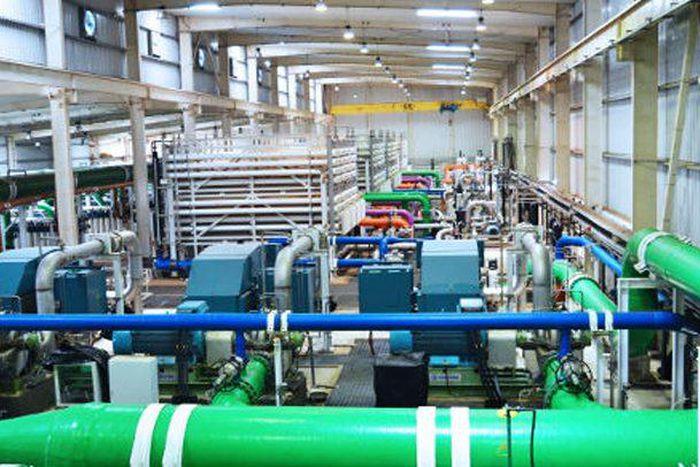

A project conceived to strengthen water supply to thousands of residents in Teshie, Nungua and adjoining communities has become the centre of a US$235 million arbitration liability for Ghana following the termination of its water purchase agreement.
Ghana Water Limited, formerly Ghana Water Company Limited, has been ordered to pay approximately US$235 million to Befesa Desalination Developments Ghana Limited, the company associated with the Teshie Nungua desalination project, after two final arbitration awards were issued on September 17, 2026.

The awards arose from disputes surrounding the termination of the Water Purchase Agreement between the parties. Interest has been accruing on the principal award from April 1, 2026, until the eventual date of payment, while Ghana Water has also been ordered to contribute towards part of the legal costs incurred by Befesa during the arbitration proceedings.

The awards also have implications for the Republic of Ghana because the project was backed by a state guarantee. According to the information released in connection with the arbitration, the Republic is required under that guarantee to satisfy the obligations recognised in the awards, subject to provisions preventing double recovery.

The development has consequently reopened questions about the structure of the original transaction, the financial obligations assumed by Ghana Water, the operation and performance of the plant, the decision to terminate the agreement and the circumstances that eventually led the parties before an arbitration tribunal.
At the centre of the controversy is a facility originally conceived as a response to persistent water supply difficulties in parts of Accra.

A Project Designed to Expand Water Supply
The Teshie Nungua desalination project was developed as a seawater reverse osmosis facility with a designed production capacity of 60,000 cubic metres of potable water each day.

The project was structured under a build, own, operate and transfer arrangement, under which the private developer would finance, construct and operate the facility before eventual transfer under the agreed concession structure.

The Ministry of Finance’s 2024 Annual Report on Public Private Partnership Projects places the estimated project cost at approximately US$125 million and identifies the concession period as 25 years. The report states that commercial operations commenced in 2015 and that the facility was designed to serve an estimated population of approximately 500,000 people in Teshie, Nungua and surrounding communities.
The World Bank Group’s Multilateral Investment Guarantee Agency similarly described the project as a 60,000 cubic metre per day seawater reverse osmosis facility intended to provide potable water to residents and businesses in the Teshie Nungua area.
The project therefore represented a significant attempt to supplement Ghana’s conventional sources of treated water by converting seawater into potable water for distribution through the existing Ghana Water network.
Parliament subsequently considered and approved the relevant financing and guarantee arrangements. A report of Parliament’s Joint Committee on Finance and Works and Housing records a US$110 million Water Purchase Agreement involving the Government of Ghana as guarantor, alongside a request for tax and duty waivers amounting to approximately US$72.83 million.
The transaction thus created obligations extending beyond the physical construction of the desalination facility. It established a long term contractual relationship between the private developer and the state owned water utility.
The Financial Structure Became Central to the Dispute
Under the arrangement, Ghana Water was required to purchase water produced by the facility.
The financial structure also incorporated capacity related payments, meaning the utility’s obligations were not determined solely by the volume of water ultimately delivered to consumers.
That distinction became increasingly important as the plant’s actual production remained below its designed capacity.
The Ministry of Finance’s 2024 PPP report records that the facility had a total annual contracted capacity of 21.9 million cubic metres in 2024, while actual supply amounted to approximately 15.74 million cubic metres. The resulting supply efficiency was 71.88 per cent.
The figures demonstrate the gap between the plant’s contractual capacity and the quantity of water actually supplied during that year.
Earlier concerns about the financial structure had also been raised publicly. The Public Utilities Regulatory Commission recorded the project as a 60,000 cubic metre per day facility operating under a 25 year concession, with the private developer selling bulk water to Ghana Water at a contracted tariff.
The Public Utility Workers Union had previously called for a review of the arrangement, arguing that the financial obligations associated with the project were placing pressure on the state water utility. Those concerns were publicly raised years before the latest arbitration awards.
Government Support Increased Over Time
The financial burden was not confined to Ghana Water.
Ghana’s 2024 Annual Public Debt Report records that the government made payments relating to contingent liabilities arising from three public private partnership projects, including the Teshie Nungua Desalination Project.
The report records approximately US$16.1 million in 2024 payments connected to the Teshie Nungua project.
The Ministry of Finance’s PPP report also documents the continuing financial obligations associated with the project and the performance of the facility.
This means that the current US$235 million arbitration award must be viewed against a much longer financial history involving the original investment, contractual payments, government support and other obligations associated with the project.
The US$235 million award itself should not, however, be described simply as the construction cost of the plant. The arbitration award relates principally to payments arising from the termination of the Water Purchase Agreement.
Cox Infrastructure Group, which controls 95 per cent of Befesa Desalination Developments Ghana Limited, stated that the US$235 million award is net of taxes and relates to termination payments under the Water Purchase Agreement. The company also clarified that the amount recognised in the award does not automatically represent equivalent net cash attributable to Cox because the ultimate economic effect depends on the project’s financing structure, third party rights, recovery and accounting treatment.
The Plant Did Not Consistently Operate at Full Capacity
The production figures provide another important dimension to the dispute.
Although the plant was designed to produce 60,000 cubic metres of water each day, its 2024 performance was equivalent to only 71.88 per cent of its annual contracted capacity.
The Ministry of Finance’s report attributes the performance figure to an annual supply volume of approximately 15.74 million cubic metres against contracted capacity of 21.9 million cubic metres.
The facility’s operational history had also generated concerns before the latest arbitration.
The Ghana News Agency reported in 2022 that the plant had previously been producing approximately 40,000 cubic metres of water per day, compared with its overall capacity of 60,000 cubic metres.
The same report noted that Ghana Water and the Public Utilities Regulatory Commission had earlier begun discussions with the plant’s operators concerning the cost of production and the financial terms of the arrangement.
These historical figures demonstrate that concerns about the plant’s financial sustainability and production performance did not emerge only after the contract was terminated.
The Dispute Eventually Escalated Into Arbitration
The relationship between Ghana Water and Befesa subsequently deteriorated to the point where the Water Purchase Agreement was terminated.
That termination became the basis for arbitration proceedings involving the contractual obligations of Ghana Water and the state guarantee issued by the Republic.
Two final arbitration awards were issued on September 17, 2026, with Befesa receiving notification of the decisions the following day.
Under the awards, Ghana Water is required to pay approximately US$235 million to Befesa, together with interest accruing from April 1, 2026, until payment. Ghana Water is also required to reimburse part of Befesa’s legal costs.
The arbitration tribunals also substantially rejected Ghana Water’s counterclaims, including a counterclaim valued at approximately US$144.5 million.
The awards have therefore transformed what was initially a dispute over the operation and termination of a water supply agreement into a substantial financial obligation involving a state owned utility and a sovereign guarantee.
The Plant Has Also Become Entangled in a Wider Water Supply Problem
The financial dispute has coincided with continuing questions about the plant’s operational status.
The facility has been out of production since October 2025, according to recent reporting on the arbitration dispute.
The plant has historically supplied water to communities including Teshie, Nungua, Spintex, Baatsona, Sakumono and parts of La.
Consequently, the dispute carries implications beyond the contractual relationship between Ghana Water and Befesa because the facility was originally established as part of the water supply infrastructure serving communities in the eastern part of Accra.
The current situation therefore presents a difficult public policy problem. Ghana faces a substantial contractual liability arising from a facility that was created to strengthen water supply, while the facility itself is no longer contributing to production.
The Bigger Issue Is Ghana’s Management of Public Private Partnerships
The arbitration award has also revived broader questions about how Ghana structures long term public private partnerships involving essential public services.
The Teshie Nungua project demonstrates how a private infrastructure arrangement can create substantial obligations for the state even where the initial capital expenditure is not borne entirely through direct government financing.
A state guarantee can transfer significant financial risk to the public sector if contractual obligations subsequently become enforceable against the government.
In this case, Parliament was involved from the beginning because the transaction required approval of the relevant guarantee and associated arrangements. Parliament’s Joint Committee report documented the US$110 million financing arrangement and the requested tax and duty concessions.
The project was therefore not simply a private commercial undertaking. It was a public private partnership involving a state owned utility, government guarantees and parliamentary approval.
That institutional history makes the latest arbitration award particularly significant for Ghana’s future approach to public private infrastructure projects.
The Questions Now Facing Ghana
The US$235 million award inevitably raises questions about the original contractual arrangements, the assumptions used in structuring the project and the processes through which the agreement was subsequently managed.
Questions also arise regarding the reasons for the difference between the facility’s designed capacity and its actual production, the financial obligations accumulated over the life of the project, the decision to terminate the Water Purchase Agreement and the legal and financial advice available to the state before that termination.
Another important issue concerns the precise terms of the sovereign guarantee and the extent to which the Republic’s obligations under that guarantee will ultimately translate into expenditure from public resources.
There is also the question of the total financial exposure once accrued interest, legal costs and other contractual obligations are taken into account.
The answers to those questions will require examination of the Water Purchase Agreement, the sovereign guarantee, parliamentary approval documents, the Ministry of Finance’s PPP records, the arbitration awards and the financial records of Ghana Water.
A Costly Lesson for Future Infrastructure Deals
The Teshie Nungua desalination project was conceived around a straightforward public need: increasing access to potable water in communities that had experienced persistent shortages.
The project introduced desalination technology into Ghana’s water production system and was designed to supply up to 60,000 cubic metres of water each day to an estimated population of about 500,000 people.
More than a decade after the contractual arrangements were established, however, the project has become the subject of a US$235 million arbitration award.
The award does not by itself establish that the original project was improperly conceived or that any individual acted improperly. It does, however, expose the financial consequences that can arise when long term public private contracts encounter disagreements over performance, payment and termination.
For Ghana, the immediate issue is the financial obligation created by the arbitration awards.
The longer term issue is what can be learned from the entire transaction.
That means examining how the agreement was negotiated, how its financial risks were assessed, how its performance was monitored, how disputes were handled, why renegotiation efforts did not produce a lasting settlement and what safeguards should govern future public private partnerships involving essential national services.
What began as an effort to expand access to water has consequently become a major test of Ghana’s approach to contractual risk, public finance and infrastructure governance. The US$235 million award now provides a powerful reason for the full documentary record of the project to receive careful public scrutiny.

