
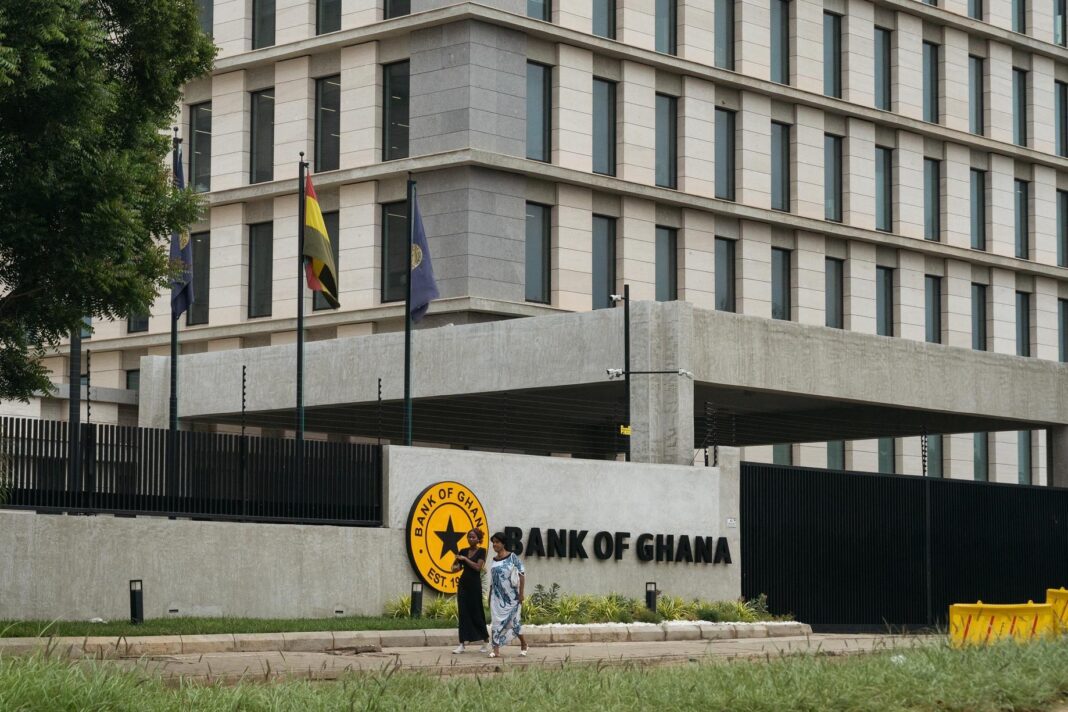

For the first time in more than two months, the Government of Ghana has fallen short of its Treasury bill target, as investor demand weakened at the latest auction of short term government securities.
Data released by the Bank of Ghana showed that investors submitted bids worth GH¢3.956 billion across the 91 day, 182 day and 364 day Treasury bills, against a government target of GH¢4.121 billion. The outcome left the auction undersubscribed by approximately GH¢164.94 million, equivalent to about 4 percent of the targeted amount.

The development represents a notable departure from the strong demand witnessed during several preceding Treasury bill auctions, when investor subscriptions consistently exceeded the amounts the government intended to raise.

Although investors presented nearly GH¢4 billion in bids, the government accepted approximately GH¢2.21 billion. The Bank of Ghana’s official auction results indicate that the accepted amount comprised GH¢1.87 billion from the 91 day bill, GH¢224.96 million from the 182 day instrument and GH¢110.52 million from the 364 day security.

The 91 day Treasury bill remained the most actively sought instrument during the auction, attracting GH¢2.28 billion in bids. This represented approximately 57.8 percent of all bids submitted across the three maturities.
The government subsequently accepted GH¢1.87 billion of the bids received for the 91 day security, making it by far the largest contributor to the total amount raised during the auction.

Demand for the 364 day Treasury bill was comparatively stronger than the amount ultimately accepted by the government might suggest. Investors submitted approximately GH¢1.214 billion in bids for the longer dated instrument, but only GH¢110.52 million was accepted.
The 182 day Treasury bill attracted GH¢452.79 million in bids, from which the government accepted GH¢224.96 million.

The latest figures therefore reveal a considerable difference between the amount investors were prepared to offer and the amount the government ultimately chose to accept.

The auction also produced further reductions in yields on the longer dated Treasury bills, continuing the downward movement that has characterised the short term government securities market in recent weeks.
The yield on the 182 day Treasury bill declined by 3 basis points to 6.48 percent, compared with approximately 6.51 percent at the previous auction.
The yield on the 364 day Treasury bill experienced a more substantial reduction, falling to 9.98 percent from 10.10 percent previously.
By contrast, the yield on the 91 day Treasury bill remained unchanged at 4.69 percent. The Bank of Ghana’s published Treasury bill data confirms the prevailing downward movement in yields across the securities market.
The latest development follows a period during which investor participation in government securities had remained considerably stronger.
At the September 7 auction, for example, investors submitted GH¢9.94 billion in bids against a government target of approximately GH¢6.55 billion. The government accepted GH¢8.38 billion, resulting in substantial oversubscription.
A week later, investors again exceeded the government’s requirement, submitting approximately GH¢8.20 billion in bids against a target of GH¢7.97 billion. The government accepted about GH¢7.21 billion.
The sharp reduction in the volume of bids at the latest auction therefore marks a significant change from the level of demand recorded earlier in September.
The development also comes as Treasury bill yields continue to decline. Lower yields can alter the attractiveness of government securities to investors, particularly when alternative investment opportunities provide comparatively competitive returns.
The latest auction data consequently provide an indication of changing conditions within Ghana’s short term domestic financing market. While the government still attracted billions of cedis from investors, the total amount offered fell below the amount it had intended to raise.
The outcome is particularly relevant because Treasury bills remain an important instrument through which the government mobilises funds from the domestic financial market.
The securities provide investors with an avenue to place funds in short term government obligations, while the government uses the proceeds as part of its broader domestic financing arrangements.
The latest figures, however, suggest that investor appetite was less pronounced at the most recent auction than it had been during several previous weeks.
The composition of the bids also shows that investors continued to demonstrate considerable interest in shorter maturity instruments. The 91 day bill accounted for well over half of the total bids submitted, while the 364 day bill attracted more than GH¢1.2 billion in offers despite the comparatively limited amount ultimately accepted.
The reduction in yields across the 182 day and 364 day securities further indicates that pricing conditions within the Treasury bill market continued to move lower.
For investors, the changing yields and varying levels of demand across the three maturities remain important considerations when assessing government securities. For the government, the latest auction demonstrates that meeting domestic financing requirements can depend heavily on prevailing investor appetite and market conditions.
The immediate shortfall was relatively modest when measured against the government’s overall target. Nevertheless, the fact that bids fell below the required amount marks a departure from the pattern established during the preceding auctions.
The government had sought GH¢4.121 billion but received GH¢3.956 billion in total bids, leaving a financing gap of approximately GH¢164.94 million at the auction.
With the 91 day Treasury bill yielding 4.69 percent, the 182 day instrument yielding 6.48 percent and the 364 day security yielding 9.98 percent, investors are now operating within a market characterised by declining returns across the longer maturities.
The next Treasury bill auction will therefore attract attention as market participants assess whether the latest decline in investor demand represents a temporary development or forms part of a broader adjustment in the domestic government securities market.
For now, the latest auction has established a clear change from the strong subscription levels recorded earlier in the month. The government failed to reach its Treasury bill target for the first time in more than two months, while investors submitted GH¢3.956 billion against the GH¢4.121 billion requirement.
The result underscores the importance of investor participation to the government’s domestic borrowing programme and provides a fresh indication of the changing dynamics within Ghana’s short term securities market.

