
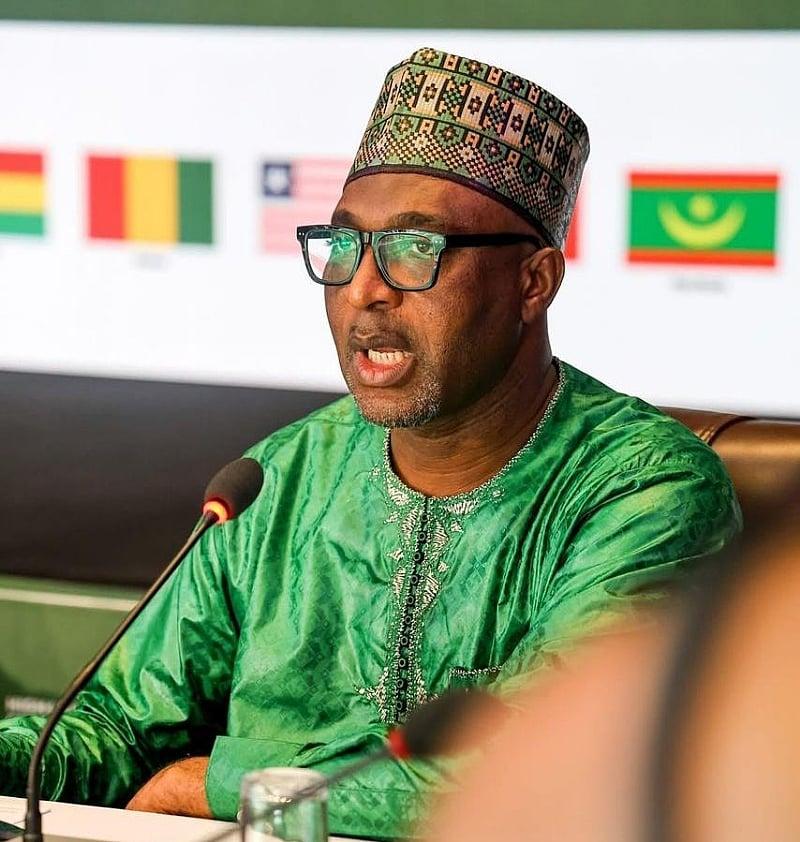

Interior Minister Mohammed Muntaka Mubarak has cautioned officials entrusted with confidential security information against mishandling or exploiting sensitive intelligence, warning that such conduct could compromise Ghana’s intelligence operations and weaken the confidence of international partners.
The Minister issued the warning during a high level security training programme in Accra organised for members of the Greater Accra Regional Security Council and Metropolitan, Municipal and District Chief Executives, with particular emphasis on the responsibilities created under Ghana’s new security and intelligence framework.

Mr Muntaka stressed that officials who are given access to sensitive information occupy positions of considerable responsibility and are expected to exercise the highest degree of discretion in handling intelligence placed in their custody.

He explained that individuals selected for sensitive security responsibilities are subjected to background checks before being entrusted with confidential duties. However, he cautioned that the screening process alone could not eliminate the possibility of individuals abusing the authority and access associated with their positions.

According to the Minister, an official who improperly discloses, exploits or otherwise mishandles confidential intelligence could ultimately expose senior government officials and state institutions to serious consequences.
He therefore called for a stronger culture of responsibility among public officials who have access to classified or security related information, stressing that the consequences of an information breach could extend well beyond the individual directly responsible.

Mr Muntaka particularly highlighted the implications for Ghana’s international intelligence relationships, noting that foreign security counterparts could become reluctant to share sensitive information if they were uncertain about how securely such intelligence would be handled after reaching Ghanaian authorities.
He explained that international security cooperation depends substantially on confidence and confidentiality, particularly when intelligence is exchanged in connection with investigations that are still underway.

Where foreign partners cannot be assured that information supplied to Ghana will remain restricted to authorised personnel, the Minister warned that they could reconsider the extent and nature of intelligence they are prepared to share.

The warning assumes added significance as Ghana continues to strengthen security partnerships with foreign governments and international institutions. In September 2026, Mr Muntaka reaffirmed Ghana’s intention to deepen security cooperation with Canada, while both countries discussed emerging threats and the importance of international collaboration.
Ghana has similarly been pursuing expanded intelligence and security cooperation with Malaysia, particularly in the areas of intelligence sharing, technology and the fight against transnational organised crime.
The Interior Minister has also previously called for closer cooperation between Ghana and the European Union in combating organised crime, arguing that increasingly sophisticated criminal networks require countries to share intelligence and strengthen the capabilities of their security institutions.
Against that background, Mr Muntaka maintained that safeguarding confidential information should be regarded as an essential component of Ghana’s national security responsibilities rather than merely an administrative obligation.
The training programme also focused on the responsibilities of local government authorities within Ghana’s evolving security architecture. Mr Muntaka urged Metropolitan, Municipal and District Chief Executives to acquire a thorough understanding of their statutory security responsibilities and to establish closer working relationships with security agencies operating within their respective jurisdictions.
He stressed that the responsibilities of MMDCEs extend beyond their role as representatives of the President at the local level, explaining that they also occupy clearly defined positions within the broader national security structure.
The Minister consequently encouraged local government leaders to work more closely with the police, intelligence services and other relevant security institutions to identify emerging threats and respond to security concerns within their communities.
He also acknowledged that security conditions vary considerably between urban and rural communities and observed that uniform national guidelines may sometimes impose restrictions that do not adequately reflect the realities confronting particular local authorities.
Mr Muntaka indicated that a review of existing guidelines could therefore become necessary to address emerging circumstances and ensure that local authorities have appropriate room to respond to the specific security conditions within their jurisdictions.
His comments are consistent with the wider national effort to strengthen Ghana’s security architecture following the enactment of the Security and Intelligence Agencies Act, 2026, Act 1168. In June, the Interior Ministry said the new legislation provides a clearer framework for coordination, accountability and intelligence led decision making within the national security system.
The broader security environment has also been undergoing review. The National Security Council Secretariat has recently been consulting stakeholders across the regions as part of efforts to revise Ghana’s 2020 National Security Strategy in response to emerging threats, including violent extremism, transnational organised crime, arms and drug trafficking, communal disputes, cyber threats and the use of misinformation.
The development underscores the increasingly interconnected nature of national security, in which effective intelligence gathering, responsible information management, institutional coordination and international cooperation are closely linked.
For Mr Muntaka, ensuring that confidential intelligence remains protected therefore represents not only an obligation imposed on individual officials but also a broader responsibility shared by state institutions, local authorities and security agencies.
He urged participants at the training programme to recognise that their decisions and conduct could have implications extending beyond their immediate jurisdictions, particularly where sensitive intelligence, ongoing investigations or international security cooperation are involved.
The Minister’s warning ultimately reinforces the importance of maintaining trust within Ghana’s security architecture, ensuring that officials with access to sensitive information exercise that responsibility with discipline while local authorities and security agencies maintain effective channels for cooperation and timely information sharing.

