
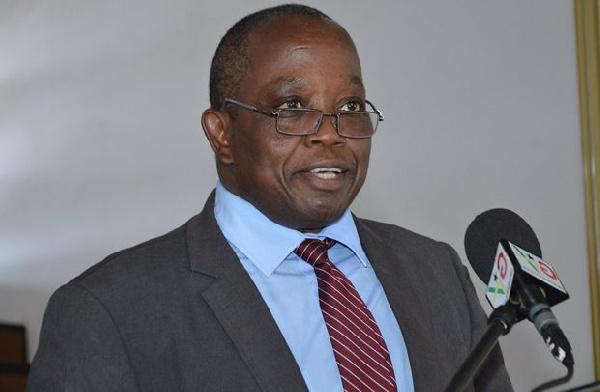

Former Auditor General Daniel Domelevo has called on former Auditor General Johnson Akuamoah Asiedu to explain how a substantial portion of Ghana’s COVID 19 fumigation expenditure was left out of a special audit conducted under his tenure.
The demand follows an investigation by journalist Manasseh Azure Awuni, which has raised serious questions about the accuracy and completeness of the Auditor General’s reporting on expenditure incurred during the pandemic. The investigation found evidence that the government spent substantially more on COVID 19 fumigation than the GH¢96.3 million recorded in the special audit.

Speaking on Joy FM’s Midday News on Tuesday, September 15, Mr Domelevo said the most appropriate way to establish what happened would be to invite the Auditor General who supervised the audit and obtain a direct explanation for the discrepancy.

“I believe we call the Auditor General then, so that we can throw light on the audit for us to know why that happened,” he said.

Mr Domelevo identified two possible explanations for the substantial difference. He said information relevant to the audit may have been withheld from the auditors, or the audit itself may have suffered from shortcomings in its planning, scope or execution.
He cautioned that either possibility would raise serious accountability concerns, particularly because public institutions and officials are legally required to provide auditors with information necessary for the discharge of their functions.

According to Mr Domelevo, if officials deliberately withheld relevant financial information from the auditors, such conduct could constitute a serious offence under Section 33 of the Audit Service Act. However, he suggested that an even more troubling situation would arise if the information had been available to the auditors but the final report nevertheless failed to accurately reflect the expenditure.
“But if it is not they hid information and the audit which reported or underreported, then that is more serious,” he said.

Mr Domelevo stressed that he could not conclusively determine which of the two circumstances accounted for the discrepancy because he was not part of the audit team.

“I didn’t do the audit,” he said, while insisting that the Auditor General who oversaw the exercise should provide an account of the circumstances that produced the reported figure.
The controversy centres on a special audit of government’s COVID 19 expenditure commissioned in 2022. The exercise was intended, among other objectives, to determine whether financial records accurately reflected receipts and payments connected to COVID 19 funds. The audit reported GH¢96.3 million as expenditure on fumigation.
However, the investigation by Mr Awuni uncovered expenditure from several government institutions that substantially exceeded the amount reflected in the special audit. The investigation found that the Ministry of Education alone incurred approximately GH¢316.1 million across three phases of school fumigation, although the audit captured only GH¢96.3 million.
The Ministry of Local Government, Decentralisation and Rural Development was also found to have spent approximately GH¢299 million on three phases of market fumigation, yet the expenditure did not appear under the fumigation costs reported in the special audit. The Ministry of Transport, meanwhile, paid approximately GH¢159.9 million for fumigation between 2020 and 2022.
Taken together, the investigation put the identified COVID 19 fumigation expenditure at approximately GH¢780 million, although the precise figure cited in subsequent reports has focused on a gap of about GH¢624 million between the GH¢96 million recorded by the audit and the substantially larger expenditure identified by the investigation.
The Ghana Audit Service has previously maintained that the absence of the Local Government Ministry’s fumigation expenditure from the special audit report did not necessarily mean the expenditure was not audited. It also confirmed that auditors examined phases of the Ministry of Education’s COVID 19 expenditure, although questions remain about why only one phase was reflected as the reported cost of fumigation.
The investigation has consequently intensified scrutiny of the special audit and the methodology used to determine the expenditure figures. It has also renewed questions about transparency, completeness and accountability in the management and auditing of public funds during Ghana’s COVID 19 response.

