
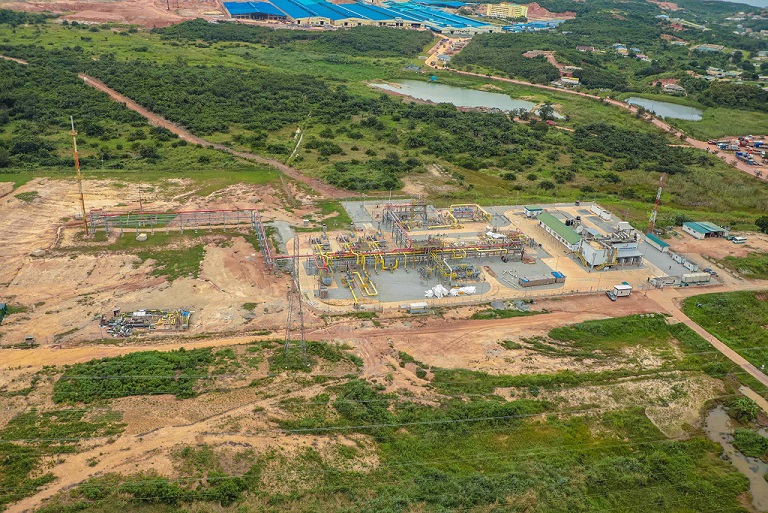

Ghana’s proposed second gas processing plant could significantly reduce the financial pressure associated with thermal electricity generation while helping to moderate future increases in electricity tariffs, according to officials within the country’s gas and energy sectors.
The proposed Ghana Gas Processing Plant Two, commonly referred to as GPP2, is expected to expand the country’s capacity to process domestically produced natural gas and consequently reduce the need to depend heavily on more expensive liquid fuels for power generation. Ghana Gas General Manager for Engineering and Maintenance, Ing. Maxwell Kwame Kelly, said although electricity prices could continue to rise as national energy consumption expands, increased access to natural gas could substantially slow the rate at which tariffs increase.

Ing. Kelly explained that the economic significance of GPP2 should not be measured solely by whether electricity tariffs immediately decline. Instead, he argued that the project should be assessed against the considerably greater financial burden Ghana could face if inadequate gas processing capacity forces thermal power producers to rely on alternative fuels.

He maintained that when the cost of those alternatives is properly considered, the economic value of expanding the country’s gas processing infrastructure becomes considerably more apparent.

The proposed facility is therefore being positioned as an important component of Ghana’s broader strategy to increase domestic gas utilisation, strengthen energy security and reduce the country’s exposure to costly imported fuels.
Gas switch could save Ghana nearly US$500 million each year
Technical Advisor to the Minister of Energy and Green Transition on Petroleum, Ing. Dr Sulemana Yussif, has provided an indication of the potential financial gains, estimating that Ghana could save close to US$500 million every year if it replaces a substantial portion of the liquid fuels currently used for thermal electricity generation with natural gas.

He explained that greater utilisation of gas instead of light crude oil and other liquid fuels could produce enormous savings because natural gas is expected to provide a more economical fuel source for thermal power generation.
The projected savings are particularly significant because Ghana has been seeking ways to reduce the amount of foreign exchange allocated to energy sector obligations. Government policy documents have identified the gas to power strategy, including construction of GPP2, as an important mechanism for reducing foreign exchange pressures associated with energy sector shortfalls and power obligations.

GPP2 is expected to complement existing gas processing infrastructure and provide the additional capacity required to absorb increased supplies from Ghana’s offshore petroleum fields. Government’s 2026 Budget indicates that additional gas supply agreements with the OCTP and Jubilee partners will require an expansion of processing infrastructure to make the gas available for power generation.

Additional gas could reduce LPG import dependence
The potential benefits of the project extend beyond electricity production.
Ing. Kelly said increased processing capacity could also result in greater domestic production of liquefied petroleum gas, thereby reducing Ghana’s dependence on imported LPG.
Ghana Gas currently supplies a substantial share of the country’s LPG requirements, meaning that an expansion of processing capacity could enable more locally produced LPG to enter the domestic market.
A stronger domestic supply could consequently reduce the pressure created by imports while improving the country’s ability to meet growing household and industrial energy requirements.
The additional production could therefore generate benefits across several areas of the energy economy rather than concentrating the value of GPP2 exclusively within the electricity generation sector.
GPP2 could also support Ghana’s oil production
The proposed facility could additionally help address operational constraints within Ghana’s upstream petroleum industry.
Gas Business Manager at the Ghana National Petroleum Corporation, Emmanuel Tamaku, explained that some oil fields are producing considerable quantities of associated gas and that limited processing capacity can create challenges for producers seeking to optimise oil extraction.
Greater processing capacity would provide additional room to receive, process and commercialise gas generated alongside oil production.
This could consequently allow petroleum producers to maximise output from existing fields while creating greater certainty around the availability of a dependable gas buyer.
Mr Tamaku further suggested that a reliable market and infrastructure for associated gas could improve investor confidence in Ghana’s upstream petroleum industry, particularly as the country seeks fresh investment to sustain production from existing fields and develop new petroleum resources. The Ghana National Petroleum Corporation has separately emphasised the importance of predictable project economics, timely decision making and strong partnerships in attracting capital to Ghana’s upstream sector.
Pipeline infrastructure will determine how much Ghana gains
Despite the projected benefits, engineers have cautioned that the success of GPP2 will depend substantially on the infrastructure available to transport the processed gas.
Chairperson of the Ghana Institution of Engineering, Greater Accra, Ing. Dr Frank K Pinto, stressed that the proposed onshore natural gas pipeline would be essential to ensuring that additional processed gas can be conveyed efficiently from production and processing facilities to power plants and other areas of demand.
The pipeline is consequently expected to complement GPP2 by creating the transportation network required to move the additional gas to locations where it can generate economic value.
Ing. Pinto also noted that developing domestic transportation infrastructure could allow Ghana to retain a greater proportion of the money currently spent on transporting gas, thereby creating additional economic benefits for the country.
The concerns underline the fact that expanding processing capacity alone may not be sufficient. Ghana would also need dependable pipelines and related infrastructure capable of transporting the additional gas efficiently and consistently.
Project forms part of Ghana’s wider gas to power strategy
The proposed GPP2 forms part of the government’s broader Gas to Power Transformation Policy, which seeks to increase domestic gas utilisation and reduce the country’s exposure to expensive liquid fuels.
The strategy also includes plans for a state owned 1,200 megawatt power plant and measures intended to revitalise Ghana’s upstream petroleum industry. Government has described these interventions as part of efforts to conserve foreign exchange and strengthen national energy security.
Industry analysis indicates that GPP2 is expected to have an initial processing capacity of approximately 150 million standard cubic feet per day, with the potential to expand to 300 million standard cubic feet per day. Once completed, the facility would substantially increase Ghana’s overall gas processing capability.
GPP2 targeted for completion in 2028
Preparatory work on the second gas processing plant is reportedly well advanced, with mechanical completion targeted for the first quarter of 2028 and operations expected to commence during the second quarter, subject to the project remaining on schedule.
The government has already established a project implementation committee to accelerate the deployment of GPP2 and ensure that additional gas supplies secured from Ghana’s offshore petroleum partners can be effectively processed and utilised.
The proposed facility consequently represents more than an expansion of Ghana’s gas infrastructure. It is increasingly being regarded as a strategic investment capable of lowering the cost of thermal electricity generation, reducing reliance on liquid fuels, limiting LPG import dependence, supporting oil production and conserving valuable foreign exchange.
If the project is delivered on schedule alongside the necessary pipeline infrastructure, officials and industry experts believe GPP2 could provide Ghana with a stronger domestic foundation for meeting its growing electricity and industrial energy requirements while easing some of the cost pressures that have historically affected the power sector.

